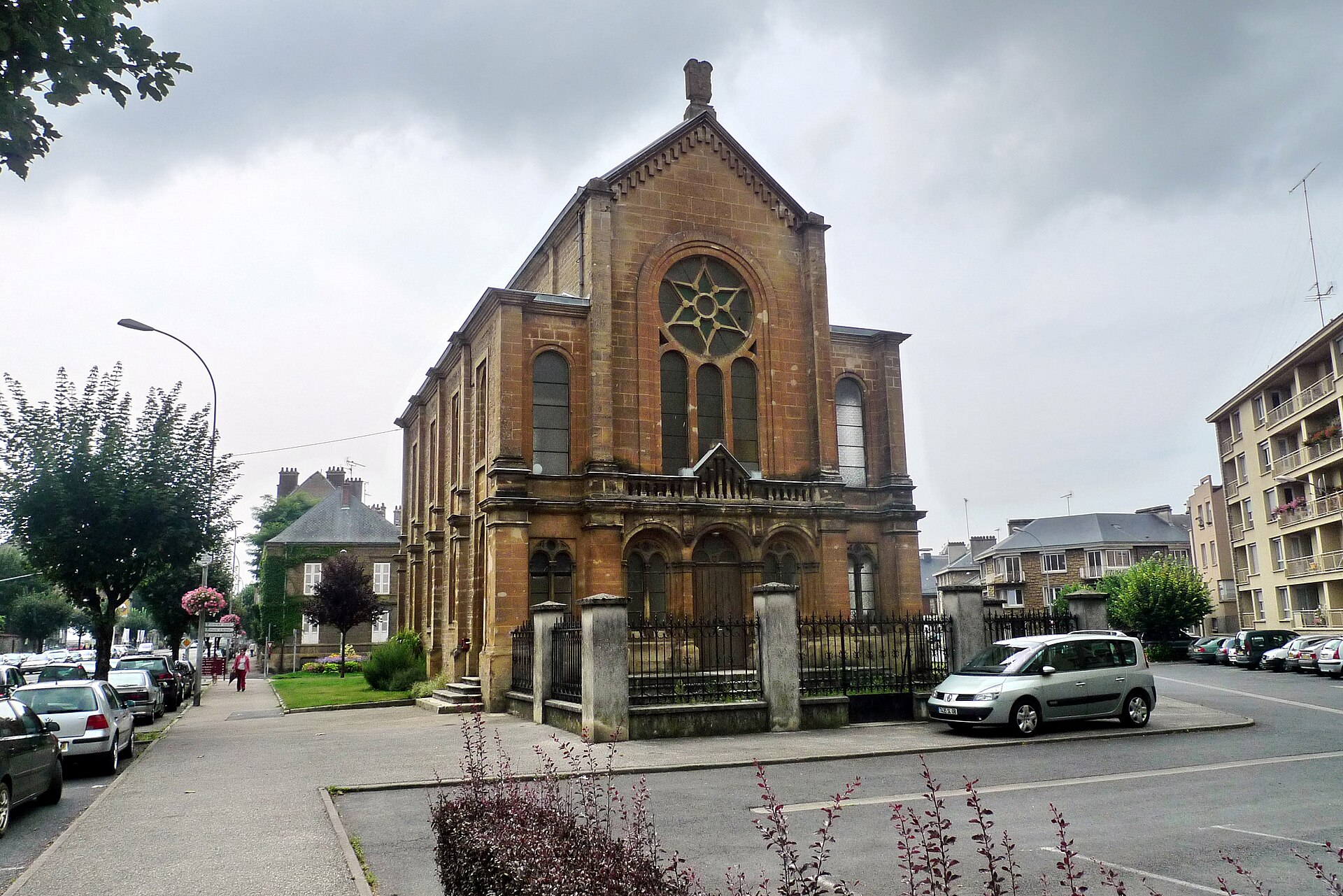
About this place
The Sedan Synagogue stands at 6 avenue de Verdun, right in the center of this small town in the Ardennes department, in the Grand Est region of northern France. It's one of the few remaining physical traces of the Jewish community that once lived here — a building that has outlasted wars and the many transformations the town has gone through since the late nineteenth century.
What is the history behind the synagogue?
The building was constructed in 1878 at the initiative of the local Jewish community. Sedan, situated on the Meuse river, was at the time a town with an established trading and artisan tradition, drawing Jewish families from the neighboring Alsace and Lorraine regions. The synagogue served as a place of worship in the Ashkenazi rite — the liturgical tradition associated with Jews of Central and Eastern Europe, distinct from the Sephardic rite practiced elsewhere.
The darkest chapter in the local community's history came during World War II. Like Jews in many other French towns under occupation, the Jews of Sedan were deported. The synagogue building itself, however, survived the war intact — it was neither destroyed nor seriously damaged, which is notable given how many French Jewish places of worship from this period did not survive. Today it stands as physical evidence that Jewish life existed in Sedan and had its place in the town's fabric, even though the community that built it was largely erased by history.
What can you see when you visit?
The synagogue sits in the central part of Sedan, within walking distance of the town's main landmarks, including the famous Sedan Citadel — one of the largest medieval fortresses in Europe. The building itself isn't a major tourist draw in the museum sense, but for anyone interested in French Jewish history or nineteenth-century religious architecture, it's a meaningful stop on the regional map. Look closely at the facade and the modest yet distinctive style typical of synagogues built in smaller French towns during the second half of the 1800s — a world away from the monumental synagogues of Paris or Strasbourg.
Viewing the exterior doesn't require any booking — it's a natural stop on a walk through Sedan's historic center. Access to the interior may be limited depending on how the building is currently used, so it's worth checking current local information before planning a visit that includes going inside.
How do you get to Sedan?
Sedan lies in northeastern France, close to the Belgian border, and is well connected by road to Reims and to Charleville-Mézières, the capital of the Ardennes department. The nearest major rail hub is Charleville-Mézières, from where a local train or bus reaches Sedan in roughly 20 to 30 minutes. Drivers will find the town sits on the main routes linking the region to Reims and to Belgium.
When is the best time to visit?
Like most towns in the Ardennes, Sedan is best visited in spring or autumn, when the weather is mild and lighter tourist traffic makes it easier to explore the historic center at a relaxed pace, including the Citadel and the surrounding streets where the synagogue stands. Summer tends to be warmer and busier, as visitors come to the region for its history and scenery.
Frequently asked questions
Is the Sedan Synagogue still active as a place of worship? The historic Jewish community of Sedan was largely decimated by deportations during World War II, so current religious use of the building may be limited or occasional — it's worth checking its current status before visiting.
Can visitors go inside the synagogue? Access to the interior depends on the building's current schedule and use. The exterior and facade can be viewed freely while walking through town.
Are there other historic sites nearby? Yes, the synagogue is close to the Sedan Citadel, one of the largest medieval fortresses in Europe, making it a natural stop on a walking tour of the town's historic center.
What architectural style does the building follow? The synagogue was built in 1878 in the modest style typical of smaller French Jewish congregations of that era, without the monumental features found in larger cities' synagogues.
Nearby places

Earn badges for the places you visit
Download NextOnTrip, discover new places and check off your trails.