About this place
Sant Salvador de Polinyà is a Romanesque parish church in the small town of Polinyà, in the Vallès Occidental region, a short drive north of Barcelona. The church stands on the rise where the original village settlement grew up, and it has remained the town's religious focal point for close to a thousand years.
How do you get there?
Polinyà sits in Vallès Occidental, right next to Sabadell and Barberà del Vallès. Driving is the easiest option, since the town connects directly to the motorway network serving greater Barcelona, and the church sits in the old quarter, an easy walk from the main square. If you prefer public transport, regional buses run to Polinyà, leaving just a short walk to the church itself.
What will you see?
The building you see today is really two structures layered together. The oldest surviving part, a semicircular apse, dates to the 11th century and still carries the arcaded frieze resting on pilasters that is typical of early Romanesque work in the region. The base of the bell tower belongs to this same period. The nave, covered by a barrel vault, and the upper section of the tower were added in the 12th century — a difference you can still spot in the stonework and detailing if you look closely.
In the 18th century, a larger new church body was attached to the north wall of the old Romanesque building. That newer structure now serves as the working parish church, while the original Romanesque building has been repurposed as its entrance portico — an unusual solution, and one of the main reasons to stop here, since it lets you read two different building periods side by side in a single structure.
The church also has a notable art history. During construction work in the early 20th century, workers uncovered wall paintings of real historical value inside the building. Around 1930, the Barcelona collector Joan Prats i Tomàs funded their removal and restoration, and the murals were transferred to the Diocesan Museum of Barcelona, where they remain on display. Visiting the church in Polinyà means seeing the site that produced an important piece of Catalan mural painting, even though the paintings themselves now live elsewhere.
The earliest written record of the church of Sant Salvador de Polinyà dates back to 1028, and it was formally consecrated in 1122 — among the earliest documented dates for a religious building in this part of Vallès.
When should you visit?
Daytime visits work best, since natural light brings out the texture of the stonework and the detail on the apse. Polinyà is not a heavily touristed destination, so you can expect a quiet visit without crowds. It pairs well with a broader look at Romanesque architecture in Vallès Occidental, a region with several other well-preserved churches from the same era.
Frequently asked questions
Can you go inside the church? Access depends on the parish's opening hours — check locally before your visit, or plan around service times when the building is open.
What is the most valuable architectural feature? The 11th-century Romanesque apse with its arcaded decoration, along with the bell tower that combines 11th- and 12th-century work, are the oldest and most distinctive parts of the complex.
Where are the murals found during the construction work? They were moved to the Diocesan Museum of Barcelona after restoration funded by Joan Prats i Tomàs around 1930.
Is it worth combining with other nearby sights? Yes — Polinyà is close to Sabadell and other towns in Vallès Occidental that have their own Romanesque heritage, making it easy to build a longer architectural route through the region.
Nearby places
-
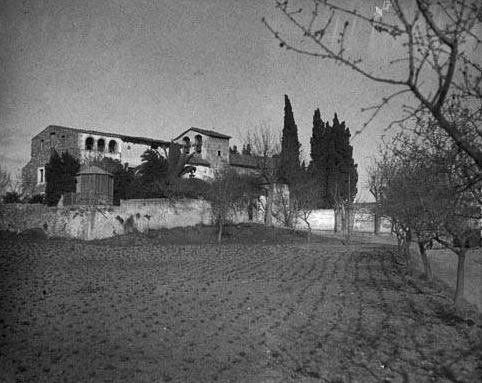
Church de Sant Genís de Plegamans
Palau-solità i Plegamans
-

Cemetery of Cerdanyola del Valles
Cerdanyola del Vallès
-
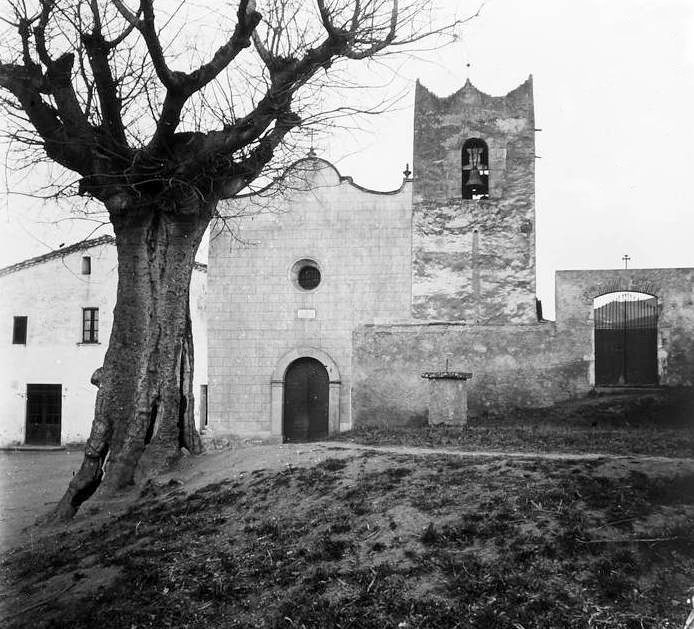
Església vella de Sant Fost de Campsentelles
Sant Fost de Campsentelles
-
Sant Miquel de Martres de Caldes de Montbui
Caldes de Montbui
-
Monastery of Sant Cugat
Sant Cugat del Vallès
-
Palau Abacial
Sant Cugat del Vallès
Earn badges for the places you visit
Download NextOnTrip, discover new places and check off your trails.