About this place
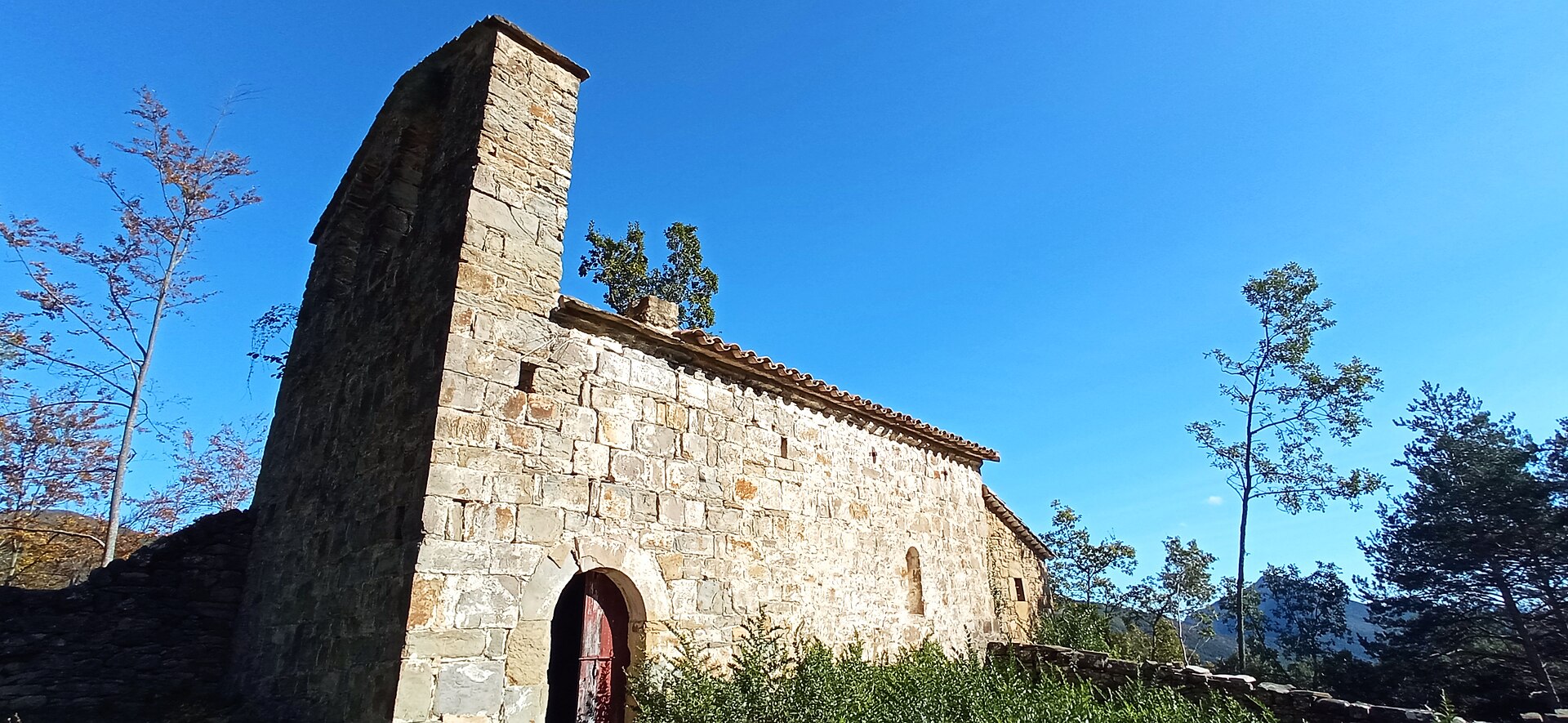
Sant Pere Despuig is a small, scattered settlement in the municipality of La Vall de Bianya, in the Garrotxa region (Girona province, Catalonia). The place takes its name from the parish church standing here, also known as Sant Pere Espuig, Sant Pere del Puig, or Sant Pere de Bianya — all names referring to the same building, perched on a small hill (in Catalan, "puig" means hill).
What will you see there?
The centerpiece is the parish church of Sant Pere Despuig, built on a low rise above the surrounding farmland. The building has Romanesque roots: its original single-nave layout dates back to the 12th century and ran on an east-west axis. Over the centuries the church underwent repeated alterations, with the most significant changes coming in the 18th century, when side wings were added to the north and south. This reversed the original orientation of the building and converted the old nave into a transept. The result is a structure where a Romanesque core is interwoven with later, largely 18th-century additions — a good example of how rural Catalan churches tended to evolve gradually rather than being replaced outright.
Right next to the church once stood a manor belonging to the Bianya family, who held the land here under franc alou (free allodial tenure, meaning without a feudal overlord). It was this family that founded the parish church. Today only ruins remain of that residence, but its presence explains why a religious center of such importance to the whole valley developed at exactly this spot.
It's worth knowing that Sant Pere Despuig is a dispersed settlement — there is no compact village center, main square, or high street. Instead, farmsteads and traditional masies (Catalan farmhouses) are scattered across the surrounding land. This is typical of the Garrotxa landscape: isolated farms, fields, and small hills topped with churches or defensive towers.
How to get there?
Sant Pere Despuig lies within the municipality of La Vall de Bianya, at the heart of the Garrotxa comarca, not far from the town of Olot — the region's main hub, famous for its volcanic landscape and the Zona Volcànica de la Garrotxa natural park. Access is via local roads that connect the valley's scattered farms and hamlets; the most practical approach is to head first to Olot or to Vall de Bianya itself, then follow the side roads leading up toward the hill where the church stands.
When to visit?
The Garrotxa region is best visited in spring and autumn, when temperatures are mild and the volcanic hills and beech forests are at their most colorful. Summers can get hot, though the surrounding woodland offers shade. Winters are cool and damp, but the mist settling over the valleys has its own quiet appeal for visitors seeking calm rather than crowds. Since Sant Pere Despuig is a dispersed, low-key place to begin with, it works well year-round for anyone wanting a genuine feel of the Catalan countryside rather than a tourist hotspot.
Who is this place for?
This is a stop for travelers interested in Romanesque architecture, the history of local noble families, and the agricultural landscape of Garrotxa. It isn't a mass-tourism attraction — rather a destination for people exploring the region by car who want to see a church in its natural, rural setting, away from the crowds and infrastructure typical of larger monuments.
Frequently asked questions
Is Sant Pere Despuig a town or a single building? It's a dispersed settlement within the municipality of La Vall de Bianya, without a compact built-up center. The name is mainly associated with the parish church standing on a small hill.
How old is the church? The earliest known reference to the church dates to the year 964, recording its act of dedication. The current Romanesque structure dates from the 12th century, and the building underwent major remodeling in the 18th century.
Can you go inside the church? As an active parish church, it may be open at set times or during services — it's worth checking locally before visiting, since this isn't a museum-style site with a regular opening schedule.
What else is worth seeing nearby? Vall de Bianya and the wider Garrotxa region hold several other rural churches, along with striking volcanic scenery — the area is known for its volcanic natural park and numerous hiking trails.
Nearby places

Earn badges for the places you visit
Download NextOnTrip, discover new places and check off your trails.