About this place
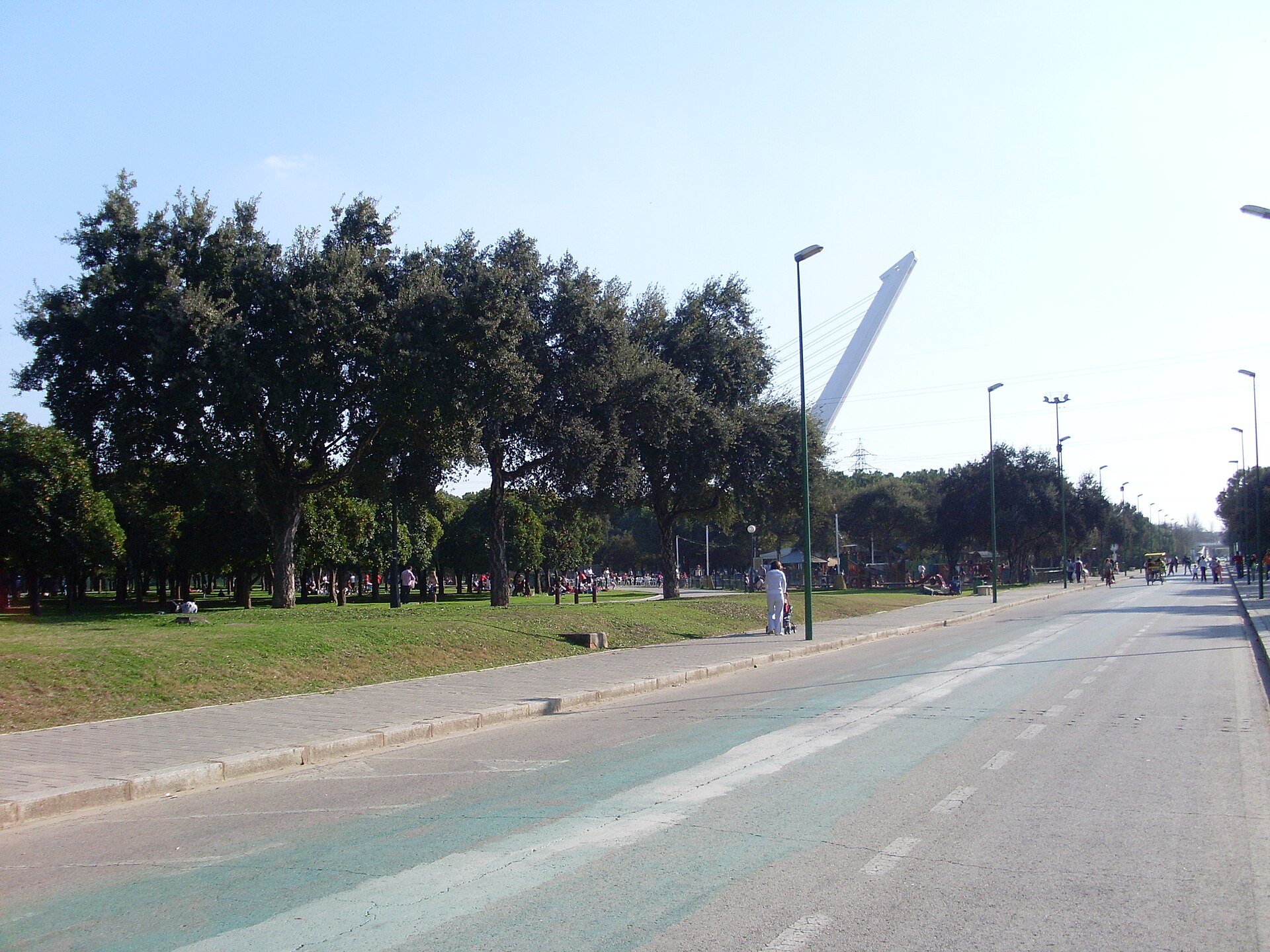
San Jerónimo Park stretches along the Guadalquivir riverbank just north of downtown Seville, covering roughly 148,000 square meters. It ranks among the city's largest green spaces and draws a steady mix of locals from the neighboring San Jerónimo district and visitors looking to step away from the busier historic quarter for a while.
Where does the park's name come from?
The park takes its name from the Monastery of San Jerónimo de Buenavista, founded in the fifteenth century beside a natural bend in the river exactly where the park now sits. Ruins of the old monastery are still visible from the park's paths, giving the green space an unexpected layer of history — a stroll among the trees can turn up traces of centuries-old religious architecture almost by accident.
How did the park come to exist?
The site's story is tied directly to the 1992 Universal Exposition. Before Expo 92 opened, this land served as a nursery, where plant species brought in from around the world were grown and acclimatized before being transplanted to the exhibition grounds. Once the fair ended, the area was landscaped and formally opened to the public as a city park in 1995.
What is there to see inside the park?
At the far end of the park's main avenue stands a striking monument to Christopher Columbus, titled "The Birth of the New Man" and known locally as "Columbus's Egg." It was created by Georgian-Russian sculptor Zurab Tsereteli, and its scale alone makes it one of the more recognizable landmarks in this part of the city. Beyond the monument, the park offers long walking paths, open lawns for relaxing, and clear views across the river.
How do you get there, and what does it connect to?
In 2011, a pedestrian bridge was built over the Guadalquivir dock, along with a path running north from it, linking San Jerónimo Park directly to Alamillo Park. Together, the two parks now form the largest continuous green area in all of Andalusia, making the route a popular choice for longer walks or bike rides. San Jerónimo Park sits close enough to central Seville that it's easily reached on foot, by bike, or by public transport, while still offering a break from the crowds of the old town.
When is the best time to visit?
Given Seville's mild-but-scorching climate, early morning or late afternoon are the most comfortable times to walk here, especially through the summer months. Spring and autumn bring milder temperatures and show off the park's greenery at its best, making them ideal seasons for a longer walk all the way to Alamillo Park.
Frequently asked questions
How big is San Jerónimo Park? The park covers approximately 148,000 square meters, making it one of Seville's larger green spaces.
What is the monument inside the park? It's a large-scale sculpture of Christopher Columbus by artist Zurab Tsereteli, titled "The Birth of the New Man" and popularly nicknamed "Columbus's Egg."
Is the park connected to other green areas? Yes. Since 2011, a pedestrian bridge over the Guadalquivir dock links San Jerónimo Park to Alamillo Park, together forming the largest green area in Andalusia.
Where does the park's name come from? From the nearby fifteenth-century Monastery of San Jerónimo de Buenavista, whose ruins are still visible from within the park.
Nearby places

Earn badges for the places you visit
Download NextOnTrip, discover new places and check off your trails.