Save this place and discover nearby attractions with NextOnTrip
In the app you can add it to your favorites, see what else is worth visiting nearby on the map, and earn a badge for your visit.
The app is available for iPhone and Android.
About this place
Saffron Walden Cemetery is a Victorian burial ground on Radwinter Road in Saffron Walden, a market town in the Uttlesford district of Essex. It is a quiet place of historic interest, notable for its listed chapel, its architectural design and its place in the town's 19th-century story.
How did the cemetery come about?
The cemetery belongs to the wave of municipal burial grounds created across England after the Burial Act of 1854. Once the act was adopted in Saffron Walden, a parish Burial Board was formed in 1855 and land was acquired for a new cemetery on the edge of town. The road alongside it was then known as Sewers End Road; today it is called Radwinter Road. Creating a purpose-built cemetery outside the centre was the standard answer of the period to crowded town churchyards.
Who designed it?
The buildings were designed by the architect James Pigott Pritchett. His work here covers the chapel, the lodge and the boundary walls, so the entrance and the main structures form one coherent Victorian composition. The chapel dates from 1857.
What is the chapel like?
The surviving chapel is a Grade II listed building, built in the Decorated Gothic style that was popular for Victorian cemetery architecture. Listing means the building is legally protected for its special architectural and historic interest. The chapel has since been refurbished and is described by the local council as non-denominational, so it can be used for services of different traditions.
Why were there two chapels?
Like many Victorian cemeteries, Saffron Walden's originally had two mortuary chapels. One served the Church of England and the other served nonconformist congregations. The nonconformist chapel was demolished in the 1990s, so today only the Anglican-built chapel remains. The pairing is a small reminder of the religious divisions that shaped burial practice in 19th-century England.
Is there a war graves section?
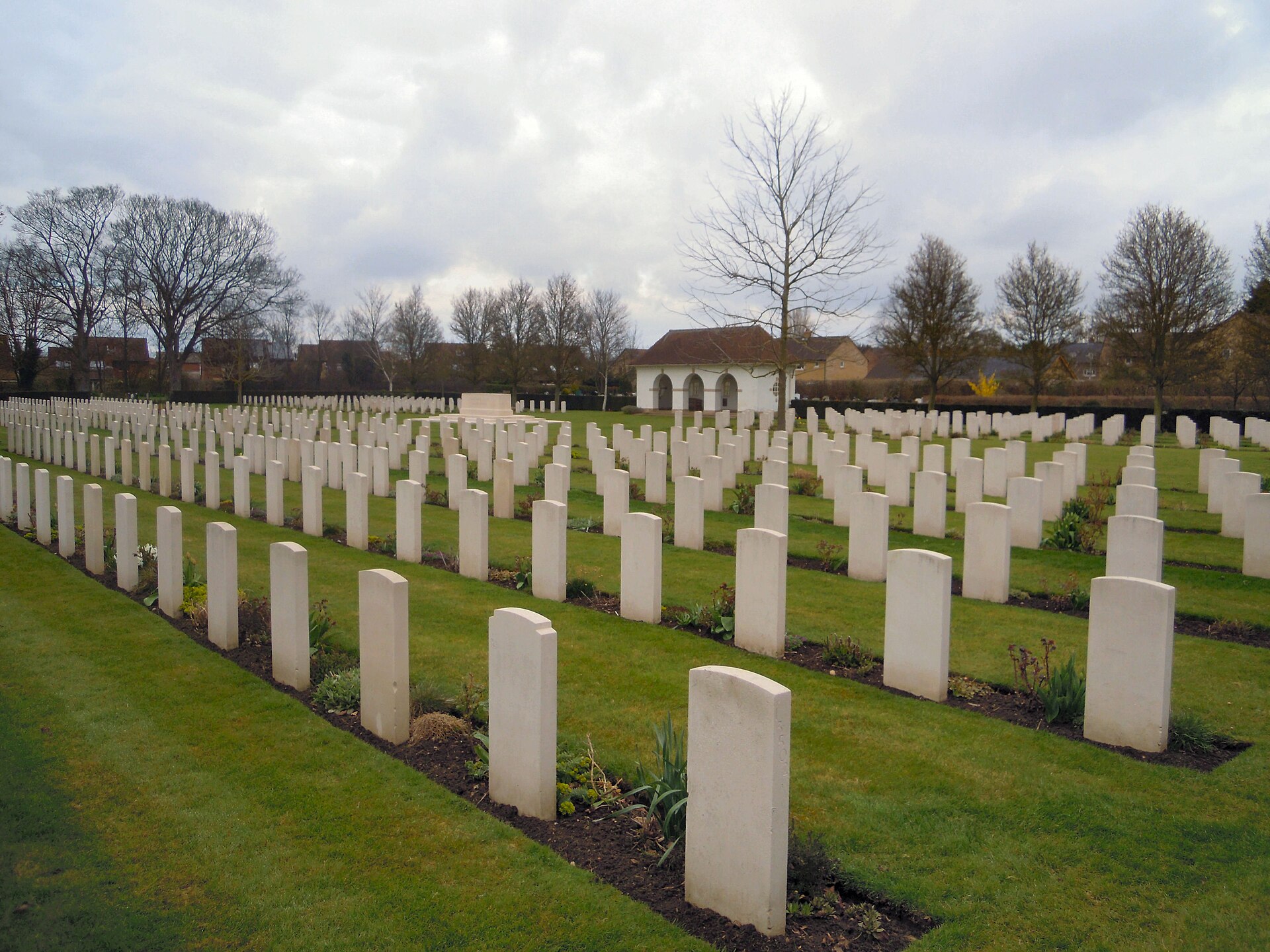
Yes. The cemetery contains graves of Commonwealth service personnel, and it is recorded by the Commonwealth War Graves Commission. Visitors interested in military history can find these graves among the civilian burials.
Who looks after it today?
The cemetery is run by the local town council, which handles enquiries about burials and the upkeep of the grounds. It remains an active cemetery, so visitors should behave with the usual respect, keep voices low and avoid disturbing any ceremony in progress.
Who is it interesting for?
- Local historians and genealogists, since the cemetery's records are used for family research.
- Architecture enthusiasts interested in Pritchett's Gothic Revival work.
- Walkers exploring Saffron Walden beyond its famous medieval centre.
Frequently asked questions
Where is Saffron Walden Cemetery? On Radwinter Road, on the edge of Saffron Walden in Essex.
When was it established? The Burial Board was formed in 1855 and the chapel dates from 1857.
Is the chapel listed? Yes, it has Grade II status.
Can I visit? It is a working cemetery, so visits are welcome with respect for mourners and ceremonies. Check with the town council for opening arrangements.
Are there war graves? Yes, Commonwealth service graves are located within the cemetery.
Nearby places

Earn badges for the places you visit
Download NextOnTrip, discover new places and check off your trails.