Save this place and discover nearby attractions with NextOnTrip
In the app you can add it to your favorites, see what else is worth visiting nearby on the map, and earn a badge for your visit.
The app is available for iPhone and Android.
About this place
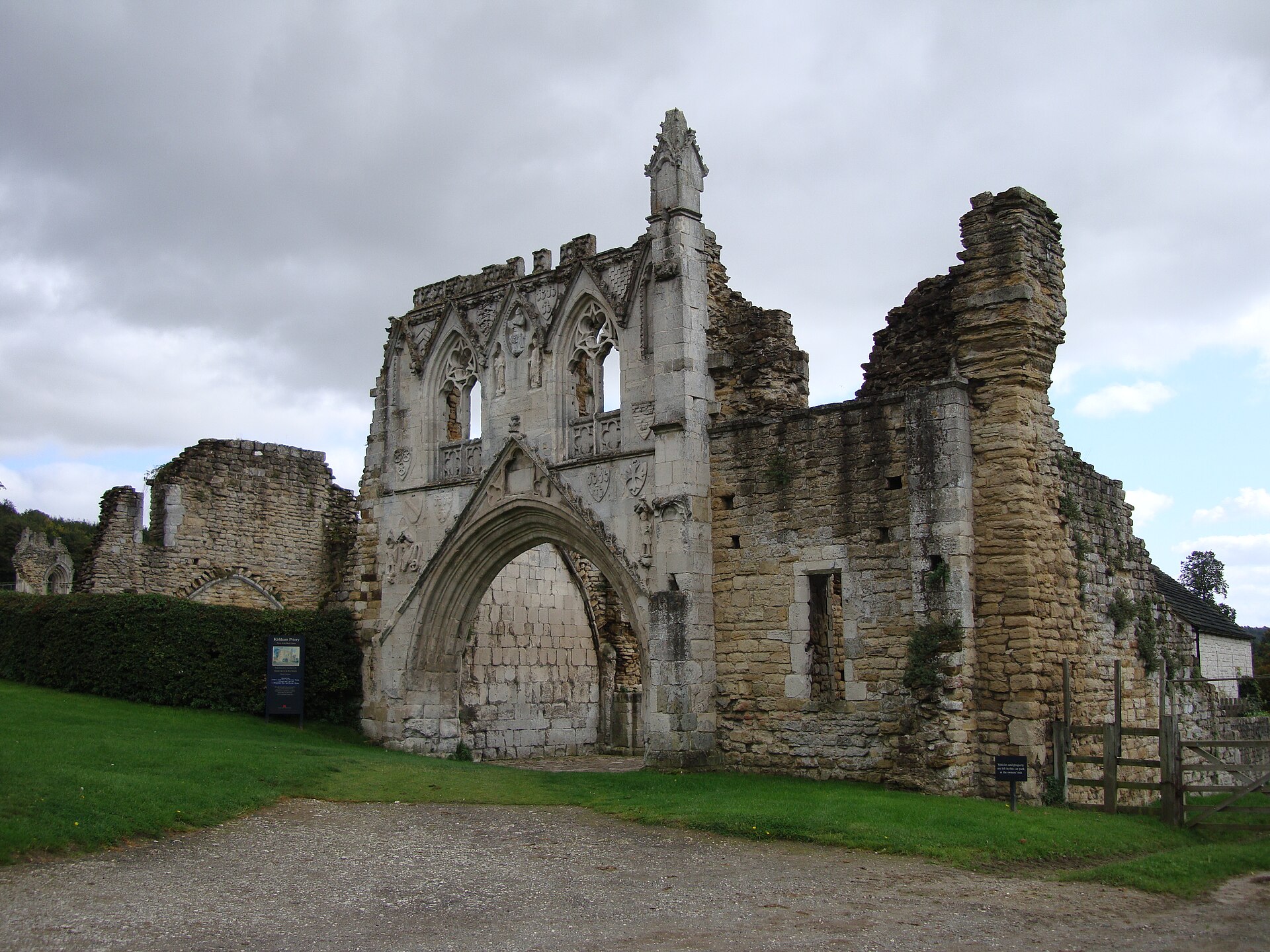
Ruined Church of St Andrew in Bishopthorpe, just south of York, is the surviving west front of a brick church that served the village until the end of the nineteenth century. It stands close to the River Ouse and is a Grade II listed building.
What is the Ruined Church of St Andrew?
The ruin is what remains of the former parish church of Bishopthorpe, a village on the edge of York in North Yorkshire, England. Of the building, only the facade survives, meaning the west wall and the foundations. The fabric is pinkish-orange brick with a facade of magnesian limestone ashlar. The ruins are looked after by St Andrew's Trust, a registered charity, and the structure was listed as Grade II on 12 July 1985.
How old is the site?
Accounts of the very first church differ slightly. One dates it to about 1202 and suggests it was built by the prior and monks of the newly founded Priory of St Andrew at Fishergate in York. Another places it between roughly 1205 and 1215 and describes a cruciform building with a central tower and two bells. Either way, a church has stood here since the early thirteenth century.
By 1768 the medieval building was in poor condition. It was demolished on the orders of Robert Hay Drummond, the Archbishop of York, and only the foundations were kept. He commissioned Thomas Atkinson to design a replacement. The new church was built largely of brick and kept the cruciform plan of its predecessor. Its windows were moved from the chapel at Cawood Castle, and the glass was designed by William Wailes.
Why was it abandoned?
The position beside the Ouse was the church's weak point, because the site flooded regularly. In 1842 Archbishop Vernon Harcourt had the roof and floor replaced and the seating enlarged, but the water kept coming. After severe flooding in 1892 a new burial ground was laid out at the corner of Church Lane and Bishopthorpe Road. In 1899 a new church was built to the north of the old site and consecrated by Archbishop William Maclagan on St James' Day, 25 July 1899. The old church was then left to decay, leaving the ruin you see today.
Is anything from the old church still in use?
Yes. An Early English piscina, a small basin used for rinsing sacred vessels, was found in the old churchyard in 1895 by Canon John Robert Keble, vicar of Bishopthorpe from 1891 to 1903. It is now built into the sanctuary of the present church.
Frequently asked questions
Where is it? In Bishopthorpe, a short distance south of the centre of York, near the river.
What can I see? The west facade of pinkish-orange brick and limestone, together with the foundations of the former building.
Is it protected? Yes, it is a Grade II listed building, listed in 1985, and is cared for by a charitable trust.
When was the newer church built? The present parish church dates from 1899, after the flooding of 1892 made the old site impractical.
Who designed the 1768 church? Thomas Atkinson, commissioned by Archbishop Robert Hay Drummond.
Nearby places


Earn badges for the places you visit
Download NextOnTrip, discover new places and check off your trails.