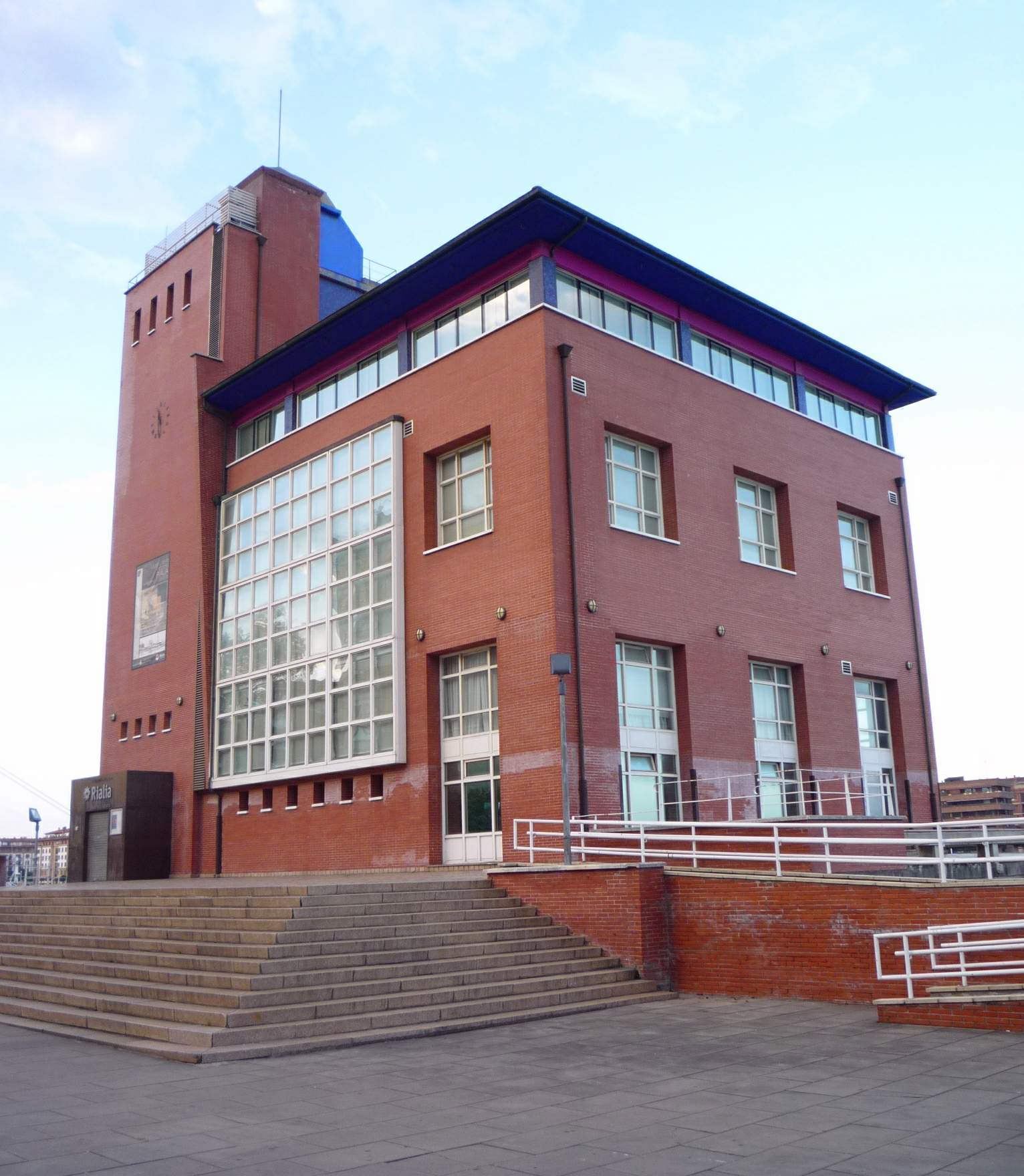
About this place
Rialia Museum of Industry sits in Portugalete, a town on the left bank of the Nervión estuary in the Basque Country, right beside the famous Vizcaya Bridge. Opened in 2006, the museum was created to preserve the memory of the region's industrial and maritime past and to honour the workers whose labour built up more than a century of heavy industry here.
What is the museum about?
Rialia's collection rests largely on the historical and artistic holdings of two former industrial giants, Altos Hornos de Vizcaya and Babcock & Wilcox, supplemented by objects donated over the years by former workers and local residents. Rather than a generic history museum, it reads as a portrait of a single industrial region told through the companies and people who shaped it.
How is the exhibition organised?
The building is arranged over four themed floors, and the visit is designed to move from top to bottom. The fourth floor covers the maritime landscape of Portugalete and the so-called Iron Estuary, explaining how iron ore and river transport shaped the town's growth. The third floor turns to working life, showing the daily reality of people who laboured along the estuary and inside the factories. The second floor pairs the history of the iron industry with an art collection and a documentation centre where archival material is available to visitors. On the ground floor stands a reconstruction of the Altos Hornos de Vizcaya works, alongside photography, and a section devoted to the literature, music and games of the industrial era.
How do you get there?
Portugalete lies a short distance from central Bilbao, on the left bank of the Nervión, and is well connected by metro and rail. The museum stands right next to the Vizcaya Bridge (Puente Colgante), a UNESCO World Heritage Site, which makes it easy to pair a museum visit with a walk along the waterfront and a ride across the bridge's gondola — together these fill a comfortable half-day.
When is a good time to visit?
Beyond its permanent collection, Rialia regularly hosts temporary exhibitions built around the themes of iron and steel, so it's worth checking what's on before you go, since the offering changes through the year. Given the riverside setting next to the bridge, clear days are especially rewarding if you plan to explore the surrounding area after the visit.
Who is this museum for?
Rialia appeals particularly to visitors interested in industrial history, engineering and the social history of factory workers, as well as families looking for an alternative to conventional art museums — the exhibition blends technical content with the everyday stories of the people who once worked along the estuary.
Frequently Asked Questions
What does the Rialia Museum of Industry cover? It is dedicated to the industrial, shipbuilding and maritime history of the Portugalete area, built mainly on the collections of the former Altos Hornos de Vizcaya and Babcock & Wilcox companies.
How many floors does the exhibition have, and what do they show? Four: the maritime landscape and Iron Estuary, working life along the estuary, the iron industry paired with an art collection and documentation centre, and a ground-floor reconstruction of the AHV works with photography, literature and period games.
Is it worth combining with a visit to the Vizcaya Bridge? Yes — the museum sits right next to the UNESCO-listed bridge, so both can easily be seen on the same walk through Portugalete.
Does the museum have temporary exhibitions? Yes, alongside its permanent collection Rialia regularly runs temporary exhibitions centred on iron and steel industry themes.
Nearby places

Earn badges for the places you visit
Download NextOnTrip, discover new places and check off your trails.