About this place
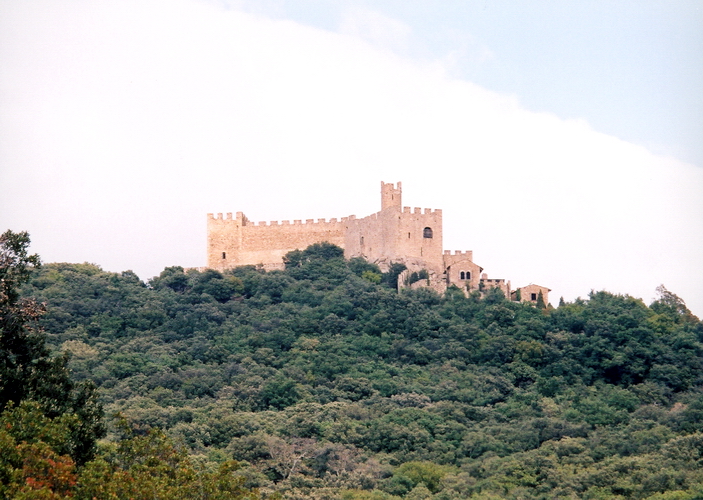
Requesens Castle stands on a hilltop above the southern valleys of the Neulós massif, roughly 7 km east of the Requesens hamlet, within the municipality of la Jonquera. For centuries the stronghold guarded the passage between France and Spain, watching over one of the key communication corridors in this part of the Eastern Pyrenees, in Catalonia.
Where exactly is it located?
The ruins sit off the beaten path, well away from la Jonquera's main roads and built-up areas. The closest reference point is the hamlet of Requesens itself, from which the castle is separated by several kilometres of hillside. The location isn't arbitrary — from this spot the natural passage between the valleys is clearly visible, which is precisely why the site held strategic value for so long.
How do you get there?
No paved road runs all the way up to the walls — driving access typically ends near Requesens or nearby forest parking areas, and the rest of the way is on foot along a trail climbing the slope. The path crosses hilly, partly wooded terrain typical of the Neulós foothills, so sturdy footwear and enough water are worth packing, especially in summer. This is a destination for hikers rather than for anyone hoping for an easy, drive-up viewpoint.
What will you see on site?
Today the castle survives as a ruin — surviving wall fragments and the outline of the former structures let visitors picture the scale of the original stronghold, though nothing here has been fully reconstructed. The site's biggest draw is its setting: the hilltop opens onto views over the valleys south of Neulós, and the surroundings stay quiet and far less crowded than the region's more popular sights. It suits travellers who value history woven into landscape over a polished, rebuilt monument.
What role did the castle play in the region's history?
Requesens has long been associated with controlling the border route between Catalonia and France, its hilltop position giving a clear observation advantage over the valley below. The castle's name matches that of the old settlement of Requesens, itself part of the la Jonquera municipality — confirming that fortress and village functioned for centuries as a single defensive-settlement unit.
When is the best time to visit?
Given the nature of the approach — an uphill climb across terrain with little shade in places — spring and autumn offer the mildest conditions, more comfortable than the height of summer. Winter can make the trail trickier, with damp or icy patches on the rockier stretches, so it's worth checking conditions before setting out.
What can you pair the visit with?
The area around la Jonquera and the Neulós range holds further hiking trails in a similar setting, so it's worth treating Requesens as one stop on a longer route through the border hills rather than a single stand-alone destination — the drive and the climb already take up a fair amount of time on their own.
Frequently asked questions
Can you drive all the way up to the castle? Not entirely — driving access ends near Requesens or the nearby parking areas, and the final stretch has to be covered on foot along a mountain trail.
Is the castle restored, or just a ruin? It's a ruin — wall fragments and the outline of the former structures survive, with no full reconstruction of the interiors.
How far is the castle from central la Jonquera? It lies several kilometres into the hills beyond the Requesens hamlet, so at some distance from the municipality's own centre.
Is the route suitable for children or less fit visitors? The uphill climb and rocky terrain call for a basic level of fitness — plan an unhurried pace and wear proper footwear.
Nearby places

Earn badges for the places you visit
Download NextOnTrip, discover new places and check off your trails.