About this place
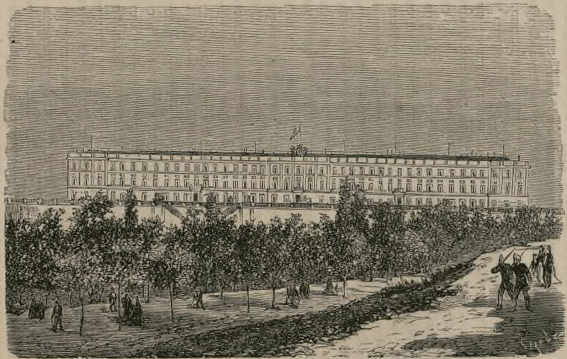
Quintana Palace is a 19th-century mansion in Madrid's Argüelles neighborhood, also known as the Palace of Infanta Isabel de Borbón or "Palacio de La Chata." Standing at number 7 Calle de Quintana, it now serves as the headquarters of Spain's Air and Space Force command.
Where does the palace come from, and what happened here?
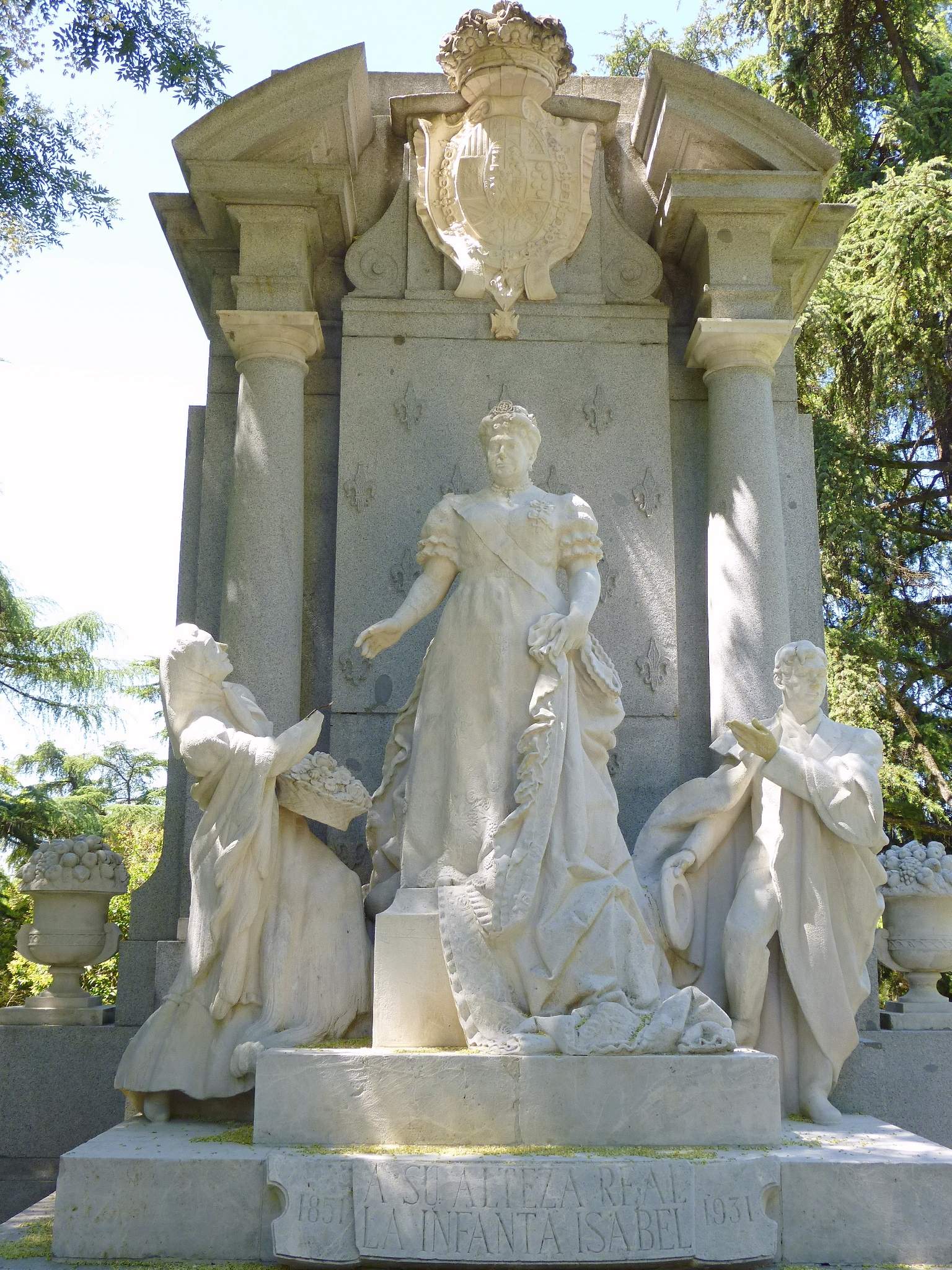
Construction began in 1868 as a casa-palacio for the Counts of Cerrajería, designed by architect Antonio Ruiz de Salces. In 1900 the property was acquired by Infanta Isabel de Borbón, daughter of Queen Isabella II and popularly known in Madrid as "La Chata." She lived there from 1902 until her death in 1931, and it was under her ownership that the palace underwent a major renovation led by architects Repullés and Bernardo García, giving the building its final, stately appearance.
After King Alfonso XIII died in 1941, the royal family sold the building to the Spanish Air Force. Following restoration, it became the seat of the General Air Command, a role the palace still fulfills today as the headquarters of the air and space force command.
What will you see inside and outside?
The palace has a rectangular floor plan built around a central square patio and a smaller secondary courtyard. The building rises across four levels — basement, ground floor, main floor and attic — and its corners are topped with distinctive turrets that make the silhouette stand out among the surrounding Argüelles townhouses.
Inside, the original monumental staircase survives, with curved marble steps and a bronze balustrade, crowned by a ceiling painting by Mariano Benlliure, one of the leading Spanish sculptors and painters of the turn of the 20th century. During Infanta Isabel's residence, the palace also housed a private theater, a music room decorated with portraits of her favorite composers, and a library holding her personal book collection.
How do you get there?
The palace sits in Argüelles, in the western part of central Madrid, close to Parque del Oeste and the Temple of Debod. The easiest way in is by metro to Argüelles station (lines 3, 4 and 6) or Ventura Rodríguez, followed by a short walk through the neighborhood streets. City buses running along Calle de la Princesa also serve the area well.
When should you visit, and can you see the interior?
Because the building functions as a military air command headquarters, it isn't open to the public on a regular basis like a typical museum. Occasional guided visits have been organized in the past, allowing access to the representative interiors, including the staircase and the Infanta's former reception rooms. It's worth checking the current schedule of such openings before planning a visit, since access depends on the institution's calendar. The exterior and facade, however, can be admired year-round, and a walk through Argüelles is most pleasant in spring and autumn, when Madrid's temperatures are mild.
Frequently asked questions
Is Quintana Palace open to visitors? Not on a regular basis — it serves as the headquarters of the Air and Space Force command. Interior access is only possible during occasional guided visits organized by local institutions.
Who lived in the palace? From 1902 to 1931 it was the residence of Infanta Isabel de Borbón, daughter of Queen Isabella II, popularly known as "La Chata."
What architectural style does the building represent? The palace combines 19th-century stately palace architecture with features typical of aristocratic residences of the era — corner turrets, interior patios and a monumental staircase.
What's the quickest way to reach the palace from central Madrid? Take the metro to Argüelles station, from which the palace is just a few minutes' walk through the neighborhood.
Nearby places

Earn badges for the places you visit
Download NextOnTrip, discover new places and check off your trails.