About this place
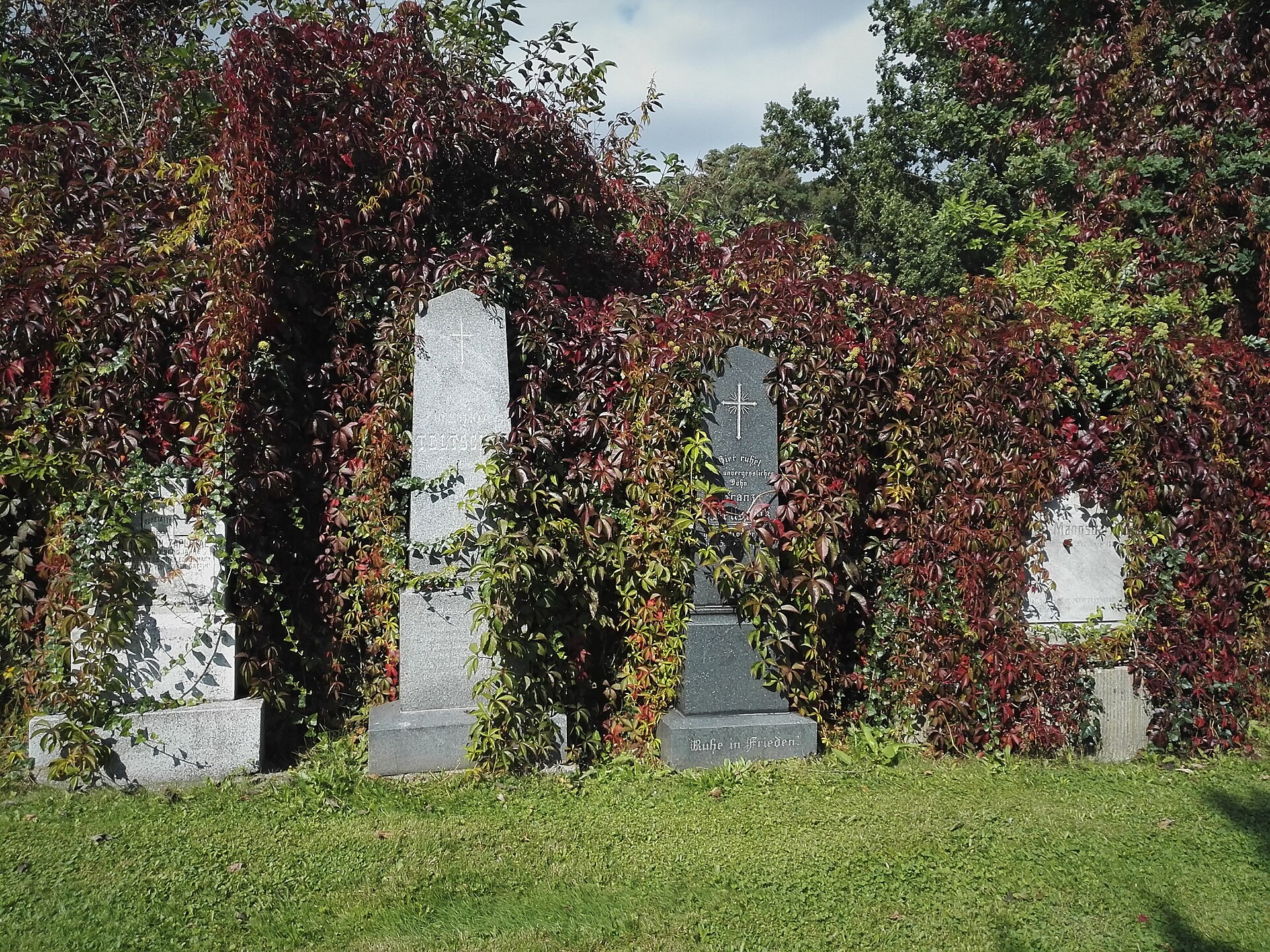
The Protestant cemetery in Suchdol nad Odrou is a modest but historically rich burial ground situated next to the local evangelical church, in a market town in northern Moravia whose administrative area also includes the small settlement of Kletné. The cemetery covers roughly 3,425 square metres and has long been owned by the municipality of Suchdol nad Odrou.
When was the cemetery established?
The burial ground was founded in 1856, at a time when the local Protestant community had grown large enough that earlier burial arrangements no longer sufficed. It was subsequently enlarged in 1879, reflecting the continued growth of the congregation and its need for additional space. The entrance gate, still a defining feature of the site today, was designed by Eduard Würtemberg, whose work gives the cemetery its distinctive, dignified approach.
Who administered the cemetery historically?
During the interwar period, the cemetery belonged to the German Evangelical Church, mirroring the religious and ethnic composition of this part of Moravia before the Second World War. Following the war, the site was confiscated by the state — a fate shared by many places of worship and burial associated with the German-speaking community in what was then Czechoslovakia. Despite these changes in ownership, the cemetery has survived intact and today stands as a record of the region's multi-ethnic and multi-confessional past.
What can visitors see on site?
The most striking structure is the large classicist crypt of the Schittenhelm family, located in the rear part of the cemetery. This monumental tomb stands out among the generally more restrained gravestones typical of Protestant burial grounds, and it offers a notable example of nineteenth-century sepulchral architecture. Walking through the grounds, visitors also encounter graves connected to the region's broader history.
Who is buried here?
Among the notable burials is Jan Szepessy, an evangelical senior who held an important role within the regional church structure; Gustav Adolf Říčan, a Czech Brethren minister and historian whose scholarship helped document the history of Czech Protestantism; and senator Heinrich Fritsch, who represented the local community in political life. Their presence gives the cemetery significance beyond its religious function, tying it to the broader cultural and political history of the region.
Where exactly is the cemetery located?
The cemetery sits directly beside the evangelical church in Suchdol nad Odrou, in a quiet, green setting characteristic of this part of the country. Suchdol nad Odrou itself is a market town made up of several parts, including the small settlement of Kletné, home to roughly 200 residents according to the 2021 census.
Frequently asked questions
Is the cemetery still in active use? The site functions primarily as a historical and memorial place — its value lies mainly in its preserved gravestones and family crypt rather than in ongoing burials.
How can visitors reach the site? The cemetery is located next to the evangelical church in the central part of Suchdol nad Odrou, making it easy to visit as part of a walk through the town.
Why is this cemetery worth visiting? It is a well-preserved example of a Protestant cemetery in Moravia, combining architectural interest — the entrance gate and the Schittenhelm crypt — with the history of the local German-speaking community and its fate after the war.
How does it differ from Catholic cemeteries in the area? Simpler gravestone forms, different sepulchral symbolism, and a direct connection to the Protestant tradition and the German-speaking congregation set it apart from the typical Roman Catholic parish cemeteries found elsewhere in the region.
Nearby places

Earn badges for the places you visit
Download NextOnTrip, discover new places and check off your trails.