About this place
Poříčí Castle
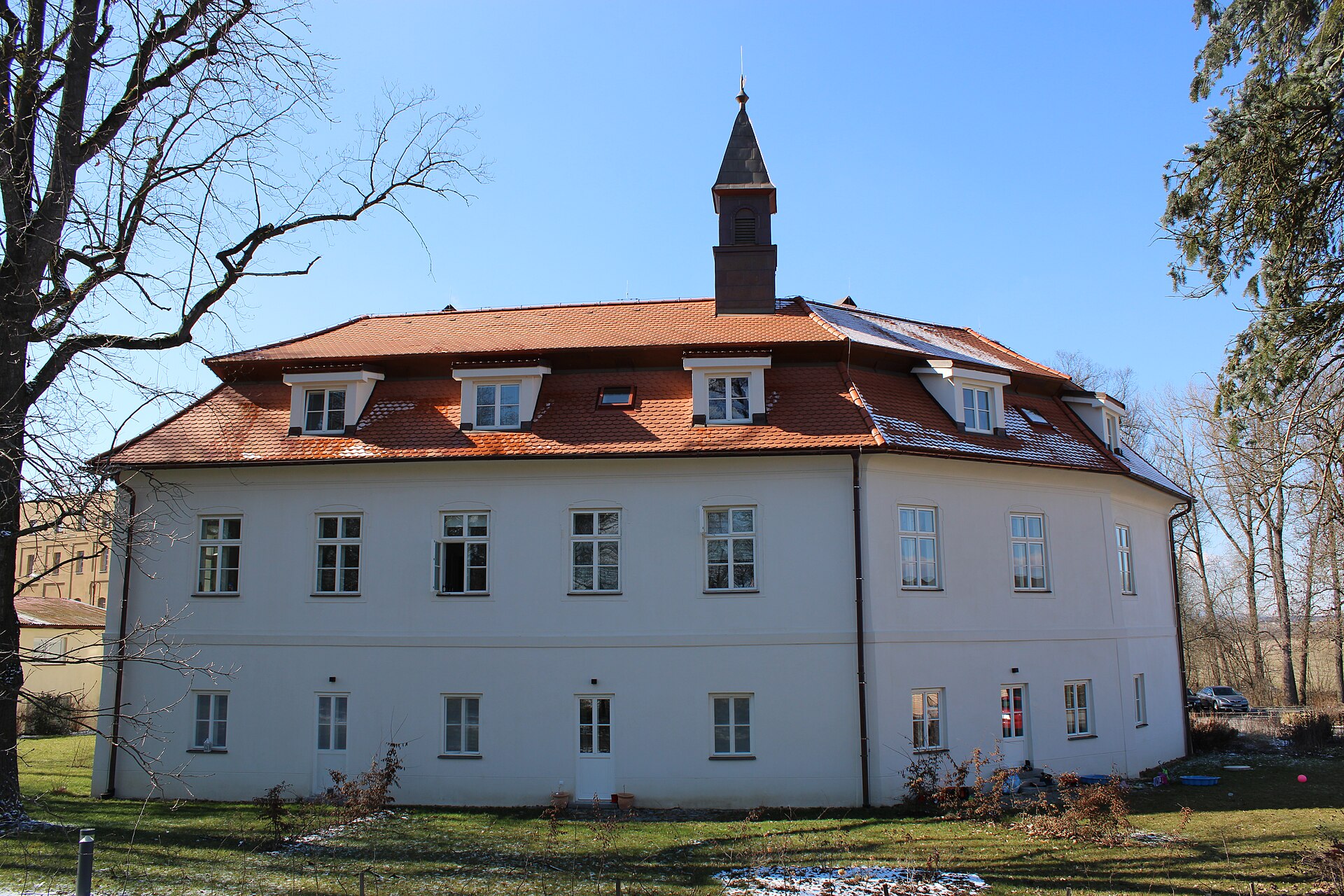
Poříčí Castle is a small, unassuming residence standing on the right bank of the Vltava river, in the village of Poříčí, part of the municipality of Boršov nad Vltavou, a few kilometers southwest of České Budějovice. Behind its modest size lies a turbulent history of ownership and decades of neglect, followed by a full restoration that reopened the building as a community and housing project in 2019.
What stood here before the castle?
Long before the current building existed, a fortified manor (tvrz) occupied the same site. Its earliest trace goes back to before 1379, when written records mention a certain Bušek z Poříčí as the local lord. During the Hussite wars, his daughter Barbora ran the estate in his place. The fortified manor itself is first formally documented in 1562, though it clearly predates that record by a wide margin.
How often did the estate change hands?
Ownership of Poříčí shifted many times over the centuries. By the mid-15th century it belonged to Václav Talafous z Dobřan, later passing to Bernard Talafous. Throughout the 16th century, a series of minor noble families held the property in relatively quick succession; from 1596 it belonged to Štěpán Vamberecký z Rohatce, and in 1617 it was bought by Jan Vrábský Tluksa z Vrábí. This long chain of owners shows that, for most of its early history, Poříčí was a modest local holding rather than the seat of a powerful family.
When did the fortified manor become a castle?
The turning point came after the Thirty Years' War, in the second half of the 17th century, when Dominican friars from nearby České Budějovice rebuilt the old fortified manor into a baroque chateau. This transformation gave the building a far more representative appearance than the original fortification ever had. Toward the end of the 18th century it was reworked again, this time in a classicist style, which further shaped its look for generations to come.
Who lived at the castle in the 19th and 20th centuries?
During the 19th century, the estate passed through the hands of the Pachner, Lanna, and Klaudy families, local landowners who kept it as a private residence. In 1925, the property was acquired by the Jewish Pollak family. After the Nazi occupation, the estate was seized under Aryanization laws, and the Pollak family was deported and murdered in a concentration camp — one of the darkest chapters in the building's history.
Why did the castle fall into disrepair?
After the Second World War and through the following decades, the building lacked a stable owner able to maintain it properly, and it gradually deteriorated. This long period of neglect continued into the 2010s, by which point the castle was in a severely dilapidated state.
How was the castle brought back to life?
In 2016, the property was jointly purchased by Austrian entrepreneur Gerald Auböck and the Vilánek couple, who are connected to the Auböck construction company. Between 2018 and 2019 they carried out a thorough restoration of the entire complex. The renovated castle was officially reopened on 17 May 2019, ending years spent standing empty and crumbling.
What is the castle used for today?
Today Poříčí Castle serves a residential and community purpose rather than functioning as a museum. The building houses thirteen rental apartments alongside a community center called Na Zámečku, run by the non-profit organization Josefina. Its launch was supported by a roughly 19-million-koruna grant from European Union funds. There is no guided sightseeing route through historic rooms, but visitors can view the building from the outside while walking along the Vltava riverbank.
Frequently Asked Questions
Where is Poříčí Castle located? In the village of Poříčí, part of the municipality of Boršov nad Vltavou, on the right bank of the Vltava river, about six kilometers southwest of České Budějovice.
How old is the site the castle stands on? A fortified manor already stood here before 1379, though it is only formally documented in written sources from 1562 onward.
Who converted the fortified manor into a castle? Dominican friars from České Budějovice rebuilt it in baroque style after the Thirty Years' War; a classicist remodeling followed in the late 18th century.
What happened to the Pollak family, one of the castle's owners? The Jewish Pollak family bought the estate in 1925, lost it under Nazi Aryanization laws, and was deported and murdered in a concentration camp.
Can the castle be visited today? Not as a traditional museum — since 2019 it has housed thirteen rental apartments and the Na Zámečku community center, though the exterior can be viewed while walking along the river.
Nearby places

Earn badges for the places you visit
Download NextOnTrip, discover new places and check off your trails.