About this place
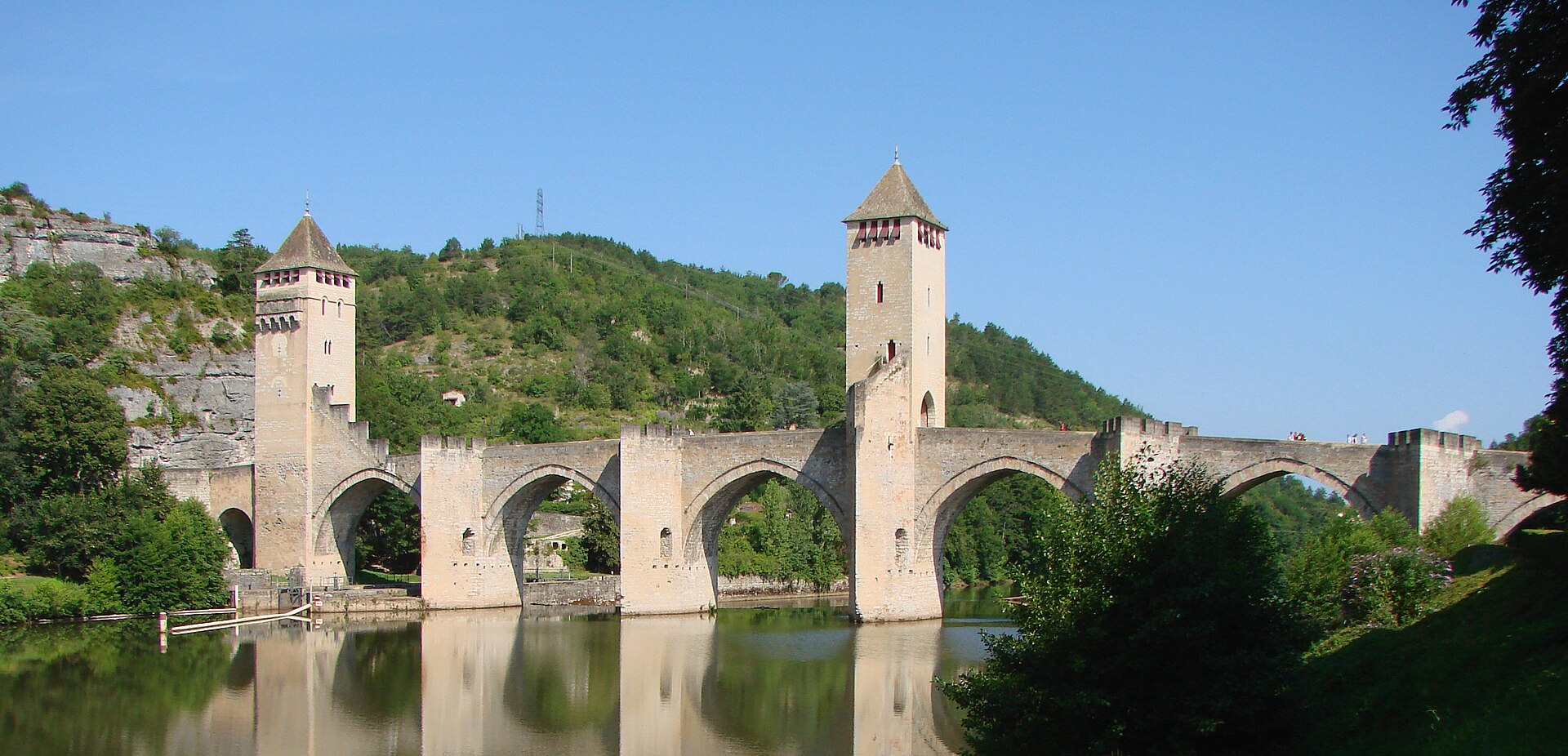
Pont Valentré in Cahors is one of the best-preserved fortified bridges of medieval France. This six-arch stone crossing over the Lot River, just west of the town, dates from the 14th century and has been the city's defining landmark ever since — its silhouette, punctuated by three square towers, shows up on nearly every postcard from the Lot region.
Why does the bridge have three towers?
Pont Valentré was built for defense as much as for crossing the river. Its three towers — one on each bank and one in the middle — allowed the town's defenders to control traffic and repel attackers. That's unusual by European standards: most medieval bridges made do with a single gate tower, whereas here the fortified design carries through all six spans. The battlements and arrow slits that look purely decorative today once served a very real military purpose.
What's the story behind the devil legend?
The central tower carries one of the bridge's most recognizable details — a small devil figure carved into the stone near its top. It comes with a story typical of great medieval building projects: the master mason, frustrated by delays, is said to have struck a bargain with the devil to help finish the bridge on time. When the devil realized he'd been outsmarted, legend has it he took revenge by loosening stones from the corner tower every night — hence the bridge's playful nickname, "Pont du Diable." The devil carving itself was added during later restoration work, but the tale has circulated for generations and remains a fixture of any visit to the bridge.
What is its connection to the Way of St. James?
Pont Valentré sits on one of the French routes to Santiago de Compostela, and as part of the "Routes of Santiago de Compostela in France" network, it's inscribed on the UNESCO World Heritage List. Pilgrims heading toward the Pyrenees have passed through Cahors for centuries, and the bridge — alongside Saint-Étienne Cathedral — remains one of the most recognizable landmarks along this stretch of the route.
What else is worth seeing nearby?
Cahors is the capital of a wine region famous for its dark, full-bodied Cahors wines, made mainly from Malbec grapes — pairing a walk across the bridge with a tasting nearby is an easy way to round out a visit. The bridge is best seen from the banks of the Lot at sunset, when the towers catch the evening light, or from a boat on the river, one of the few vantage points that reveals the piers themselves.
Frequently Asked Questions
Can you walk across Pont Valentré? Yes, the bridge is open to pedestrians and cyclists, and walking across it is one of the essential things to do when visiting Cahors.
Can visitors go inside the towers? Access to the towers' interiors varies depending on how visits are currently organized, so it's worth checking locally or with the tourist information office.
Why is it also called the "devil's bridge"? The nickname comes from the medieval legend of a pact supposedly struck with the devil by the bridge's builder, commemorated by the carved figure at the top of the central tower.
Is the bridge lit up at night? Yes, nighttime illumination highlights the bridge's architecture and is one of the most popular times to photograph it.
Nearby places

Earn badges for the places you visit
Download NextOnTrip, discover new places and check off your trails.