About this place
The Friedrich Ludwig Jahn Monument in Český Krumlov
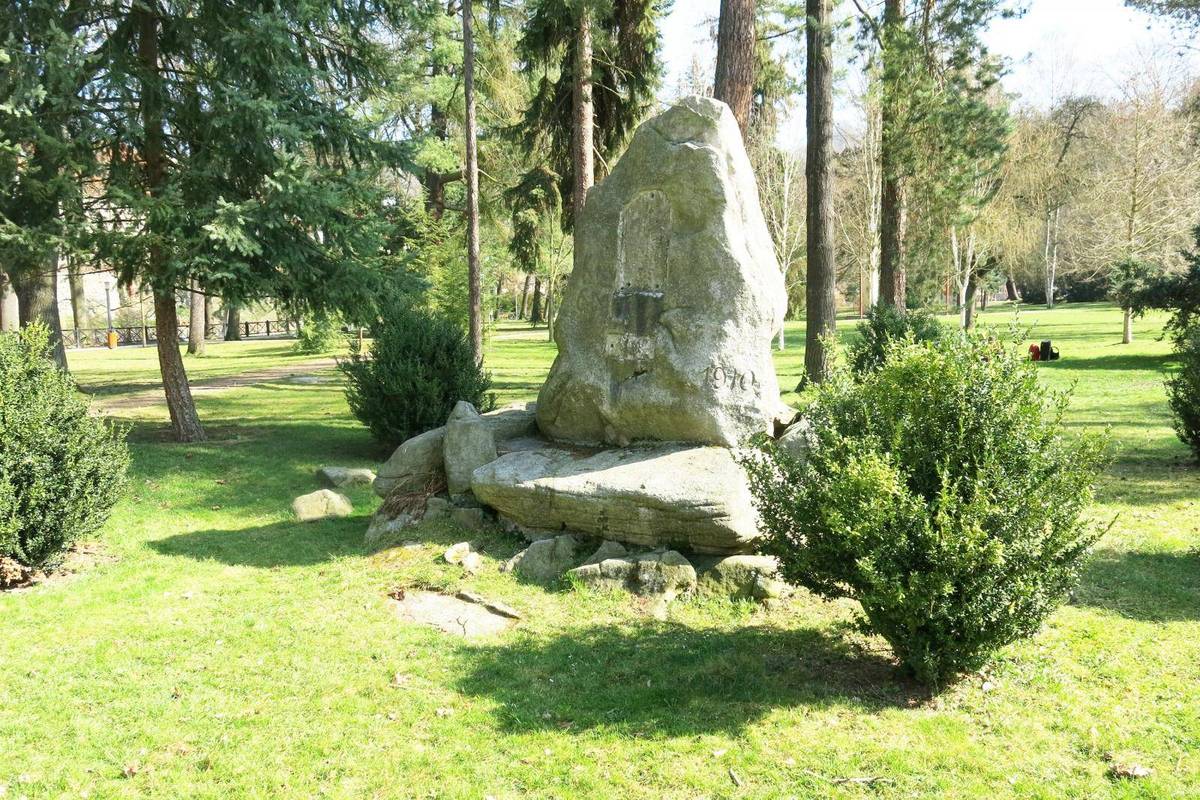
The Friedrich Ludwig Jahn Monument is a modest stone memorial standing in the northern part of the Municipal Park (Městský park) in Český Krumlov, right next to the circular path that runs along the Vltava river. It's the kind of quiet detail visitors easily walk past on the park's main avenue, yet it tells a meaningful chapter of the town's German-speaking history from more than a century ago.
Who was Friedrich Ludwig Jahn?
Friedrich Ludwig Jahn (1778–1852) was a Prussian pedagogue and public figure best known as the founder of the German gymnastics movement, which earned him the popular nickname "Turnvater Jahn" — "father of gymnastics." He pioneered the idea of organized outdoor physical exercise, establishing the first public exercise grounds (Turnplatz) and laying the foundations of the Turner movement, which spread across the German-speaking world during the 19th century, including the Czech lands. Jahn was also a political figure, serving as a member of the Frankfurt National Assembly during the revolutionary events of 1848.
Why was the monument built in Krumlov?
The answer lies in the history of the park itself. The Municipal Park was created in 1907 on the grounds of a former Jesuit garden and was formally opened on 16 June 1907, on the initiative of the district administrator Frank Khemeter. In the strongly German-speaking Krumlov of that era, the Turner movement inspired by Jahn's ideas had a considerable following, much like in many other towns of the Austro-Hungarian monarchy with a German-majority population. Erecting a monument to the movement's patron in the newly established park was a natural way for the local German-speaking community to honor a figure of importance to them.
What does the monument look like?
The memorial takes the form of a simple stele — a roughly unworked granite boulder without any sculpted decorative details. Its north-facing side originally carried a bronze plaque bearing a relief portrait of Friedrich Ludwig Jahn's head along with a commemorative inscription. This raw, almost natural shape set the monument apart from more elaborate memorial designs of the period, echoing the modesty and endurance the Turner movement associated with itself.
When was it built, and what happened to it over time?
The monument was unveiled in 1910, three years after the park itself opened. During the interwar period, roughly between 1924 and 1930, its surroundings changed further: a wooden music pavilion was built nearby, and the park's path network was reorganized, with a new central axial path added that closed off the inner walking circuit. The monument thus became part of a larger, deliberately planned park layout that combined recreational and commemorative functions.
After 1945, amid the postwar demographic and political changes in Czechoslovakia, the bronze plaque bearing Jahn's relief portrait and inscription was removed from the stele. The stone boulder itself remained in place, today standing without its original decoration and lettering — a quiet trace of an era when Krumlov had a distinctly German character.
Frequently asked questions
Where exactly is the monument located? In the northern part of the Municipal Park in Český Krumlov, along the circular path that follows the river.
Who was Friedrich Ludwig Jahn? A Prussian pedagogue and public figure, founder of the German gymnastics movement, known as the "father of gymnastics."
Has the original plaque survived? No — the bronze plaque with the relief and inscription was removed after 1945; only the stone boulder remains.
When was the monument unveiled? In 1910, three years after the Municipal Park opened.
Nearby places

Earn badges for the places you visit
Download NextOnTrip, discover new places and check off your trails.