About this place
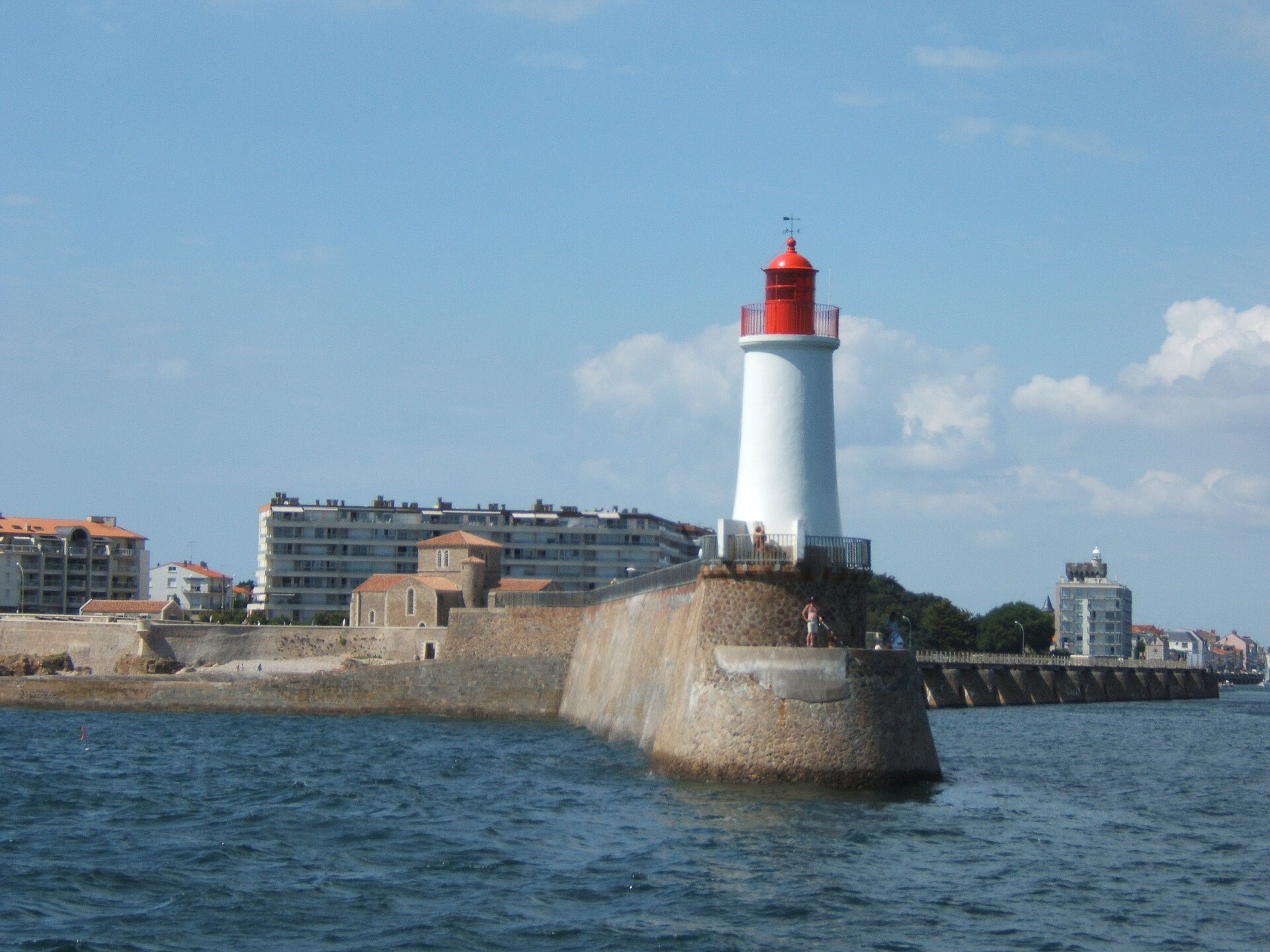
The Pointe du Grouin du Cou lighthouse rises on a narrow sandy headland at the western edge of La Tranche-sur-Mer, exactly where the open Atlantic meets the Pertuis Breton, the strait leading toward Île de Ré. It's the kind of coastal spot that rarely makes the front page of a guidebook, yet it offers one of the widest, most unobstructed views along this stretch of the Vendée coast.
What will you find there?
This isn't a grand, postcard-style lighthouse in the Brittany tradition — it's a plain, functional concrete tower built in 1953 to a design by architect Maurice Durand. It replaced an earlier structure that retreating German forces destroyed near the end of World War II, so the tower you see today is effectively a post-war rebuild, a marker of the coastline's return to normal maritime life after the occupation.
The headland juts out just far enough for the lighthouse to act as a sentinel at the mouth of the Pertuis Breton, the channel separating the mainland from Île de Ré. Standing near it, you get open Atlantic swell on one side and the calmer strait waters on the other. It's a favorite spot for anglers, birdwatchers, and anyone looking for a walk away from the busier central beaches of La Tranche-sur-Mer.
How do you get to Pointe du Grouin du Cou?
The point sits at the western tip of the La Tranche-sur-Mer municipality, so the easiest approach is by car or bike along the coastal road connecting the town to neighboring La Faute-sur-Mer. In summer, parking areas open up near the dunes, from which it's a short walk of ten to fifteen minutes to reach the lighthouse itself, crossing land protected as a natural coastal reserve. Comfortable shoes help, since the path runs partly over sand and low dune vegetation.
The area connects easily to the rest of the Vendée: La Roche-sur-Yon and La Rochelle are both under an hour away, making the lighthouse a simple half-day detour for anyone based on this coast.
When is the best time to visit?
Spring and early summer are ideal, when the dunes are covered in their characteristic low vegetation and crowds haven't yet peaked. In summer, the point draws visitors around sunset, when the light hits the tower and the waters of the Pertuis Breton — and the air has cooled from the midday heat. In autumn and winter, it's mostly a destination for long solitary walks and for watching birds migrating along the Atlantic coast.
Why is it worth the detour?
Pointe du Grouin du Cou rewards patience rather than convenience — there's no café or souvenir stand here, just open space, quiet, and the sense of standing at the exact line where land gives way to ocean. For many visitors, that contrast between the plainness of the lighthouse itself and the scale of the landscape around it is the real draw.
Frequently asked questions
Can you go inside the lighthouse? No, Pointe du Grouin du Cou remains an operational aid to navigation and isn't open for visits inside — you view it from the headland and surrounding dunes.
How long is the walk from the parking area? Depending on where you park, it usually takes 10 to 20 minutes along a path that crosses the dune landscape.
Are there swimmable beaches nearby? Yes, sandy beaches on both sides of the point — belonging to La Tranche-sur-Mer and La Faute-sur-Mer — are popular in summer with families and surfers alike.
Does the lighthouse still serve a navigational purpose today? Yes, it continues to mark the entrance to the Pertuis Breton for vessels heading toward Île de Ré and the Vendée's ports.
Nearby places

Earn badges for the places you visit
Download NextOnTrip, discover new places and check off your trails.