About this place
Plaza de Pontevedra is one of the busiest and most recognizable squares in A Coruña, a spot that locals, students and visitors cross daily on their way between the old town and Riazor beach.
Where does the name come from and what's its history?
The square dates back to the late 19th century, when A Coruña grew beyond its medieval walls during the urban expansion known as the Ensanche. Plaza de Pontevedra marked the starting point of this newer, more spacious part of the city, acting as a kind of gateway between the old town and modern A Coruña. Over time it turned into a natural transport hub, linking the city's main thoroughfares.
What's the connection to Picasso?
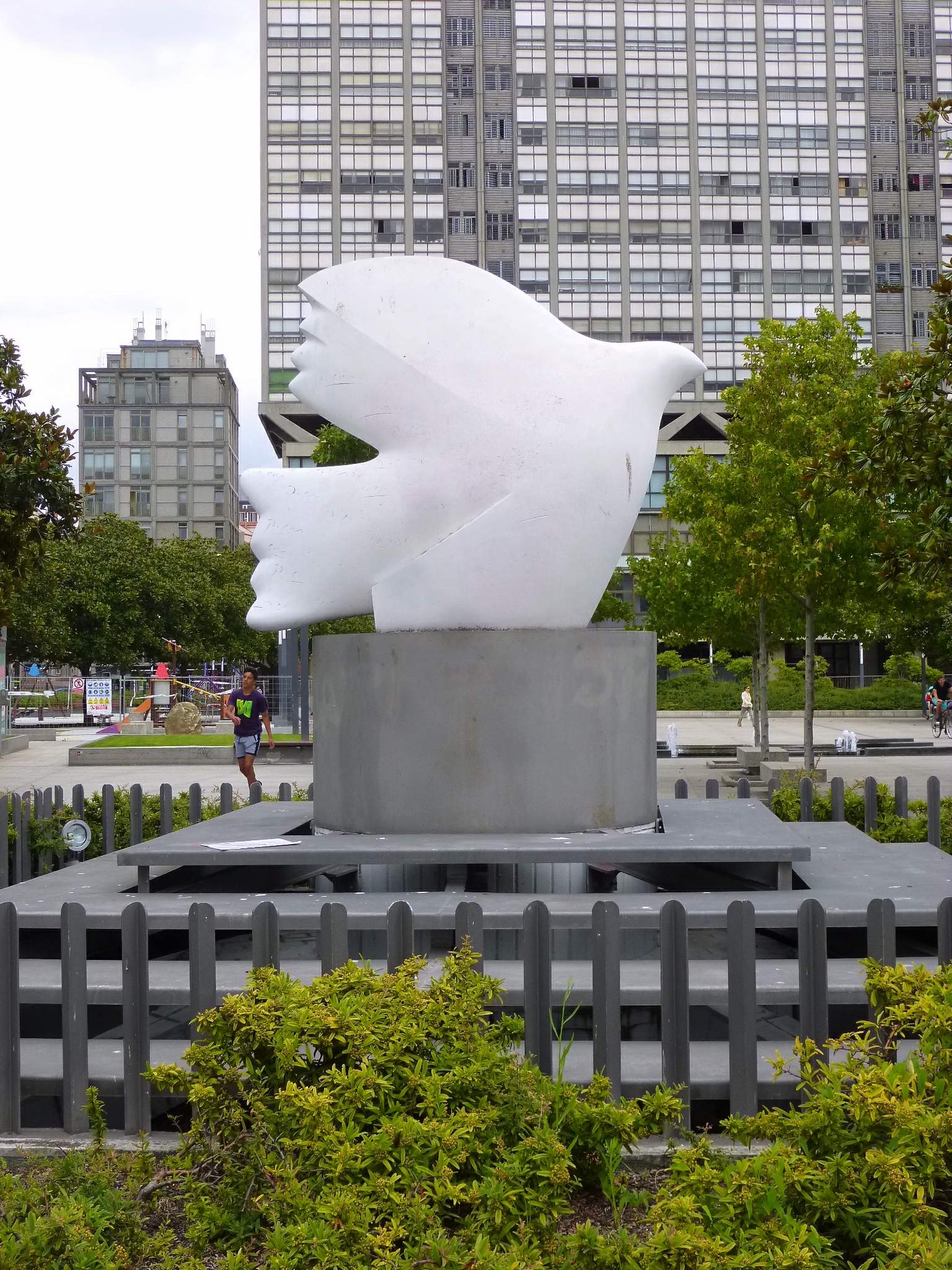
Pablo Picasso spent several childhood years in A Coruña, and the former Fine Arts school and institute where he studied stand right next to the square. In tribute to this link, a sculpture of a peace dove sits on the plaza — a nod to the artist whose formative years in the city later shaped his work.
What will you see there?
Today Plaza de Pontevedra is an open, flat public space built for walking through and meeting up. A major 2009 renovation reshaped the area: what used to be an informal skateboarding spot became an organized plaza with water jets that shoot straight up from the pavement. Kids love cooling off there on hot days, and in the evening the jets are lit up for an eye-catching effect. The square is framed by typical A Coruña buildings with glazed galleries (galerías), and cafés and small eateries line the surrounding streets.
How do you get to Plaza de Pontevedra?
The square sits right in the city center, an easy walk from A Coruña San Cristóbal train station and from the main bus stops — nearly every city bus line passes nearby. Thanks to its central location, it works well as a starting point for further sightseeing, with the old town (Ciudad Vieja) on one side and the Riazor beach promenade on the other.
When is the best time to visit?
The square is lively year-round, but spring and summer bring the most activity, when the fountains run and nearby cafés set out outdoor seating. It's also a regular meeting point for students from the nearby university faculties, so there's steady foot traffic throughout the day. After dark, the lit-up fountains and surrounding buildings give the square a calmer, more intimate feel.
Frequently asked questions
Is Plaza de Pontevedra a market square? No, it's an open public square used mainly for transit and gathering — there's no permanent market here, though it occasionally hosts events.
Is there an entrance fee? No, it's a public open space, accessible at any time free of charge.
What does the peace dove sculpture commemorate? It references Pablo Picasso's ties to A Coruña, where he spent part of his childhood and studied at the nearby fine arts school.
How much time should you plan for a visit? The square itself only takes a few minutes to walk through — it's best treated as a stop on the way to the old town or Riazor beach rather than a destination in its own right.
Nearby places

Earn badges for the places you visit
Download NextOnTrip, discover new places and check off your trails.