About this place
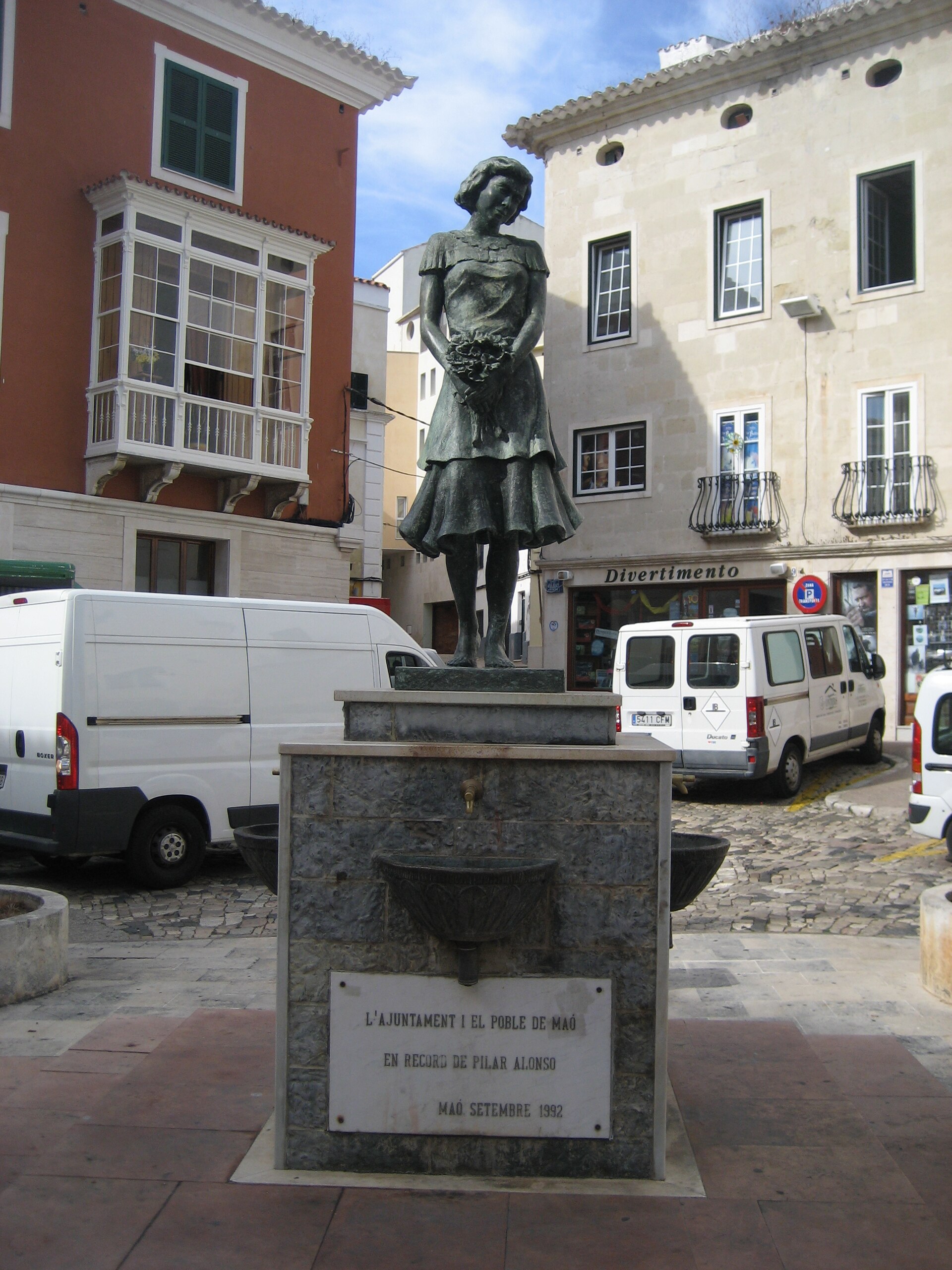
The monument to Pilar Alonso i Moll stands in the heart of Maó, the capital of Menorca, honoring one of the most celebrated performers of the Catalan music scene in the early twentieth century.
Who was Pilar Alonso i Moll?
Pilar Alonso was born in Maó on 15 February 1897 into a working family — her father was a barber who also played clarinet in the local orchestra, while her mother ran a hairdressing salon. It was in that very salon, at the age of twelve, that Pilar began singing popular cuplets for the customers. Her turning point came in 1913, when she watched the famous Raquel Meller perform at the Teatre Principal in Maó; from then on, locals nicknamed her "the little Raquel." She made her stage debut at fifteen in Mallorca, then moved with her father to Barcelona, where she first performed at the Teatro Eldorado in 1917. Between 1919 and 1925, at the peak of her career, she took the stage at the prestigious Teatre Tívoli and Teatre Lara, and record labels of the era captured her voice on 129 sides across 64 records. She helped popularize Catalan cuplets such as "Remena, nena," "El vestit d'en Pasqual" and "La Marieta de l'ull viu." She retired from performing in 1926 to get married and never returned to the stage. She died in Madrid on 27 May 1980.
Where is the monument located?
The sculpture dedicated to the singer was unveiled in 1992 on Plaça Colón in Maó, as part of the city's walking route through the historic center. The square sits just a few minutes on foot from the harbor and the main shopping streets, making it an easy stop to fold into any stroll through the old town.
What can you see there?
The monument was created by sculptor Francesc Vilà. Its composition evokes the singer's figure in stage costume, reminding passers-by of an era when cuplet performances were among the most popular forms of entertainment in Barcelona and across the Balearic Islands. It's worth pausing here for a moment and linking the visit with the rest of the heritage trail through Maó's historic center, since several other stops on the same walking route lie nearby.
When is the best time to visit?
The square is open year-round, at any hour, with no entry fees or restrictions. Early morning or late afternoon are the most pleasant times to walk through, when the sun is gentler and the town center is quieter than during peak season (July–August). In autumn and spring, Maó tends to be calmer overall, making it easier to photograph the monument and the surrounding architecture without crowds.
Frequently Asked Questions
Who was Pilar Alonso i Moll? A Menorcan-born singer of Catalan cuplet, regarded as one of the genre's leading performers between 1919 and 1925.
Where exactly is the monument? On Plaça Colón in the center of Maó, part of the city's heritage walking route.
Who created the monument and when? The sculpture is the work of Francesc Vilà, unveiled in 1992.
Is there a fee to visit? No, the square is freely accessible at all times.
Nearby places

Earn badges for the places you visit
Download NextOnTrip, discover new places and check off your trails.