About this place
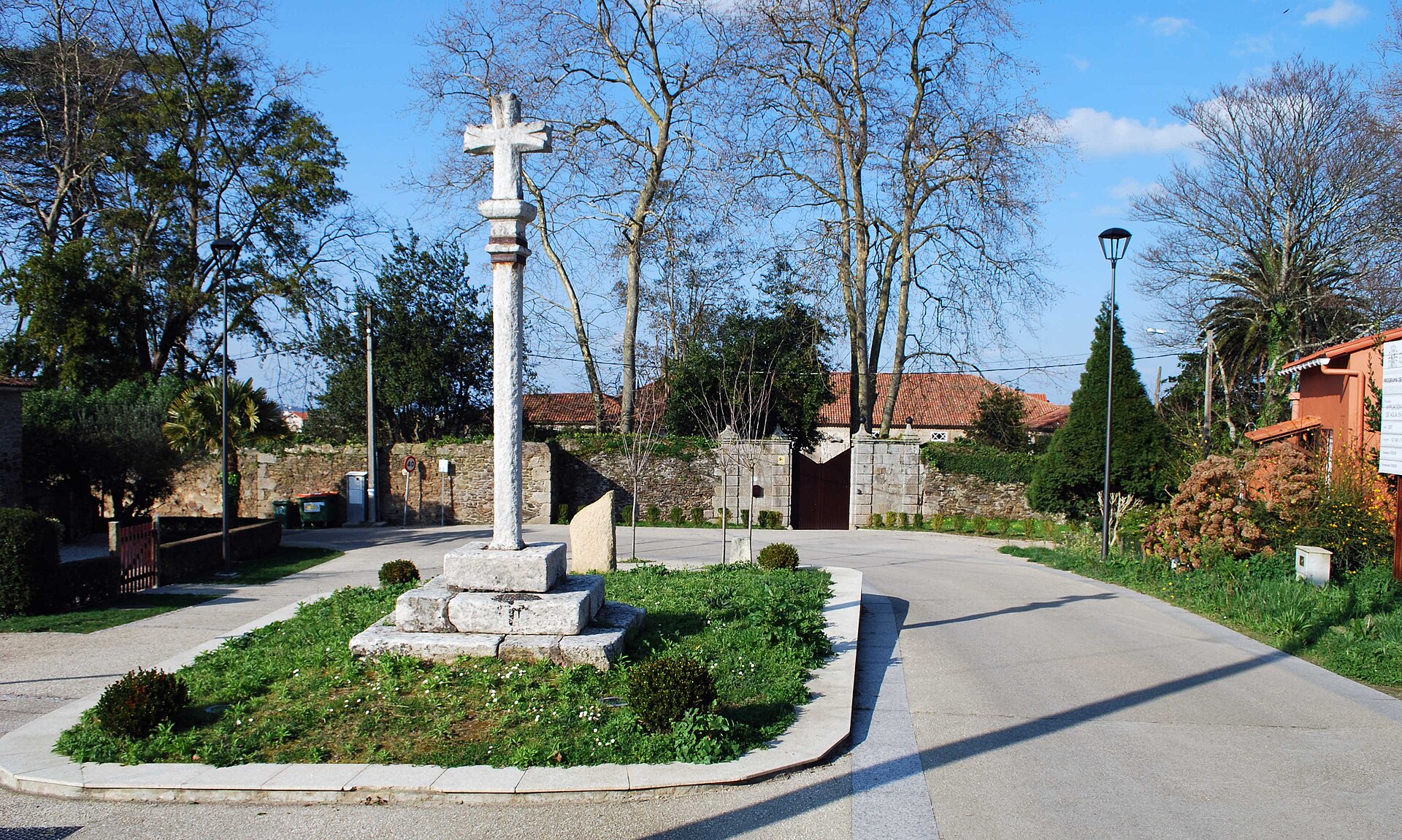
Pazo de Quembre is a 19th-century Galician manor house standing on the bank of the River Barcia, in the parish of Quembre (San Pedro de Quembre), in the municipality of Carral, province of A Coruña. It's one of those quiet corners of inland Galicia where the stone architecture of the rural gentry blends into the pastures and valleys of the As Mariñas area.
What kind of place is this?
Also known locally as Pazo da Ribeira, this manor is a classic example of the neoclassical country-house style that spread across Galicia in the 19th century. The building follows a rectangular floor plan, and its windows are framed with segmental arches — a detail typical of pazos from that era. On the rear façade, an 18th-century coat of arms survives, attributed to the Salazar and Alvarado families, hinting at noble roots that predate the current structure.
The River Barcia runs through the estate, giving the property a natural landscape axis — a common feature of pazos, which were traditionally built in close relationship with land and water, the backbone of the rural Galician nobility's economy.
How do you get to Pazo de Quembre?
The manor sits in the hamlet of A Ribeira, within the parish of Quembre, one of eight parishes making up the municipality of Carral. Carral itself is in the province of A Coruña, part of the As Mariñas tourist area, a short drive — usually 20 to 30 minutes — from the provincial capital. The pazo also lies along the Camino Inglés (English Way), one of the historic pilgrim routes to Santiago de Compostela, making it a natural landmark for pilgrims walking this stretch.
What can you see there?
The main draw at Pazo de Quembre is the architecture itself: the compact rectangular silhouette, the segmental-arched windows, and the carved coat of arms on the rear wall. It represents a more modest but genuine pazo, without the elaborate flourishes of some of the region's more famous manors. The setting — the Barcia river valley and the rural landscape of Quembre parish — completes the picture of a typical Galician country estate.
The pazo is listed as part of Galicia's civil cultural heritage, which underscores its historical value for the region, even though it isn't set up with the kind of visitor infrastructure you'd find at larger monuments.
When should you visit?
Spring and early summer (April to June) are the best months, when Galicia's countryside is at its greenest and temperatures are comfortable for walking around the area. Autumn (September–October) is another solid choice, with less rain than winter and mild weather. Galicia has a fairly humid climate overall, so it's worth coming prepared for changeable weather regardless of the season.
Frequently asked questions
Can you visit the inside of Pazo de Quembre? Available sources don't confirm regular opening hours for interior visits. This is mainly a site to view from the outside, as part of a walk through Quembre parish.
What's the difference between a pazo and a castle? A pazo is the classic Galician form of a noble or landowning manor house, typically tied to agricultural estates, unlike castles, which were built for defense. Pazo de Quembre is a clear example of this residential rather than military tradition.
Is Pazo de Quembre on the Camino de Santiago? Yes, it lies along the Camino Inglés (English Way), one of the historic pilgrim routes to Santiago de Compostela, making it visible to pilgrims passing through the municipality of Carral.
What else can you see in Carral? Besides Pazo de Quembre, the municipality of Carral has several other pazos scattered across its eight parishes, along with the Barcia river valley, an appealing spot for anyone drawn to quiet, rural Galicia.
Nearby places

Earn badges for the places you visit
Download NextOnTrip, discover new places and check off your trails.