About this place
Pazo de Ferraces is an 18th-century Galician manor house standing in the hamlet of Ferraces, within the parish of San Cristovo de Corneira, in the municipality of A Baña, province of A Coruña. It belongs to the wide family of pazos scattered across rural Galicia — stone manor houses that for centuries served as seats of local gentry and stand today as markers of the region's old landed wealth.
How do you get there?
A Baña sits inland from Costa da Morte, roughly halfway between Santiago de Compostela and the Atlantic coast. A car is by far the easiest way in — the drive from Santiago takes well under half an hour along small local roads that cut through classic Galician countryside: eucalyptus groves, stone fences, scattered hamlets. Ferraces itself is a small settlement inside the Corneira parish, next to the hamlet of Agromayor. Most visitors combine the trip with a wider loop through A Baña, since several other pazos and parish churches lie within a short drive.
What will you see?
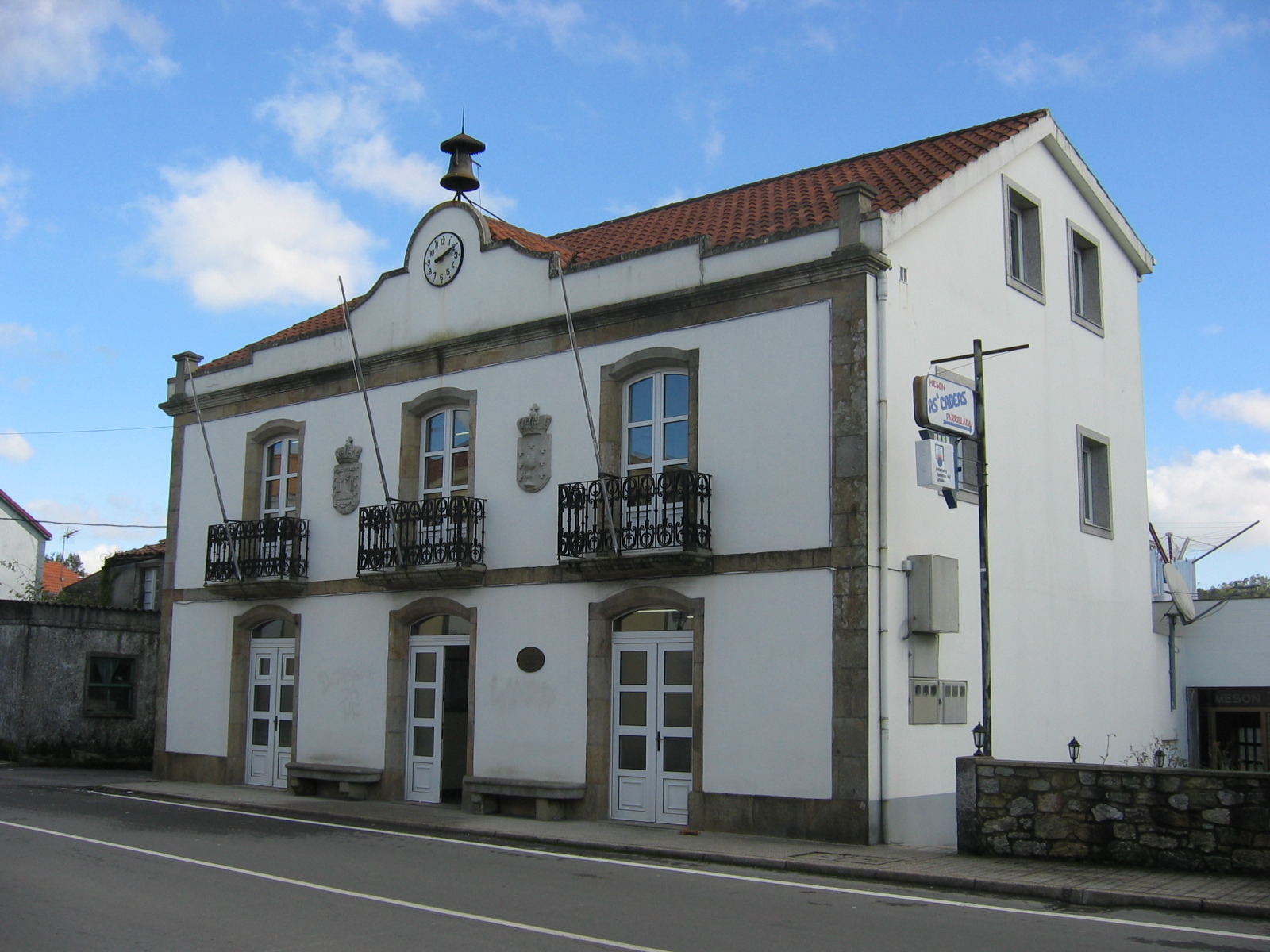
The building follows a rectangular floor plan with a rounded volume added to one side — a layout typical of Galician manor architecture that softens what would otherwise be a plain rectangular block. On the main facade a covered entrance porch survives, reached by an external staircase, and above the doorway sits a lintel dating back to the 16th century, carved with a relief and an inscription — a trace of an earlier structure that once stood on the same site before the current pazo was built.
A dovecote (palomar) also belongs to the complex; it now stands in ruin but is still clearly recognizable on the grounds. Better preserved are the covered corridor linking the living quarters to the outbuildings, the stone arches, and a family coat of arms mounted above the entrance — the traditional way pazo owners marked which lineage the estate belonged to.
One thing to know before visiting: Pazo de Ferraces is private property and its interior is not open to the public. What you can do is walk the road running through Ferraces and take in the building from the outside — the facade, porch, lintel, and coat of arms are all clearly visible from street level.
When should you visit?
Since the visit is strictly an outside-in affair, late spring through summer is the most rewarding window: long daylight hours and the lush green typical of Galicia's damp climate make for the best backdrop. Morning light works best for photographing the stone facade, and it also means less traffic on the narrow approach roads. Autumn and winter in this part of Galicia bring frequent rain, which makes an unhurried walk around the village less pleasant.
Around the area
A Baña is a rural municipality where pazos, wayside chapels, and stone crosses (cruceiros) form a dense network of heritage sites spread across its parishes. A visit to Pazo de Ferraces pairs naturally with a stop in the neighboring hamlets of Corneira and Agromayor, both home to further examples of Galician manor and religious architecture. The area sees relatively few tourists — which, for travelers after an unpolished, authentic slice of Galicia, is very much part of the appeal.
Frequently asked questions
Can you go inside Pazo de Ferraces? No — it's private property and the interior isn't open to visitors. You can only view the building from the outside.
How old is the building? The current pazo dates to the 18th century, though a 16th-century carved lintel survives above the entrance, a remnant of an earlier structure on the same site.
What's the most distinctive architectural feature? The rectangular floor plan with a rounded volume added to one side, the covered entrance porch reached by an external staircase, the stone arches, and the family coat of arms above the door.
What's the best way to reach Ferraces? By car from Santiago de Compostela — the drive takes about half an hour along local roads through the A Baña municipality.
Nearby places

Earn badges for the places you visit
Download NextOnTrip, discover new places and check off your trails.