About this place
Pazo da Carballeira de Gandarón is a baroque manor house (pazo) in Pontevedra, Galicia, in northwestern Spain. Standing in the parish of Salcedo, the building has served for nearly a century as the seat of one of Spain's oldest research institutions.
Where is Pazo da Carballeira de Gandarón located?
The pazo stands in the hamlet of A Carballeira, in the parish of Salcedo, just off the N-550 road connecting Pontevedra and Vigo, roughly seven kilometres from the centre of Pontevedra. Its coordinates are 42°24′18″N, 8°38′38″W. Salcedo is known for several pazos and traditional Galician rural architecture, making the area a worthwhile stop for anyone exploring the countryside of the Rías Baixas region.
Who built the manor, and when?
The pazo was erected at the end of the 18th century on the initiative of Archbishop Sebastián Malvar y Pinto, who was born in this very parish. He was known locally as the "building archbishop" for the number of architectural projects he financed across the region. In the mid-19th century the estate passed to Jerónimo Malvar y Taboada, who is credited with restoring the building and laying out the garden that still surrounds it.
What does the architecture look like?
The building follows the baroque style typical of Galician noble residences of its period. Its façade features two balconies with ornately worked iron railings and several entrance doors. At the rear stands a chapel, reached through a portico formed by three arches. Inside, the pazo rises across three floors linked by a stone staircase up to the first landing, continuing in wood for the remaining flights. The salon and dining room retain two French-style fireplaces carved from white marble — one decorated with relief work, the other plain.
What else is worth seeing on the grounds?
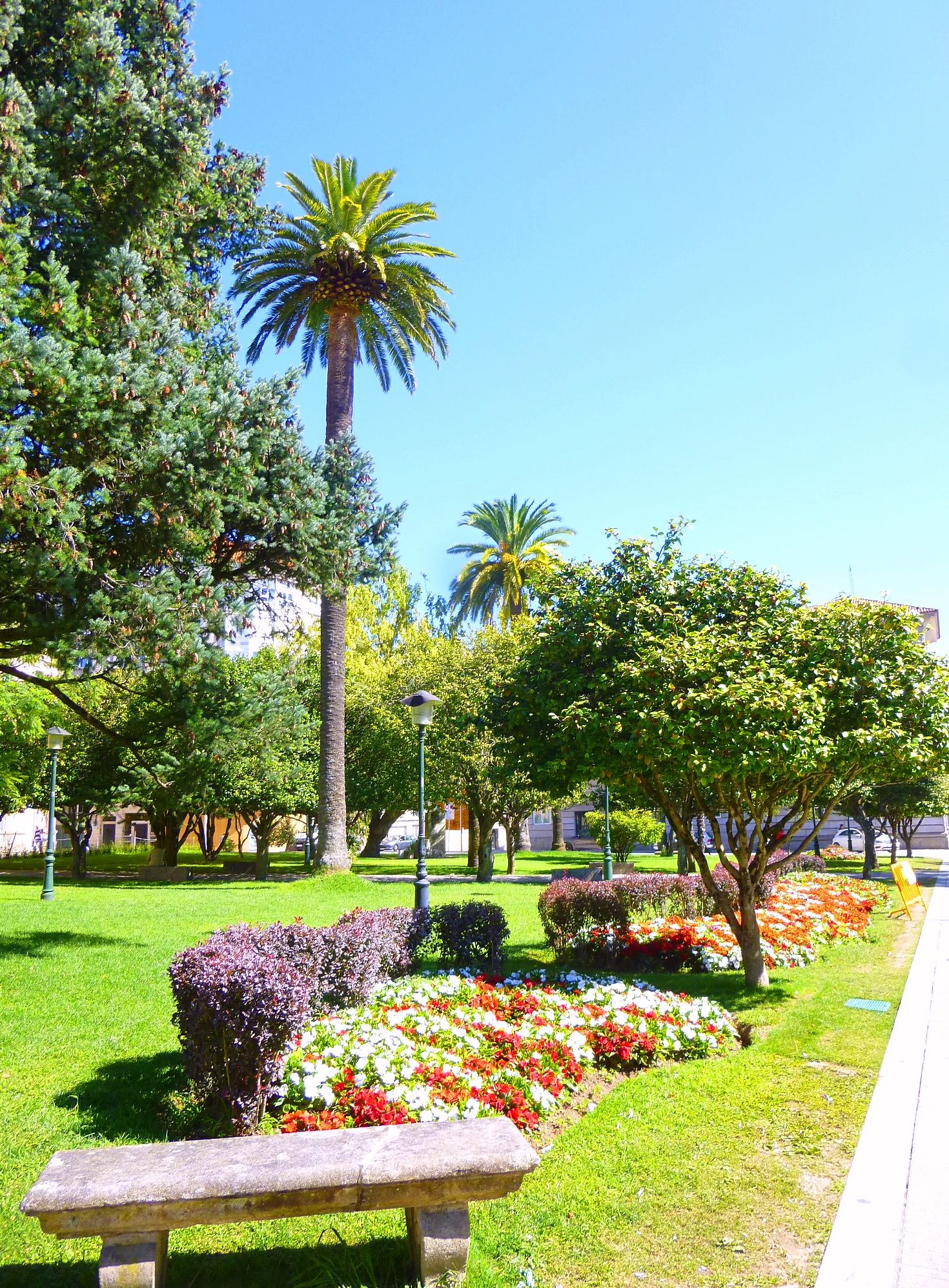
The estate includes a stone hórreo, the raised granary typical of Galicia, considered one of the finest examples of stonework craftsmanship from the Pontevedra area. Nearby stands a dovecote built on a square base. The garden surrounding the pazo, laid out in the 19th century, completes the picture of a classic Galician country estate with its working outbuildings.
What is the pazo used for today?
Since 1928 the building has housed the Misión Biológica de Galicia (Biological Mission of Galicia), a research institute belonging to the Consejo Superior de Investigaciones Científicas (CSIC), Spain's national research council. The institution was founded in 1921 by the Junta para la Ampliación de Estudios. Since 1970, modern laboratories have occupied a separate, purpose-built structure designed by architect Alejandro de la Sota Martínez, one of the most significant Spanish architects of the 20th century.
Frequently Asked Questions
Can visitors go inside the pazo? The building is an active CSIC research facility, so interior access may be limited to research purposes. Check with Pontevedra's local tourist office before planning a visit.
How do you get there from central Pontevedra? The pazo sits just off the N-550 towards Vigo, about seven kilometres from the city centre, in the parish of Salcedo.
What architectural style is the building? It is a baroque noble residence typical of late-18th-century Galician pazos, notable for its wrought-iron balconies and the chapel with its triple-arched portico.
Why is this pazo historically significant? It carries two layers of history: it was once the country residence of Archbishop Malvar y Pinto, and since 1928 it has been the headquarters of the Misión Biológica de Galicia, one of Spain's oldest and most respected research institutions in biology and agronomy.
Nearby places

Earn badges for the places you visit
Download NextOnTrip, discover new places and check off your trails.