About this place
Parque del Ebro is the largest city park in Logroño, stretching along the right bank of the Ebro River just north of the old town. The city reclaimed this riverside land in 1993, immediately turning it into the green lung of the La Rioja capital — today it covers more than 153,000 square meters of meadows, tree-lined paths and rest areas, linked with the neighboring Parque de la Ribera and Parque del Iregua into one continuous green belt running eight kilometers, from El Cubo park all the way to the mouth of the Iregua.
How do you get there?
The park effectively begins on Calle Sagasta, right next to the Church of Santiago, which offers a sweeping view over the whole river valley. That's the easiest starting point if you're walking from the old town — from the Puente de Piedra (Stone Bridge) it's only a few minutes on foot. You can also enter on foot or by bike near the iron bridge (Puente de Hierro), further east. Drivers will find the closest parking around both bridges, since the park itself has no internal roads for cars — it's a pedestrian and cycling-only space.
What will you see?
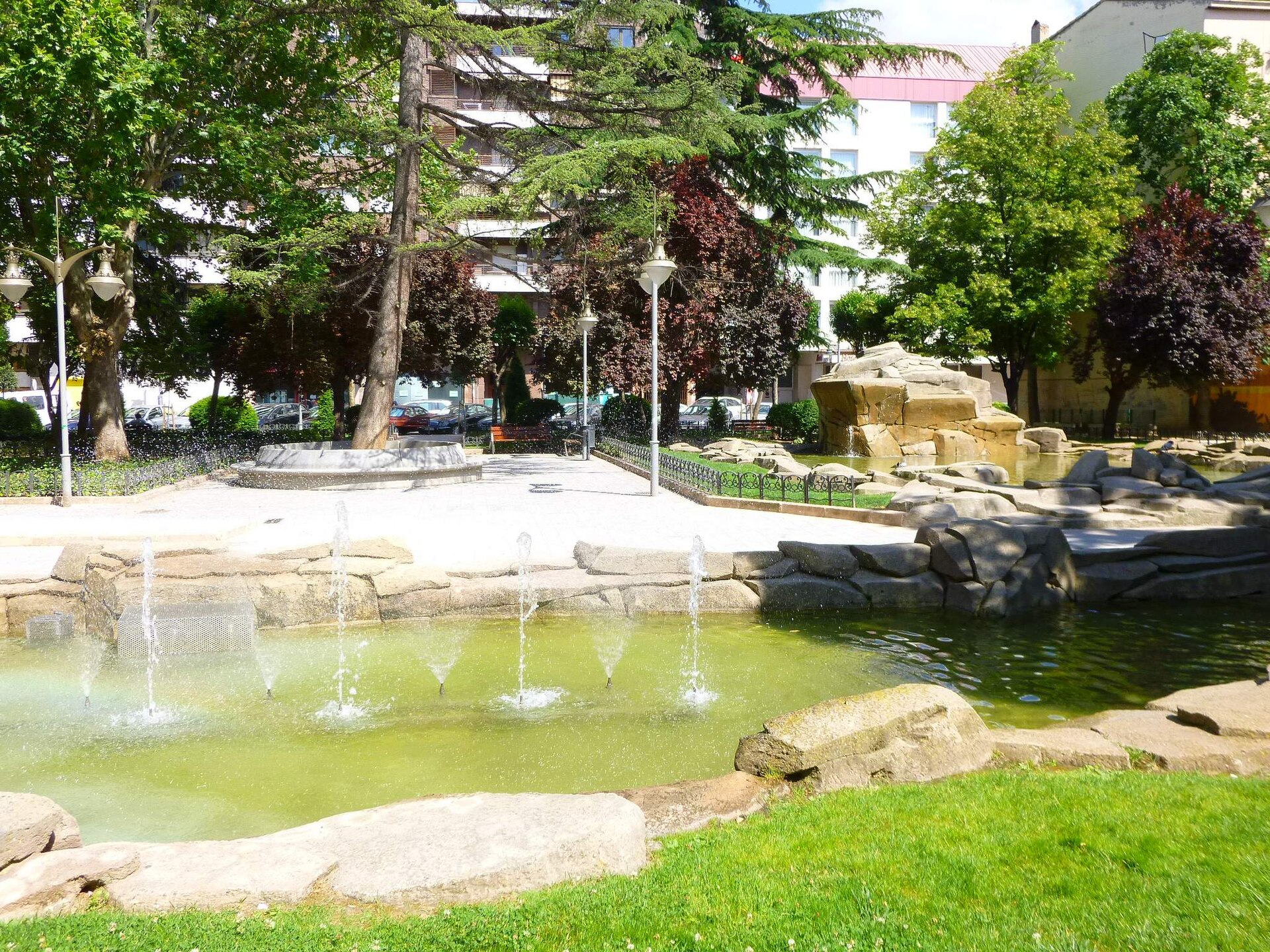
The park splits into two distinct zones. Closer to the river lies a floodable area of around 70,000 square meters — a wilder, less manicured stretch planted with poplars, willows, birches and ash trees typical of riverbank vegetation. Further inland, starting at the stone bridge, is the non-floodable section: broad lawns, walking paths, a bar by a small pond, children's play areas and a chimney where storks nest every year.
One of the park's landmark features is the mirador, a viewpoint reached by a wide staircase, giving a panoramic look over the river and the iron bridge. It's also worth tracking down the large outdoor snakes-and-ladders-style board, which allegorically depicts the stages of the Camino de Santiago — fittingly, since the park sits right on the pilgrim route.
The Puente de Hierro, or Iron Bridge, is the oldest of Logroño's bridges over the Ebro — opened in 1882, it runs 330 meters and is painted its trademark red. Locals also call it the Sagasta Bridge, after Práxedes Mateo Sagasta, the La Rioja-born statesman who pushed through many of the region's public works projects.
When should you visit?
Spring and autumn are the best seasons for a walk — the riverside trees turn brilliant colors and temperatures stay comfortable for long strolls or bike rides. In summer, the park works as the city's natural air conditioning: shade and proximity to the water draw crowds looking to cool off, especially in the late afternoon and evening. Winter is quieter, which makes it a good time to take an unhurried look at the iron bridge and the viewpoint without the crowds.
Frequently Asked Questions
Is Parque del Ebro suitable for children? Yes, the non-floodable section has play areas and wide stretches of lawn, ideal for picnics or simply letting kids run around outdoors.
Can you reach the park without a car? Easily — the park starts just a few minutes' walk from the old town, by the Church of Santiago, and is well connected by bike paths.
What is the Puente de Hierro and is it worth seeing? It's the oldest bridge over the Ebro in Logroño, opened in 1882 and also known as the Sagasta Bridge. Its red iron structure is one of the city's landmarks and a great spot for photos.
Does the park connect to the Camino de Santiago? Yes, the pilgrim route passes through this area, and the park features a board game referencing the stages of the Camino, while the nearby Church of Santiago has a mosaic dedicated to the pilgrimage.
Nearby places

Earn badges for the places you visit
Download NextOnTrip, discover new places and check off your trails.