About this place
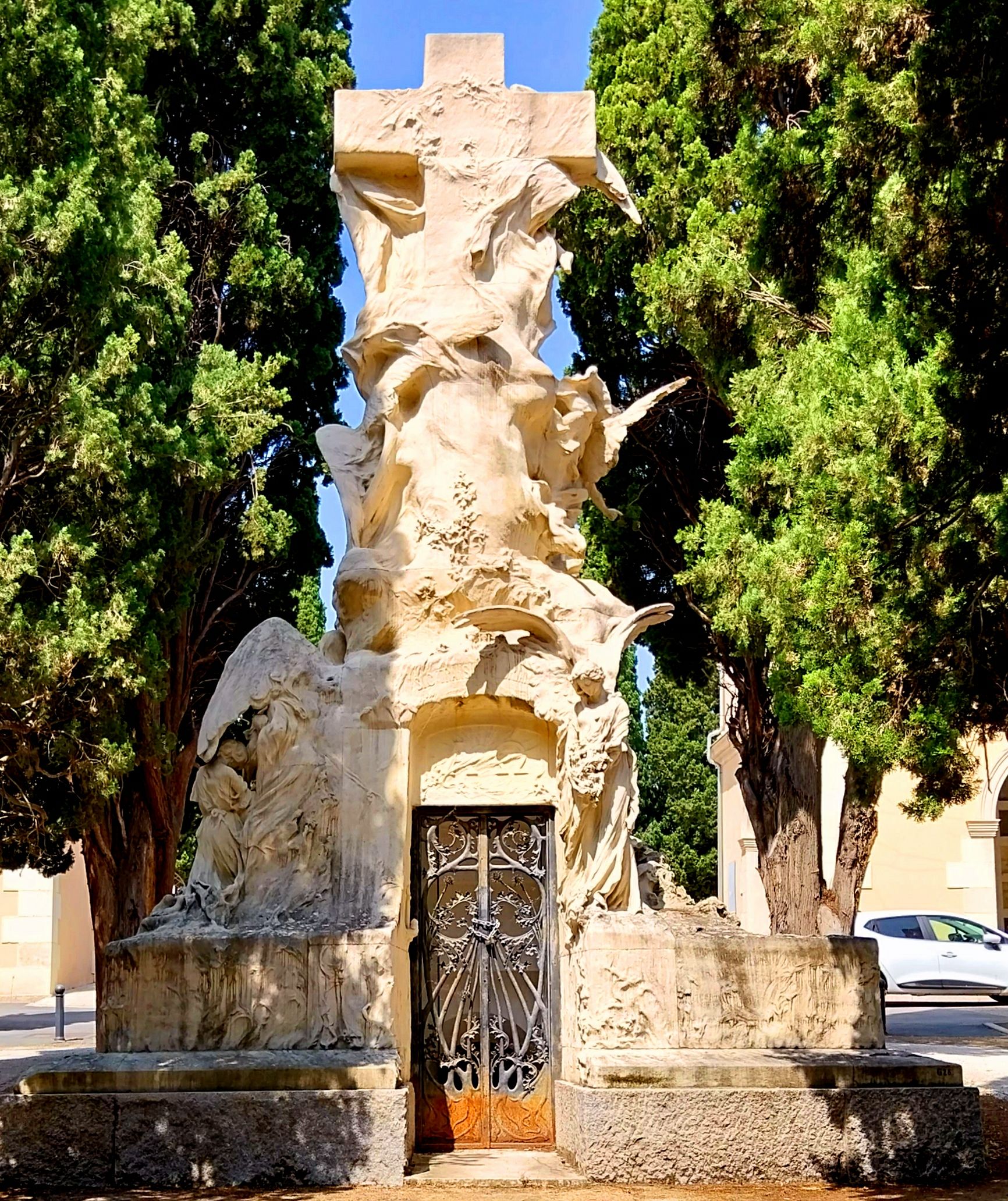
Panteón Perinat is one of the most recognizable family mausoleums in the Sacramental Cemetery of San Isidro, in Madrid's Carabanchel district. Commissioned by the Marquise Perinat, the tomb was designed in 1897 by architect Enrique Fort y Guyenet. Among the hundreds of family vaults in this nineteenth-century necropolis, this one stands out thanks to a sculpture that has become one of the cemetery's best-known landmarks.
What will you see at the Panteón Perinat?
At the entrance to the vault stands a life-size marble figure known as the "Angel of Silence" (Ángel del Silencio). It was carved in the early twentieth century by Luis Perinat, the Marquise's own son, as a final tribute to his late mother. The angel was unveiled at the National Sculpture Exhibition in 1906 and has since become one of the most photographed pieces in San Isidro cemetery. The figure's gesture — a finger raised to the lips — gives the composition an unusually intimate quality, rarely found in funerary art of that era.
The sculpture's condition is worth noting. During the Spanish Civil War the statue was vandalized, losing an arm and a foot. Both were later restored as part of conservation work carried out by the brotherhood that manages the cemetery, so today the Angel of Silence appears close to its original form.
How do you get there?
The mausoleum sits within the grounds of the Sacramental Cemetery of San Isidro, one of Madrid's oldest and most representative burial sites, located in the southern district of Carabanchel. The cemetery is open to visitors during regular opening hours and no advance booking is needed to walk its grounds. Given the size of the site and the density of tombs, it helps to bring a cemetery map or follow the signage along the main avenues.
Why visit San Isidro?
Through the nineteenth century, San Isidro cemetery became the preferred resting place for Madrid's aristocracy, politicians, wealthy merchants, and artists. The Perinat mausoleum is one of many richly decorated family tombs built here during that period, and it illustrates well how affluent families expressed mourning through funerary art at the turn of the twentieth century. A walk through the cemetery reveals neo-Gothic chapels, classical mausoleums, and Art Nouveau sculptures side by side.
When should you go?
Weekday mornings or early afternoons are the best time to visit, when the cemetery grounds are quiet and well suited to photography and quiet reflection. It's worth avoiding November 1st (All Saints' Day), when the cemetery draws far more visitors bringing flowers to family graves.
Frequently asked questions
Where exactly is the Panteón Perinat located? Inside the Sacramental Cemetery of San Isidro, in Madrid's Carabanchel district.
What is the Angel of Silence? A life-size marble sculpture by Luis Perinat, son of the Marquise Perinat, created as a tribute to his late mother and first shown at a sculpture exhibition in 1906.
Was the mausoleum ever damaged? Yes — during the Spanish Civil War the statue lost an arm and a foot; both were later restored.
Is entry to the cemetery free? Yes, San Isidro cemetery is open to the public free of charge during opening hours, with no reservation required.
Nearby places

Earn badges for the places you visit
Download NextOnTrip, discover new places and check off your trails.