About this place
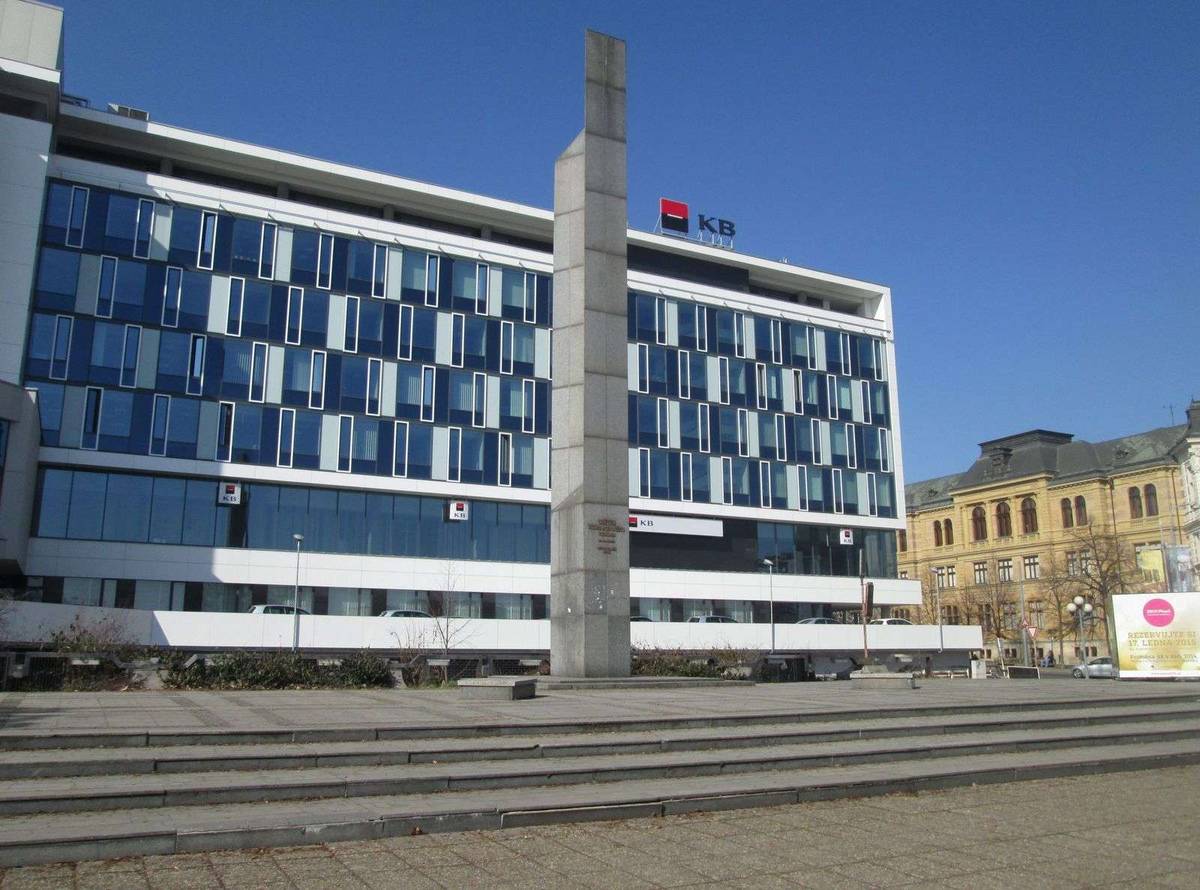
Památník československo-sovětského přátelství (Memorial to Czechoslovak-Soviet Friendship) stands on the Anglické nábřeží (English Embankment) in Plzeň, next to a bridge over the Radbuza River, near Americká street. It was built during the communist era to express the official narrative of alliance between Czechoslovakia and the Soviet Union, and after 1989 part of its meaning was reworked.
Who designed the memorial and when was it built?
The project originated in the mid-1970s. The sculpture is the work of Rudolf Svoboda, with the architectural design credited to Miloslav Sýkora. Construction was completed in 1985. The monument is built from granite and bronze, giving it the heavy, monumental look typical of public memorials from that period.
What does it show, and what do the inscriptions say?
The front side carries the text "ČESKOSLOVENSKO SOVĚTSKÁ SMLOUVA 1943 / KVĚTEN 1945" — a reference to the Czechoslovak-Soviet treaty signed in 1943 and to May 1945, the end of the Second World War in Europe. The reverse side lists the names "DUKLA SOKOLOVO BUZULUK / PLZEŇ SVERDLOVSK." The first three names refer to places associated with Czechoslovak military units that were formed and fought alongside the Red Army during the war, while the second pair refers to the twin-city relationship between Plzeň and Sverdlovsk (present-day Yekaterinburg) during the era of the Eastern Bloc.
What changed after 1989?
Following the fall of communism, one of the symbols present in the original design was removed from the structure. At the initiative of the city of Plzeň and the Confederation of Political Prisoners, the rear part of the memorial was converted into a site commemorating victims of communist terror. As a result, the same monument now carries two layers of meaning: the original one glorifying the alliance with the USSR, and a later one honoring victims of the communist regime's repression. A separate monument dedicated to victims of communist terror also stands nearby.
Is the memorial's future still debated?
Yes. City officials in Plzeň have repeatedly revisited the question of what to do with the memorial in its current form, weighing removal, further transformation, or leaving it unchanged. This debate mirrors a broader, nationwide discussion in the Czech Republic about how to handle monuments from the communist era that remain in public space.
Is it worth visiting?
The memorial is not a conventional tourist attraction with visitor infrastructure or a marked route, but it makes for an interesting stop for anyone interested in 20th-century history and in how Central European cities handle the legacy of communism. Anglické nábřeží is within easy walking distance of Plzeň's city center, so a look at the memorial can easily be combined with a stroll along the riverside boulevards.
Frequently asked questions
Where exactly does the memorial stand?
On Anglické nábřeží in Plzeň, next to a bridge over the Radbuza River, near Americká street.
Who created the memorial?
The sculpture was designed by Rudolf Svoboda, with the architectural design by Miloslav Sýkora. It was completed in 1985.
What material is it made of?
Granite and bronze.
What do the inscriptions mean?
The front refers to the 1943 Czechoslovak-Soviet treaty and to May 1945; the back lists places tied to Czechoslovak military units that fought alongside the Red Army, plus Plzeň's twin city, Sverdlovsk.
Did the memorial's meaning change after 1989?
Yes — at the initiative of the city and the Confederation of Political Prisoners, its rear section was turned into a memorial to victims of communist terror, and one of the original symbols was removed.
Nearby places

Earn badges for the places you visit
Download NextOnTrip, discover new places and check off your trails.