About this place
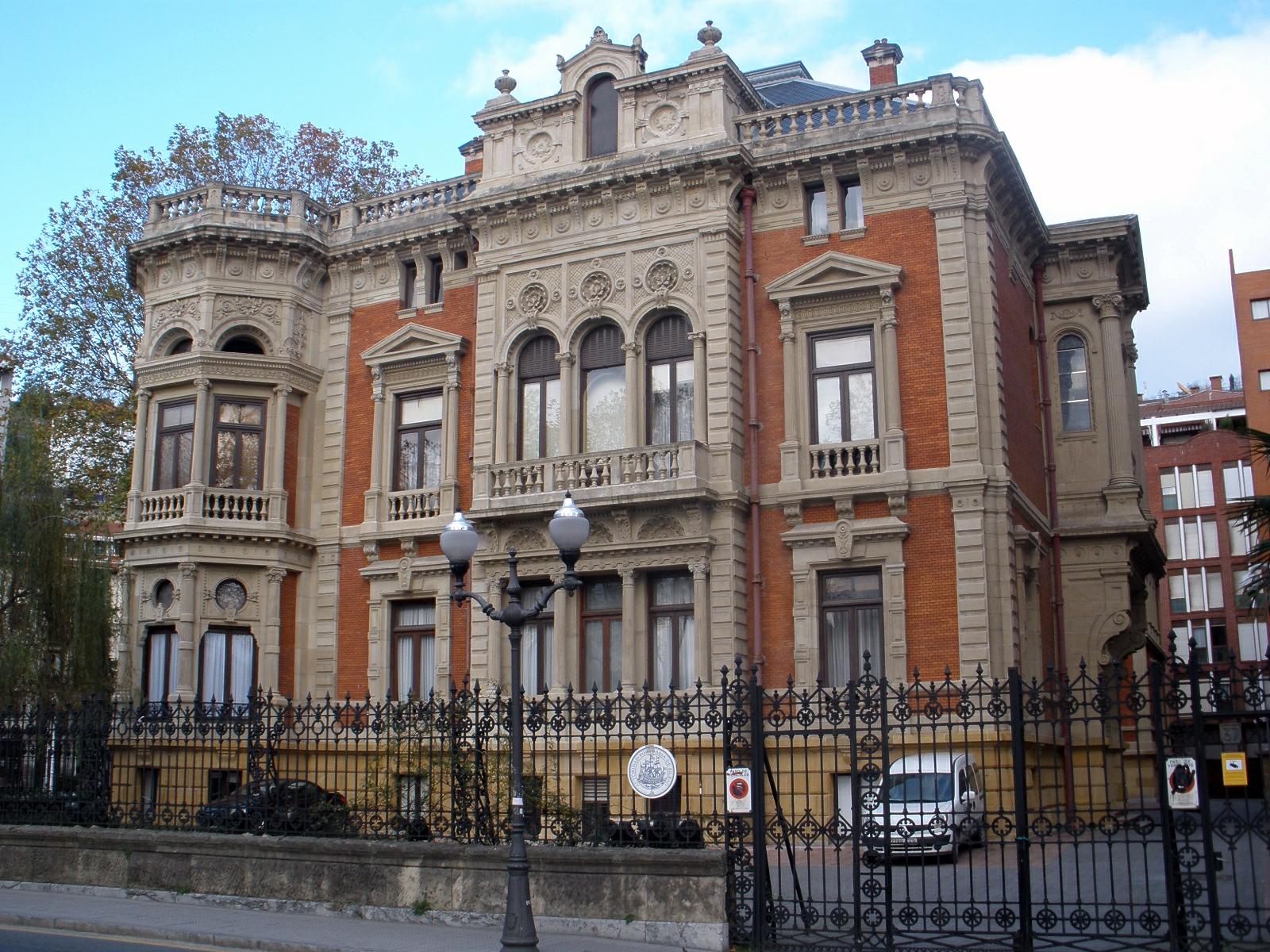
Palacio Olabarri is a 19th-century urban mansion in Bilbao, standing at Campo Volantín 37 right above the Nervión river, a short walk from the Moyúa metro station. It is one of the last surviving examples of the private residences that wealthy families built in this part of the city during the boom years of Bilbao's industrial bourgeoisie.
How do you get there?
The easiest approach is the metro to Moyúa station, followed by a few minutes' walk toward the Campo Volantín riverside promenade. The Euskotran tram also stops close to the embankment, and the palace is an easy fifteen-minute walk from Plaza Moyúa if you'd rather stroll through the Ensanche, Bilbao's grand 19th-century expansion district. Because the building sits right on the river walk, it's simple to combine a visit with a longer stroll along the water or through the surrounding boulevards.
What will you see there?
The mansion was designed in 1894 by architect Julián de Zubizarreta as a private residence for José María de Olabarri, a prominent businessman of the period. Its façade and detailing mix French and English influences, a combination typical of the elegant townhouses and small palaces that once lined Campo Volantín. The property sits on roughly 2,000 m² of land, with about 4,200 m² of built floor area in total, since the main palace is connected to a second, more functional building on Huertas de la Villa 35; the complex was expanded further in 1957.
From 1953 onward, the building served for more than seventy years as the headquarters of the Bilbao Port Authority (Junta de Obras del Puerto de Bilbao). Staff gradually relocated to new offices in Santurtzi, with the final departure completed in March 2024. In December 2023, the Port Authority sold the property to Bericato, a company linked to the Luze hotel chain, for €10,470,798 excluding VAT. The new owner plans to convert the palace into a hotel while preserving the elements protected for their architectural and historical value.
When should you visit?
Since the palace is mainly viewed from the outside as part of a walk along the riverside promenade and through the Ensanche district, spring or early autumn are the most comfortable seasons — mild enough for walking without the summer heat. Aim for daytime hours, when natural light brings out the detail of the façade and plasterwork best.
Why is Palacio Olabarri worth seeing?
It offers a rare glimpse of what residential Campo Volantín looked like before the city's later redevelopment swept most similar mansions away. The building also tells a compact story of changing use: from an industrialist's private home, through decades as a public port authority, to its upcoming life as a hotel — a transformation that mirrors Bilbao's own economic evolution.
Frequently asked questions
Can visitors go inside Palacio Olabarri? The building is currently privately owned and being converted into a hotel, so the interior is not open to the general public. It's worth checking for updates once the hotel project is completed and opens to guests.
Who built Palacio Olabarri and why? Architect Julián de Zubizarreta designed it in 1894 as a private residence for the businessman José María de Olabarri.
What architectural style does the building represent? It follows the eclectic late-19th-century residential style typical of Bilbao's affluent quarters, blending French and English design influences.
How long did the palace serve as the port authority's headquarters? From 1953 until 2024 — more than seventy years — before the building was sold and repurposed as a hotel.
Nearby places

Earn badges for the places you visit
Download NextOnTrip, discover new places and check off your trails.