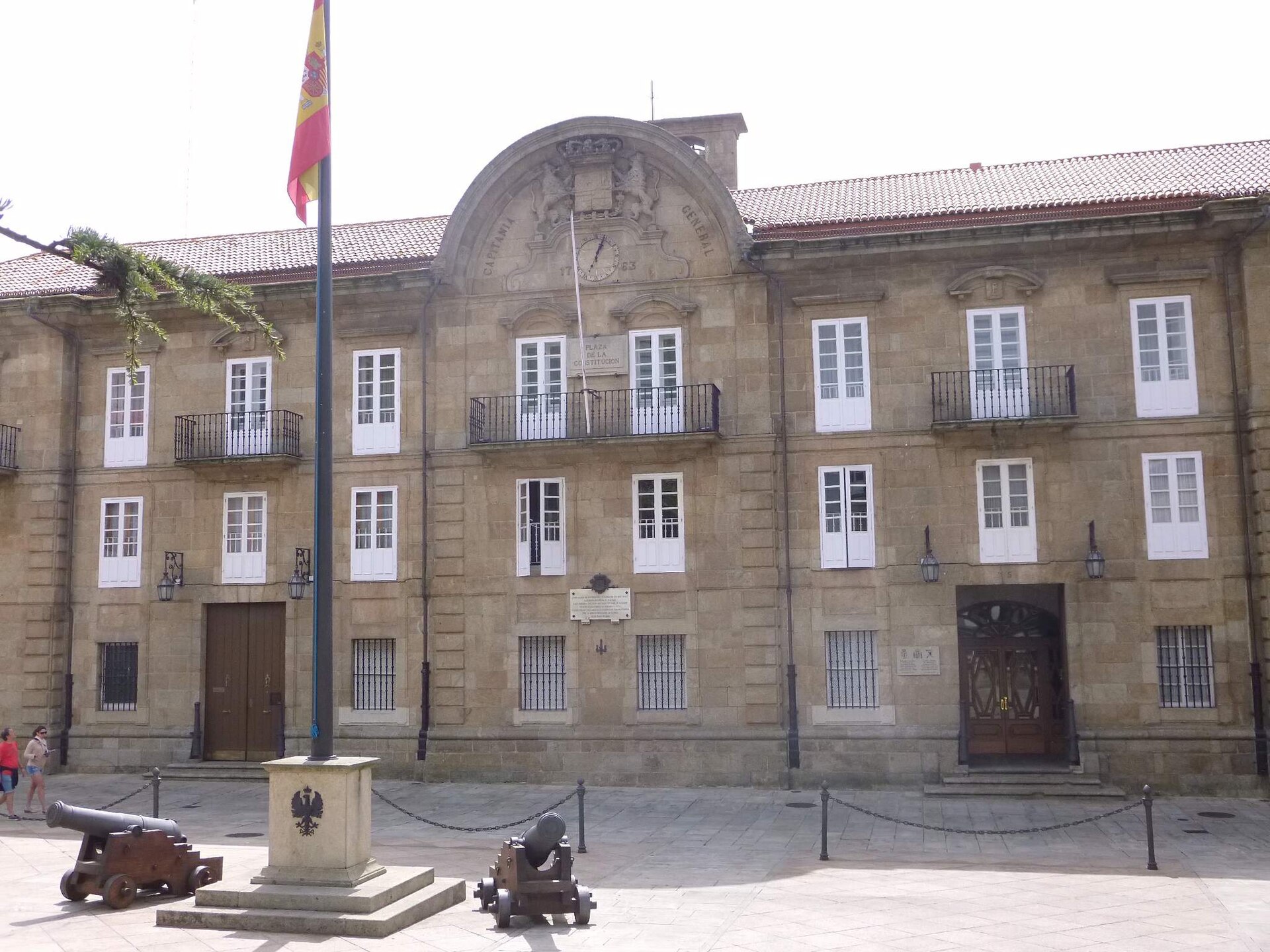
About this place
Palacio de Capitanía in A Coruña is one of the most imposing buildings in the city's old quarter, tied for well over two centuries to the military administration of Galicia. It stands in the historic core of the city, close to what is known today as Plaza de la Constitución, and its severe, classical façade makes it hard to miss on a walk through the old town.
Where does this building come from?
An earlier structure occupied the site as far back as the 16th century, but the palace visitors see today only took shape in the mid-18th century. The order to build a new headquarters came under the reign of King Fernando VI, and the new complex was meant to house both the residence of the captain general and the offices of the Real Audiencia, the royal court of the period. The original design was drawn up by Juan de Vergel, but it was Francisco Llovet who carried the construction through to completion over four years, introducing a fair number of changes along the way.
What architectural style does the palace represent?
The building is a solid example of neoclassical architecture: a symmetrical, monumental façade, evenly spaced windows, and a portal that underlines the official, representative role the building was built for. That formality was deliberate — from the outset the palace served as the seat of military authority and judicial power, so its architecture was meant to project stability and institutional weight rather than decoration for its own sake.
What historical events took place here?
The palace has witnessed several turning points in Galician history. In 1808 it was the starting point of the first Galician uprising against Napoleonic troops, as residents of A Coruña and the surrounding area rose up against French occupation, with ripples of that resistance felt across the wider region. A second dramatic episode followed in 1820, during the liberal uprising: a crowd stormed the palace, and the captain general in office at the time was seized and taken to nearby Castillo de San Antón, one of the city's most recognizable defensive fortifications, where he was held.
Does the palace still serve a purpose today?
Yes — the building remains linked to military administration and functions as an active institutional seat rather than a museum piece frozen in time. That said, free guided visits are occasionally organized, giving visitors a chance to see interiors that are normally off-limits to casual tourism. These openings tend to be tied to local cultural and educational programs aimed at both residents and visitors curious about the city's history.
Why is the palace worth seeing while visiting A Coruña?
For anyone walking through A Coruña's old town, the palace is a clear landmark, combining an architectural layer — it is one of the few large neoclassical buildings in the city — with a historical one, since it is directly tied to the turbulent events of the Napoleonic era and the liberal upheavals of 19th-century Spain. It is a good spot to pause for a moment and compare the quiet, present-day look of the square with accounts of crowds storming the palace gates two hundred years ago.
Frequently Asked Questions
Can visitors go inside the palace? The interior is not open to the public on a permanent basis, since the building still houses military administration. Free guided visits are organized from time to time, so it is worth watching local cultural listings if getting inside matters to you.
Who designed the building? The original design came from Juan de Vergel, while the four-year construction was ultimately carried out and finished by Francisco Llovet, who made his own changes to the plan.
What is the historical significance of this place? The palace is best known for two events: the outbreak of the first Galician uprising against Napoleonic troops in 1808, and the storming of the building during the 1820 liberal uprising, when the captain general of the time was captured and imprisoned.
Where exactly is the palace located? The building stands in the historic center of A Coruña, within the old town, close to today's Plaza de la Constitución — an area that is easy to reach on foot as part of a walk through the city's historic quarter.
Nearby places

Earn badges for the places you visit
Download NextOnTrip, discover new places and check off your trails.