About this place
Palacio de Bendaña o Paternina is a Renaissance-era palace in the heart of Haro, a town in the La Rioja Alta area, widely regarded as one of the most distinctive buildings in the old quarter. It stands on Plaza de la Paz, right along the line of the town's former defensive walls, and remains one of Haro's architectural landmarks.
Where does the palace stand and what does it look like?
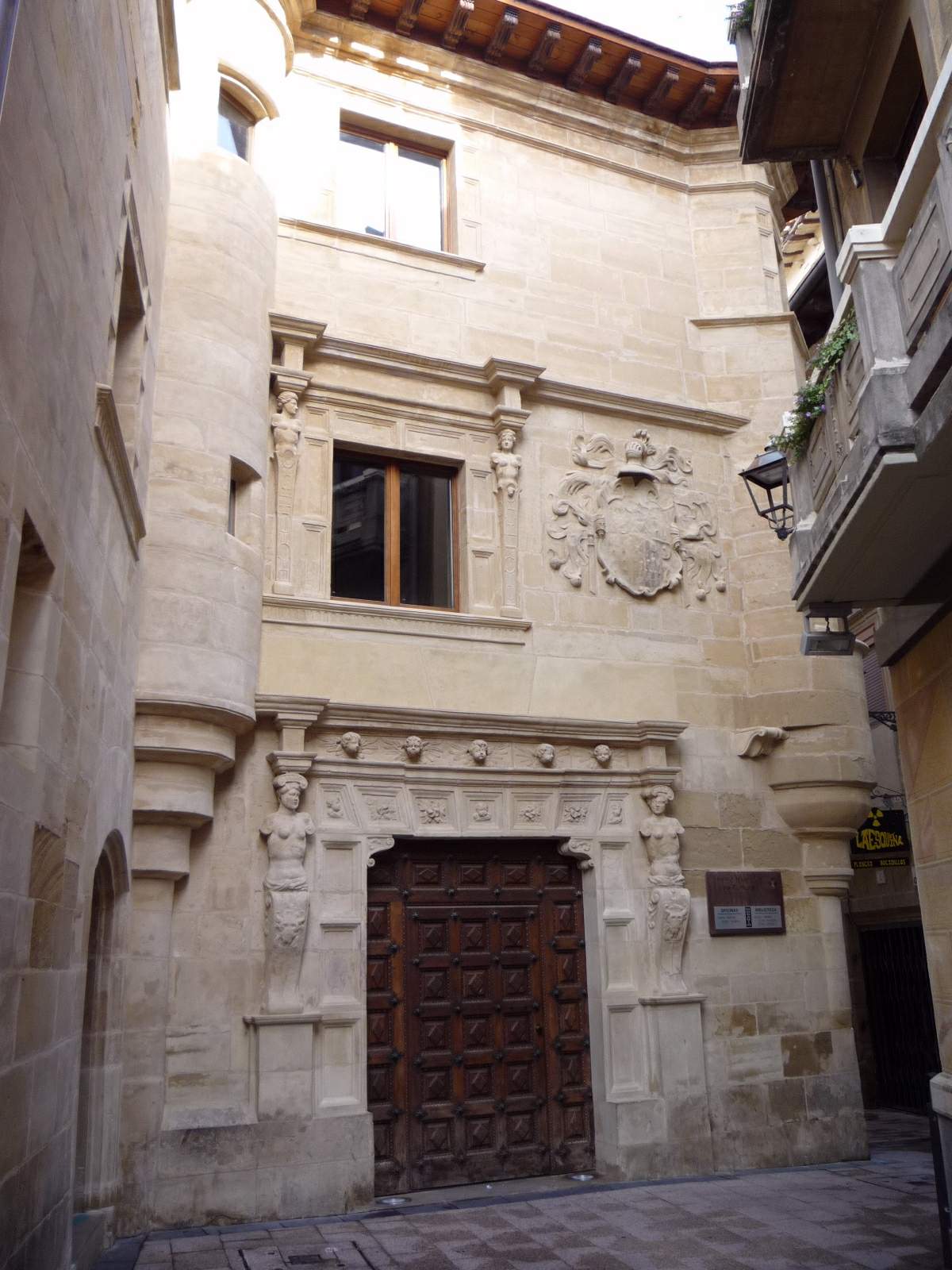
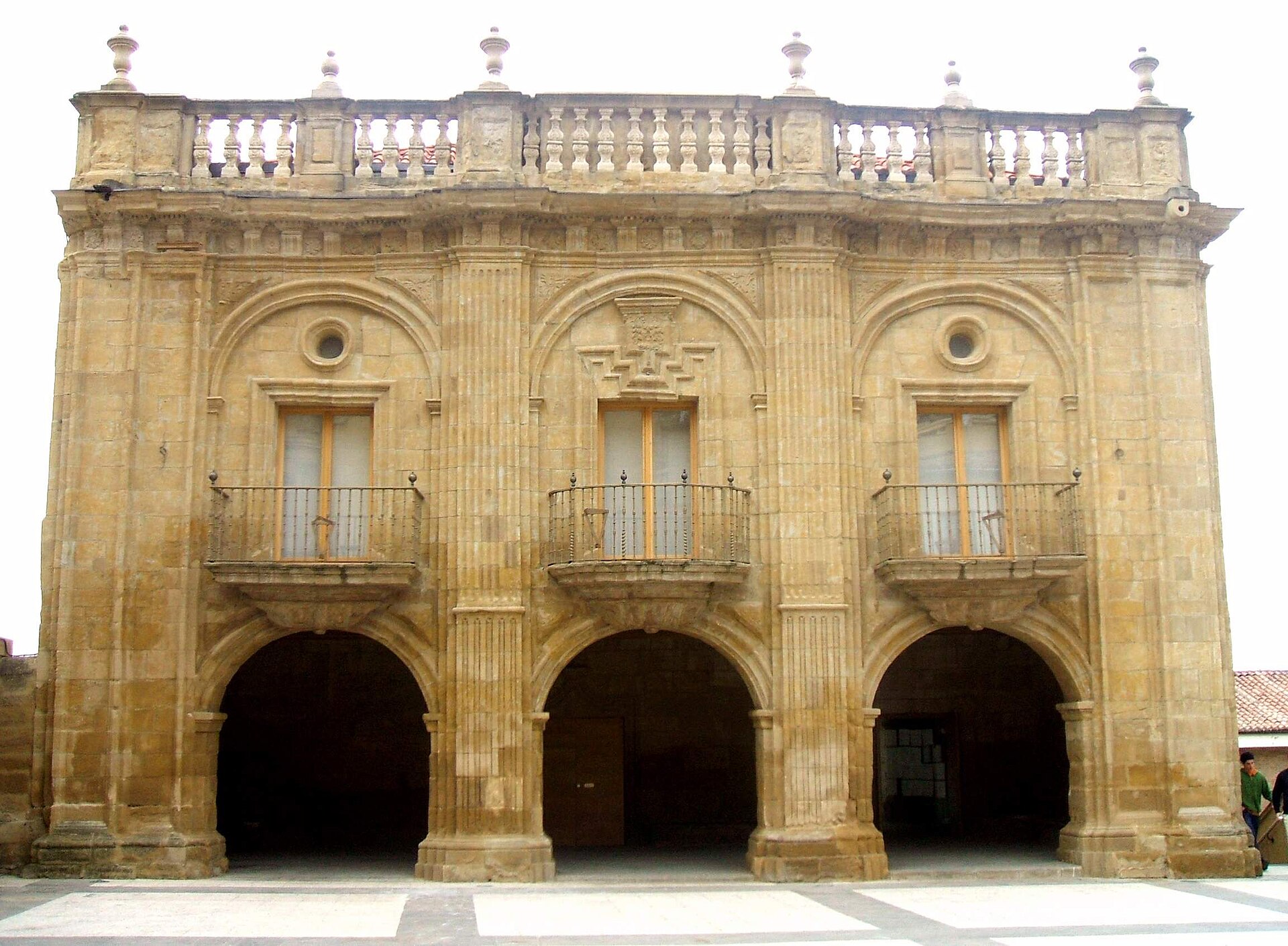
The building sits in the middle of Haro's old town, on Plaza de la Paz — one of the main stops on any walk through the historic centre. The three-storey structure, built in ashlar stone, is easy to spot thanks to two clearly different facades: one dating from the 16th century, the other added in the 18th century, so the building visibly tells the story of more than one era. Coats of arms decorate the front, alongside a frieze carved with motifs showing Islamic and Hebrew influence — an unusual combination for this part of Spain.
What makes this palace stand out among La Rioja's monuments?
The building's most striking feature is a Mudejar gallery dating back to the 15th century, making it older than the main body of the palace itself. Its decoration, built around interlacing star and floral patterns, has no equivalent anywhere else in the La Rioja region. Combined with the richly ornamented Plateresque-style facade, the gallery turns the palace into a rare example of a single building weaving together Christian, Moorish and Jewish decorative traditions.
What is the building used for today?
Over the centuries the palace shifted from a noble residence to a public building. Today its ground floor houses Haro's Municipal Tourist Office, so visitors planning to explore the town and the surrounding wine country can pick up information there while also taking in the facade and interior of the palace itself. The building is listed as a Bien de Interés Cultural (Asset of Cultural Interest), reflecting its status as one of Haro's key heritage sites.
How has the building survived to the present day?
The palace has gone through several rounds of restoration work. Earlier interventions took place in 1976 and 1981, but over time the structure needed a more thorough overhaul. Works carried out between 2010 and 2012 stabilised the building and restored the legibility of key architectural details, including the frieze and the Mudejar gallery, both of which had been suffering from gradual deterioration.
How to fit a visit into a trip to Haro?
Thanks to its location on Plaza de la Paz, the palace fits naturally into a walk through the old town, close to other historic sites in Haro's centre. Since it also houses the tourist office, it makes sense as an early stop on a visit — a good place to pick up practical information before heading out toward the bodegas and vineyards that the La Rioja Alta region is known for.
Frequently Asked Questions
Where is the Palacio de Bendaña o Paternina located? The palace stands in Haro, in the La Rioja region, on Plaza de la Paz in the town's historic centre, along the line of its former defensive walls.
From what period does the building date? The main structure and one facade date from the 16th century, a second facade was added in the 18th century, while the Mudejar gallery is even older, dating back to the 15th century.
What is inside the palace today? The ground floor houses Haro's Municipal Tourist Office, where visitors can get information about exploring the town and the surrounding region.
Is the palace a legally protected monument? Yes, it holds Bien de Interés Cultural status, and it underwent thorough restoration between 2010 and 2012, following earlier conservation work carried out in 1976 and 1981.
Nearby places

Earn badges for the places you visit
Download NextOnTrip, discover new places and check off your trails.