About this place
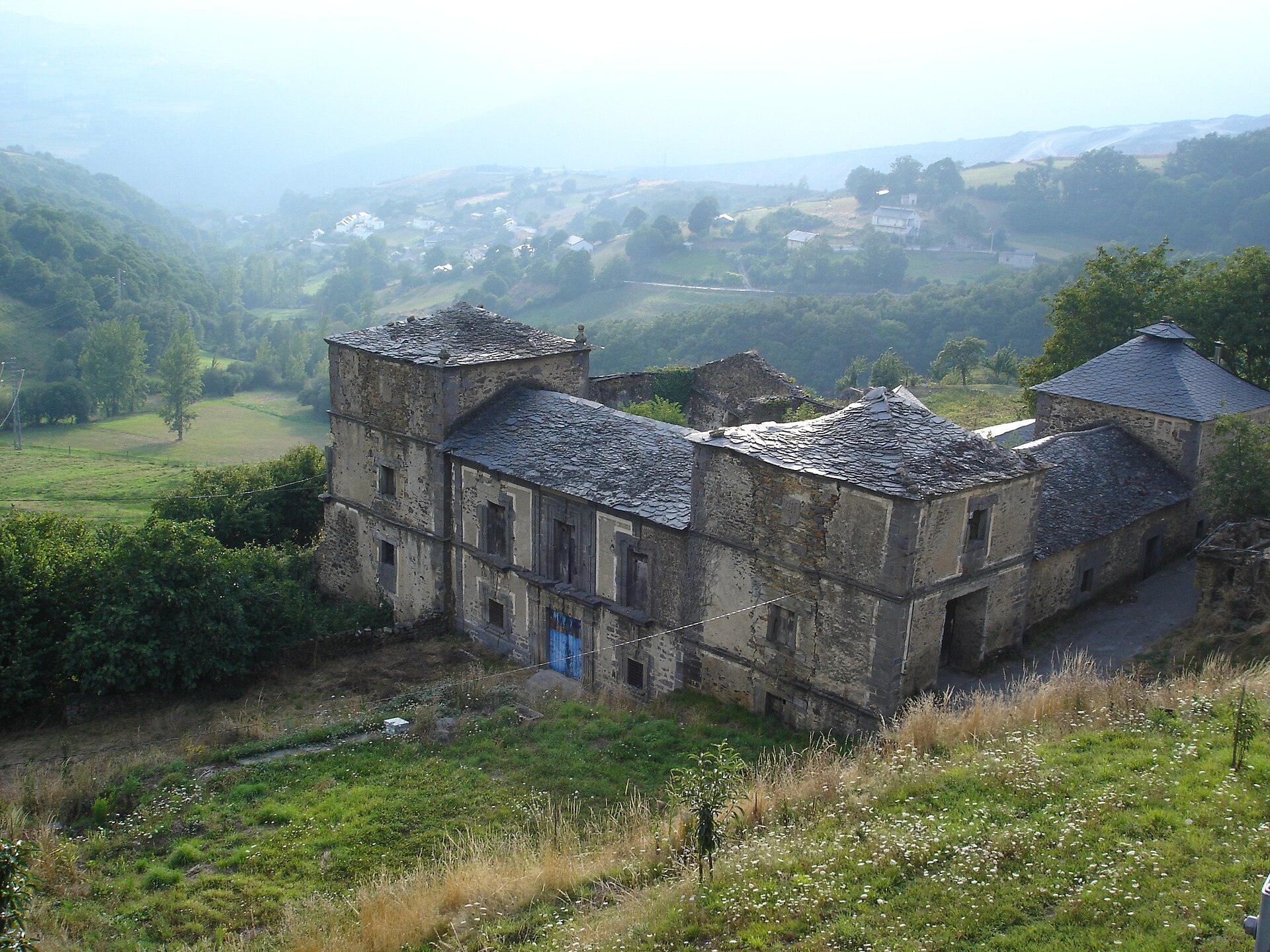
Palacio de Tormaleo is an 18th-century rural palace standing in the village of Tormaleo, in the municipality of Ibias, in the far west of Asturias near the border with Galicia. It ranks among the region's most notable examples of noble residential-defensive architecture, though today the building is struggling with ongoing deterioration.
What is this place?
The palace as it stands was built in the 18th century, but its oldest section — the western tower together with the wing attached to it — dates from an earlier period and formed the original core around which the rest of the residence was later expanded. The property belonged to local rural nobility and served as a visible marker of their standing within the Tormaleo community. On December 30, 1993, it was declared a Bien de Interés Cultural (Asset of Cultural Interest), the Spanish designation confirming its historical and architectural significance.
What will you see?
The building follows a roughly square plan, but its different sections rise to different heights, giving it an irregular, layered silhouette. The composition is built from three towers and three wings, with a perimeter wall closing off the fourth side and visually completing the quadrangle. The oldest surviving element is the western tower: a small, square-sectioned, single-story structure covered by a false vault, with no ventilation openings at all despite housing a fireplace inside. This austere, defensive design contrasts sharply with the rest of the complex.
The main facade, facing south, speaks a completely different architectural language. Its central section rises two stories and is flanked by two three-story towers, forming a striking, symmetrical composition. This is where all the decorative work is concentrated: an elaborately carved entrance portal, window openings, and balconies dressed with molded frames, pilasters, and other Baroque details. The contrast between the plain, defensive tower and the ornate southern facade tells the story of how the residence grew over the centuries — from a modest watchtower into a full-fledged noble palace.
What condition is the palace in today?
Despite its legal protection status, Palacio de Tormaleo has stood abandoned for years and continues to deteriorate. The lack of use and maintenance has caused structural damage, compounded by the theft of stones and architectural elements from its walls. As a result, the building's condition can differ noticeably from one visit to the next. Even so, it remains the foremost example of rural palatial architecture in the entire municipality of Ibias and a key reference point for anyone interested in the region's history.
How do you get there?
Tormaleo sits deep within the municipality of Ibias, in a mountainous, sparsely populated corner of western Asturias. Driving is by far the most practical option — the approach winds through rural countryside, among the valleys and ridgelines typical of this part of the region. It is worth planning the trip ahead of time, since the area has limited tourist infrastructure, and the nearest towns with fuller services lie in the central part of the municipality.
When is the best time to visit?
Spring and early autumn are the best seasons to visit, when the mountain landscape around Tormaleo turns green and moderate temperatures make exploring the surrounding area more comfortable. Summers can get warm, though the region's elevation tempers the heat, while winter in this part of Asturias can bring difficult conditions on the local roads.
Frequently Asked Questions
Can visitors go inside the palace? The building is abandoned and in a deteriorated state, so visits are essentially limited to viewing it from the outside.
Why does the palace have such an irregular shape? It reflects its construction history — the residence expanded in stages around an older tower, blending different heights and styles into a single composition.
What does the Bien de Interés Cultural status mean? It is a Spanish legal protection category granted to sites of exceptional historical or architectural value; the palace received it in 1993.
Are there other attractions nearby? The municipality of Ibias, with its mountainous landscape and traditional rural architecture, offers additional points of interest worth combining with the same trip.
Nearby places

Earn badges for the places you visit
Download NextOnTrip, discover new places and check off your trails.