About this place
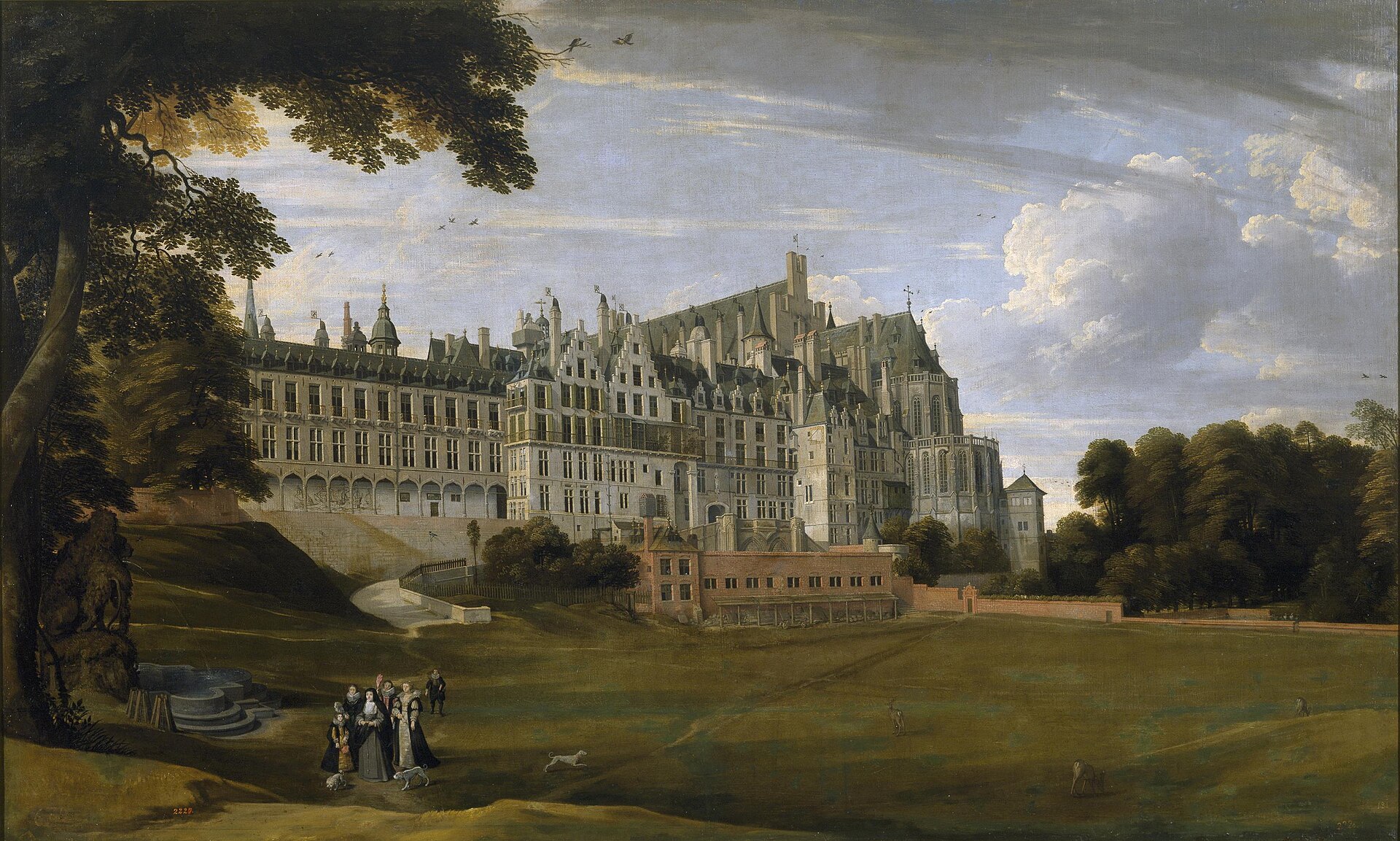
The Palace of Coudenberg was a royal residence that stood for nearly 700 years on the Coudenberg (Koudenberg), a hill located in what is today the Royal Quarter of Brussels, Belgium. From the 12th to the 18th century, the Castle and later the Palace of Coudenberg served as the seat of the counts, dukes, archdukes, kings, emperors and governors who exercised sovereignty over the Duchy of Brabant, and later over all or part of the Burgundian, Spanish and Austrian Netherlands.
Where exactly did the palace stand?
The palace rose on the Coudenberg hill, which today forms part of the Royal Quarter (Quartier Royal) at the heart of Brussels. Its coordinates, 50.84261, 4.360689, place it right in the historic and administrative core of the city, close to the institutions that still represent royal and governmental authority in Belgium today.
How long did it function as a seat of power?
The site's history as a residence of rulers spans nearly seven centuries, from the 12th century through to the 18th century. Over that long span the complex evolved considerably: it began as a fortified castle and gradually grew into an extensive palace, reflecting the increasing status and ambitions of the rulers who occupied the hill across the generations.
Who lived and ruled from Coudenberg?
The succession of rulers connected to Coudenberg mirrors the turbulent political history of the Low Countries. Counts, dukes and archdukes exercising authority over the Duchy of Brabant were followed, in later centuries, by kings, emperors and governors who held sway over all or part of the territories that passed successively under the Burgundian, Spanish and Austrian Netherlands. This sequence traces the shifting political allegiance of the region — from local Brabantine lordship, through a personal union with Burgundy, to subsequent rule under the Spanish crown and then the Austrian branch of the Habsburgs.
What was the political significance of the site?
Coudenberg was not simply a place of residence — for centuries it functioned as a center of power for the wider region. From this hill, sovereignty was exercised not only over the Duchy of Brabant itself, but, depending on the period, over the broader territories of the Netherlands as they passed under Burgundian, Spanish or Austrian control. This makes the site one of the most significant administrative and political locations in this part of Europe across several centuries.
Frequently asked questions
Does the Palace of Coudenberg still exist in its original form? Available information describes the site as a "former palace" — it functioned as a royal residence from the 12th to the 18th century.
Where was the Coudenberg hill located? The Coudenberg (Koudenberg) hill lies within what is today the Royal Quarter of Brussels, Belgium, at coordinates 50.84261, 4.360689.
Which territories was the site tied to throughout history? Successively the Duchy of Brabant, and later the Burgundian, Spanish and Austrian Netherlands, depending on the historical period.
Who exercised power from this location? Counts, dukes, archdukes, kings, emperors and governors who held sovereignty over the territories mentioned above.
Nearby places

Earn badges for the places you visit
Download NextOnTrip, discover new places and check off your trails.