About this place
Ortegat Castle
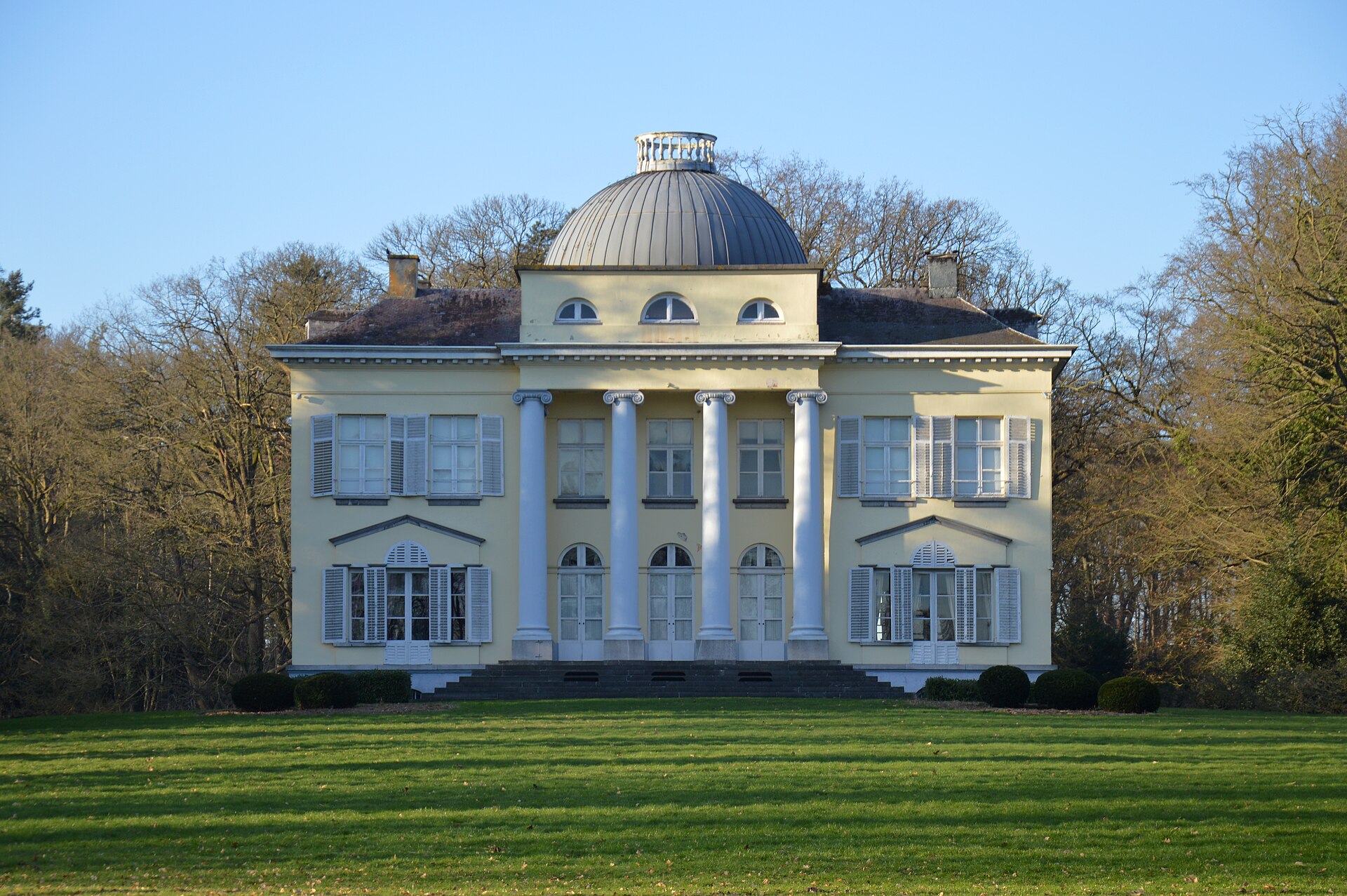
Ortegat Castle is a neoclassical mansion in Waasmunster, in the Belgian province of East Flanders, set within more than ten hectares of English-style landscaped grounds with winding paths, ponds and wooded areas. Despite the word "castle" in its name, the building is not a medieval fortress but a 19th-century country residence — and one of the best-preserved examples of its kind in the region.
Who built the castle, and when?
The story of the estate begins at the end of the 18th century. In 1797, Albertus Livinus Vermeulen, son of a mayor of nearby Lokeren, purchased part of the land belonging to a dissolved abbey and commissioned a residence to be built on it. Construction was completed by 1813, or possibly a little earlier, to a design by architect Jean-Baptiste Dubois. The result was a two-storey building set above a basement level, finished in a light-coloured, neoclassical style with clear Palladian influence: a symmetrical layout, a restrained and elegant façade, and a distinctive dome crowning the roof.
Where does the name Ortegat come from?
The estate's name changed several times as it passed between owners. It was originally known as kasteel De Bulck, after the local place name of the site where it was built. Later, once the property belonged to the founding family, it became known as kasteel Vermeulen. A turning point came around 1900, when the Ortegat family moved into the residence; by 1919 they had formally acquired the estate, and the building began to be called kasteel Ortegat — effectively "the castle of Waasmunster." That name has stuck ever since and remains the one most commonly used by locals and visitors alike.
What does the interior look like?
The interior's centrepiece is a domed rotunda, which once served as a music room complete with a raised platform for an orchestra and a trompe-l'œil ceiling painted to imitate an open sky. Elsewhere in the building, original hardwood floors and marble fireplaces have survived, reflecting the level of finish typical of a wealthy landowning family's residence in the early 19th century. The upper floor contains additional, versatile living spaces, while the basement holds a wine cellar and a former service kitchen.
What surrounds the castle?
The estate includes an extensive English-style landscape park, featuring ponds, walking paths and wooded sections — a layout typical of romantic 19th-century European gardens. Several outbuildings have also survived on the grounds, including a former coach house, stables, and a swimming pool added in the 1970s. Because of its historical and architectural value, the whole complex is protected as a heritage monument.
Frequently asked questions
Is Ortegat Castle a real medieval fortress? No — despite the word "castle" in its name, it is a 19th-century neoclassical country house typical of Flanders, not a fortified stronghold.
Where does the name "Ortegat" come from? From the Ortegat family, who moved into the residence around 1900 and formally acquired ownership of it in 1919.
Who designed the building? Architect Jean-Baptiste Dubois, commissioned by Albertus Livinus Vermeulen, who bought the land in 1797.
Can the castle be visited? It is a private property, and its accessibility to visitors should be checked in advance, as the estate has also been listed for sale as a residential property at times.
Nearby places

Earn badges for the places you visit
Download NextOnTrip, discover new places and check off your trails.