About this place
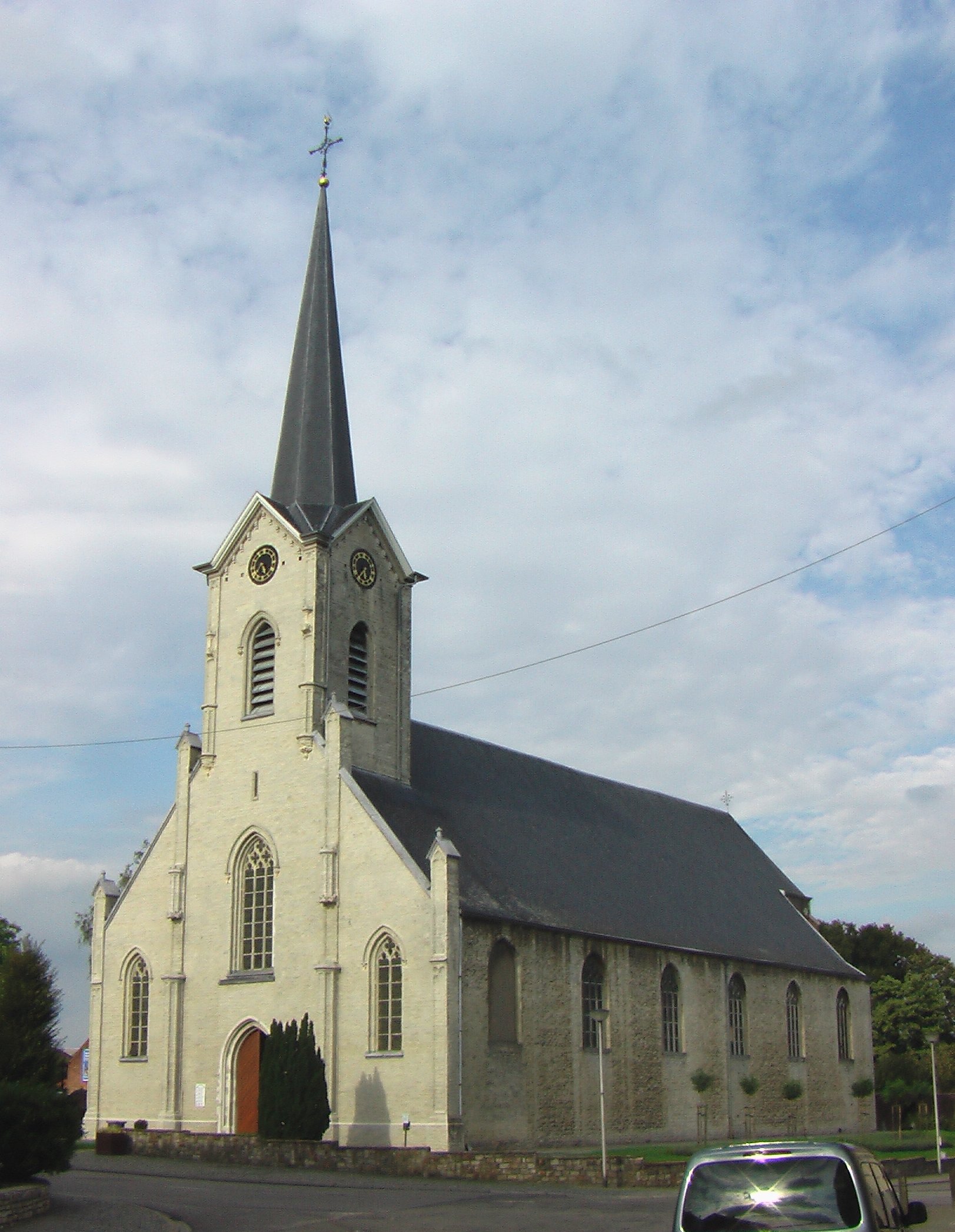
Onze-Lieve-Vrouwekerk is a Neo-Gothic church in Kortenberg, a municipality in the Flemish Brabant province of Belgium, originally founded in the second half of the 18th century and given its present form in the early 20th century. Standing at the heart of the town, it remains an active parish church and one of Kortenberg's most recognizable landmarks.
Where did the church come from?
Kortenberg's original parish church stood elsewhere, on the grounds of the former Kortenberg Abbey, where Saint Amandus was venerated. Because of its hilltop position, locals called it the "bergkerk," or "mountain church." As the settlement grew around a newly laid stone road, that hillside location became increasingly impractical for the community.
Why was a new church built?
In 1764 a local referendum settled the matter: residents voted to build a new church closer to the stone road constructed in 1709, on a site known as the Heurk. The decision spelled the end of the old hilltop church. The first stone of the new building was laid on 9 July 1771 by the abbess of the local abbey, and the old bergkerk was torn down that same summer.
When did the church take its current shape?
The building seen today was consecrated on 16 October 1922 by Cardinal Mercier, one of the most prominent Belgian church leaders of the early 20th century. That consecration marked the completion of the structure in its present form.
Where does the name Onze-Lieve-Vrouw come from?
For most of its history, the church was known as Sint-Amanduskerk, honoring Saint Amandus, patron of the original hilltop church. Only in 1981, to avoid confusion with the identically named church in Erps-Kwerps, just two kilometers away, did the Kortenberg parish adopt a new patron: Our Lady (Onze-Lieve-Vrouw), who had long been the church's secondary patroness.
What can visitors see inside?
The interior holds several notable pieces of religious art. Among them are 18th-century paintings, including a work depicting the invocation of Saint Blaise, produced by the Flemish School. A Late Gothic sculpture of Our Lady, dating from around 1500 and attributed to the workshop of the Master of Our Lady of Piétrebais, stands alongside a Baroque Ecce Homo figure of Christ from the late 17th century. The church also preserves oak Louis XVI-style paneling and confessionals, designed in 1788 by Jean Taverniers of Mechelen.
Frequently asked questions
Is this the same church as Sint-Amanduskerk? Yes — it carried that name until 1981, when the parish switched its dedication to Our Lady.
How old is the current building? Construction began in 1771, and the church reached its present form following its consecration in 1922.
What is worth seeing inside? 18th-century paintings, a Late Gothic statue of Our Lady from around 1500, a Baroque Ecce Homo figure, and 18th-century oak paneling.
Where did the earlier church stand? On the grounds of the former Kortenberg Abbey, on a hill, which is why it was known as the "bergkerk."
Nearby places

Earn badges for the places you visit
Download NextOnTrip, discover new places and check off your trails.