About this place
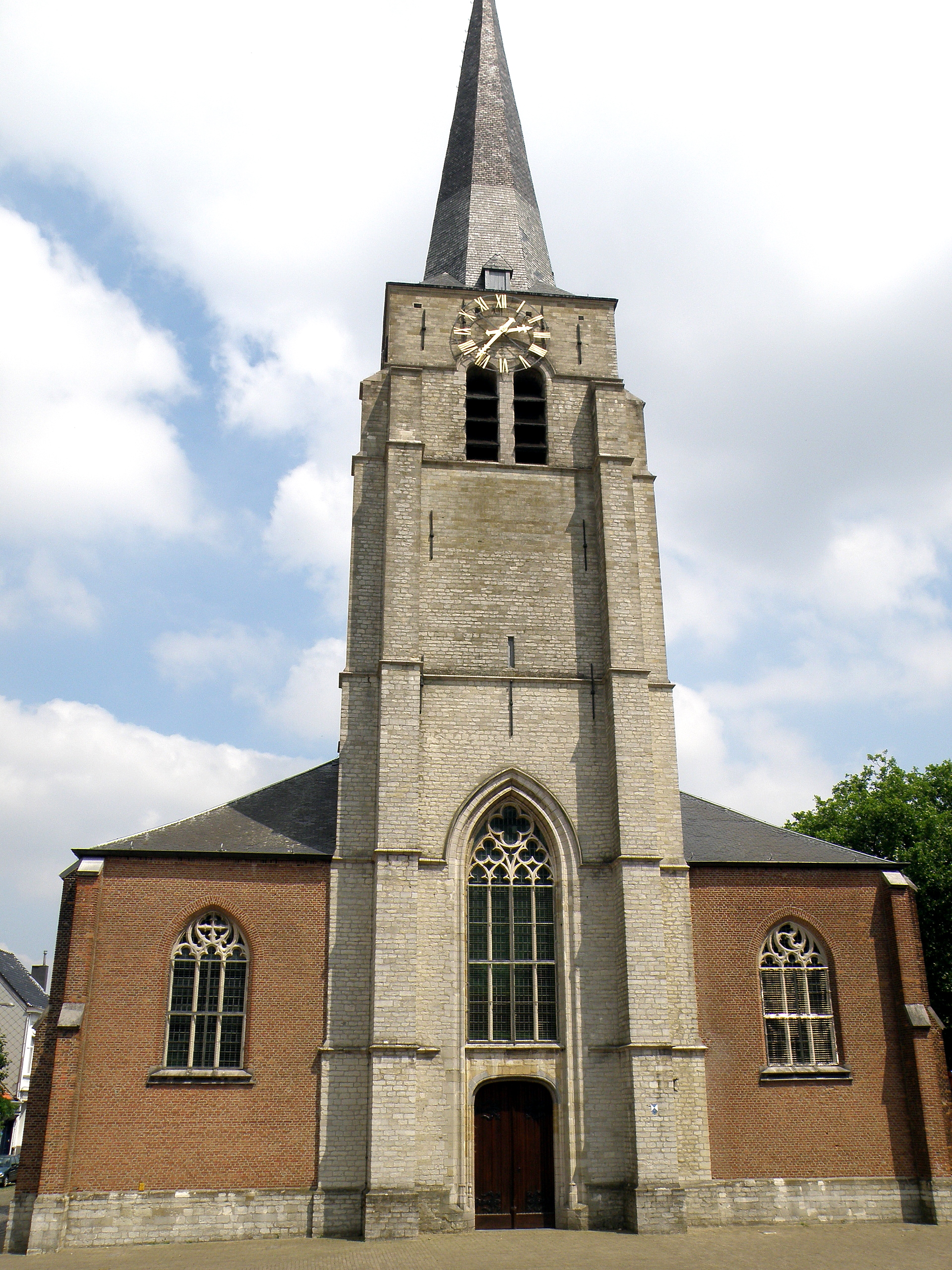
Onze-Lieve-Vrouw-en-Sint-Leodegariuskerk is the historic parish church at the heart of Bornem, a small town in the Antwerp province of Flanders, Belgium. The building carries traces of nearly a thousand years of history — from an early medieval place of worship, through a Romanesque abbey church, to a 19th-century rebuild that gave it its present appearance. Today it is legally protected both as a monument and as part of Bornem's protected village landscape.
How old is this parish?
Records mention the parish of Bornem as early as the 9th century, when a modest place of worship likely stood on the site before being demolished in the 11th century. The first written reference to a church at the current location dates back to 1101. At that time the church was linked to an abbey of Augustinian regular canons, making it not just a parish site but part of a larger monastic complex.
What happened during the medieval period?
In the 12th century the church was rebuilt in Romanesque style as a pillar basilica shaped like a Latin cross — a layout typical of larger churches of that era. In 1120 the local abbey merged with the Abbey of Affligem and was converted into a priory, tying Bornem into the network of an influential Benedictine community. The building's history was far from peaceful, though: in 1164 it partially burned down. A trace of an older liturgical division survives in a decision from 1253, when a wall was erected at the level of the communion rail to separate parts of the interior — a partition that was only removed in 1603.
Why does the church look different from its medieval original?
The Romanesque building, having survived centuries of rebuilding and fire, was almost completely demolished in 1828. This event explains why relatively little of the original church remains — the current structure largely dates from later construction phases. Surviving from the Romanesque period are the tower's foundation, the outer walls of the choir, the eastern outer walls of today's side aisles, and the Romanesque crypt, which remains the oldest and most valuable part of the whole complex.
What is protected today?
The crypt and the oldest parts of the church were officially granted heritage protection as early as 1935, well before the rest of the building. That status was extended in 1998, when the entire church was recognized as a protected monument and simultaneously listed as part of Bornem's protected village landscape. This means protection covers not only the building itself but also its relationship with the surrounding townscape.
Where exactly is the church located?
Onze-Lieve-Vrouw-en-Sint-Leodegariuskerk stands right in the center of Bornem, at approximately 51.0999°N, 4.2353°E. Its location at the heart of town has made the church a natural landmark and a social focal point for the local community for centuries.
Frequently asked questions
Can the crypt be visited? The crypt is one of the oldest and best-preserved parts of the church — it was the first element to receive heritage protection, back in 1935, underscoring its exceptional historical value.
Where does the church's double name come from? The dedication combines the Blessed Virgin Mary (Onze-Lieve-Vrouw) and Saint Leodegarius (Sint-Leodegarius), the patrons of the original church associated with the Augustinian abbey.
Did anything medieval survive the 1828 rebuild? Yes — despite the demolition of most of the Romanesque structure, the tower's foundation, the outer choir walls, the eastern side-aisle walls, and the crypt remain, allowing visitors to still trace the church's earliest building phase.
Is the church a protected monument? Yes, since 1998 the entire church has been legally protected as a monument and as part of Bornem's village landscape, while its oldest sections — the crypt and Romanesque remains — have been protected since 1935.
Nearby places

Earn badges for the places you visit
Download NextOnTrip, discover new places and check off your trails.