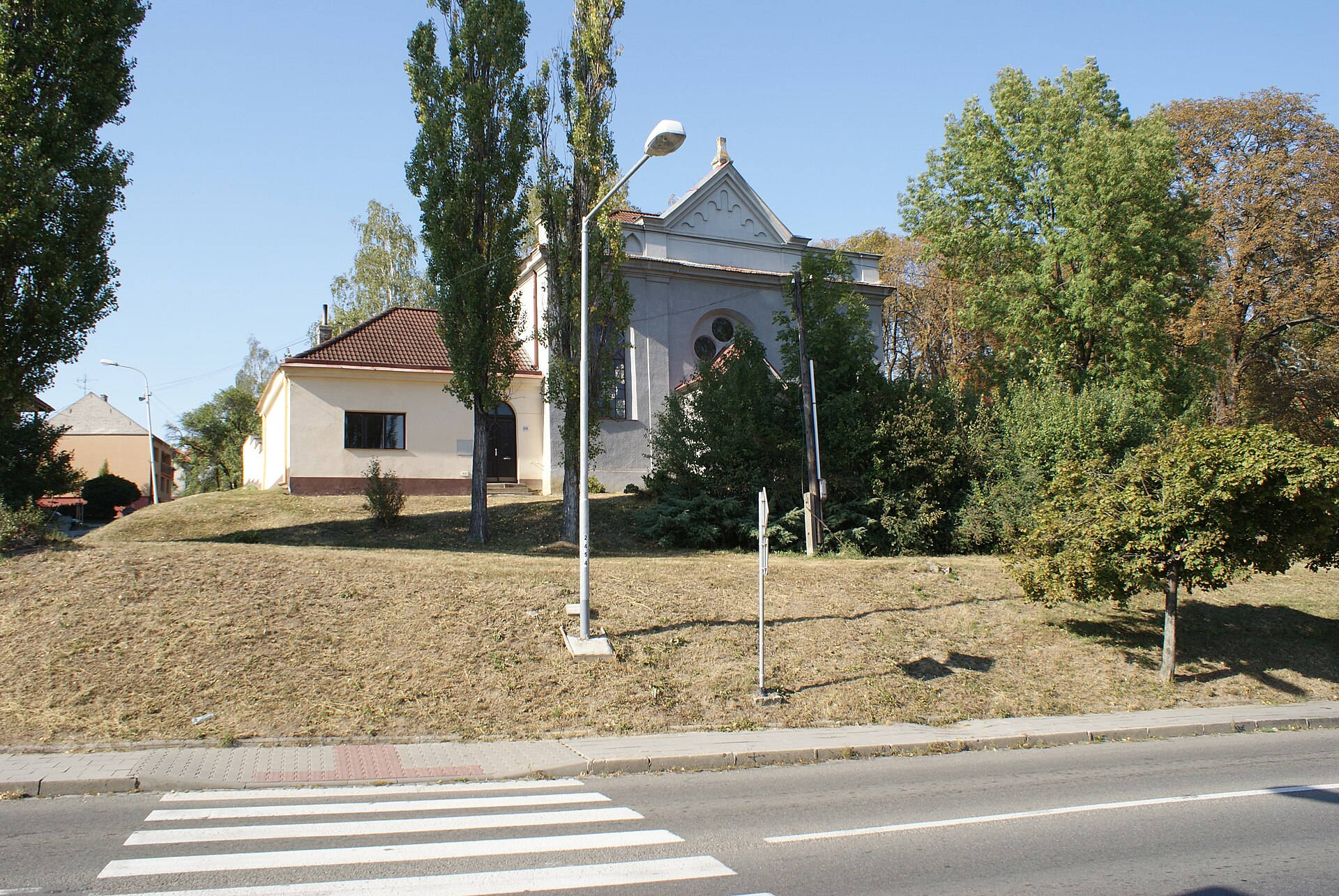
About this place
The New Jewish Cemetery in Uherský Brod stands as one of the most important remaining witnesses to centuries of Jewish life in this Moravian town. It was established in 1870, once the older burial ground could no longer serve the growing community, and remained in use until 1990, when the last burial following Conservative Jewish tradition took place there.
Why was a new cemetery needed?
The Jewish community of Uherský Brod probably dates back to the 13th century, with the first written mention appearing in a municipal document from 1470. The community grew steadily over the centuries: four Jewish families lived in the town in 1558, 18 by 1615, and 59 by 1753, rising to 110 families by the late 18th century. The Jewish population peaked at 1,068 in 1857. As numbers grew, the old cemetery, located about 0.3 km away on Pod Valy Street, eventually could no longer accommodate new burials, leading to the establishment of a new cemetery to serve the community's needs.
What can visitors see at the cemetery today?
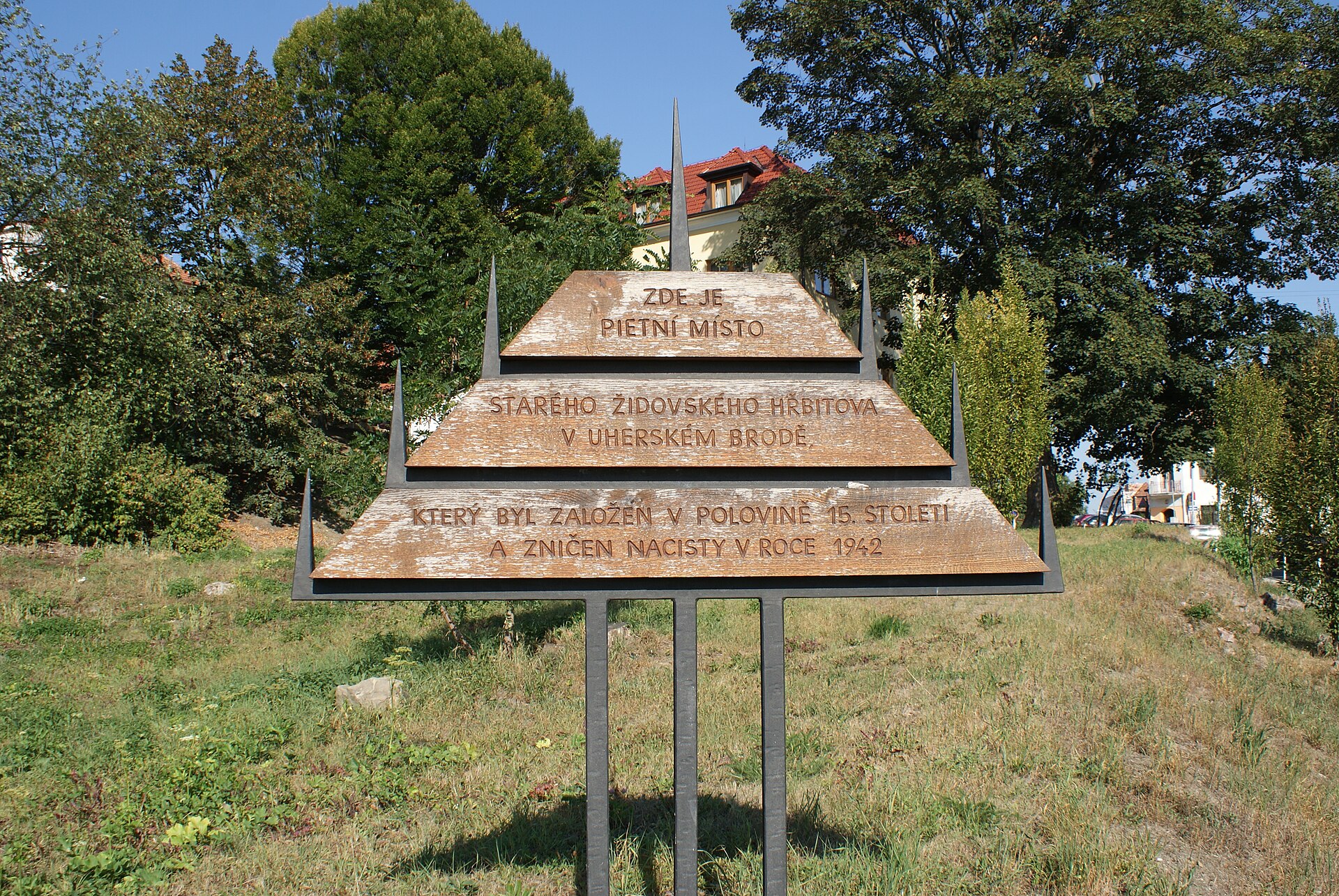
After World War II, 80 Baroque and Classical tombstones were relocated to the new cemetery from the old one, which had been devastated during the Nazi occupation. As a result, the site today combines newer graves with much older, historically significant headstones rescued from the earlier burial ground. The cemetery covers approximately 1.1 hectares, a size that has remained essentially unchanged since before the war. It is enclosed by a continuous masonry wall with a locking gate and can be reached via a public road.
How does the cemetery reflect the town's Jewish history?
The Jewish community of Uherský Brod endured severe hardship over the centuries. It suffered greatly during the Thirty Years' War (1618–1648), and in 1683 a plague epidemic killed 438 Jewish residents, with roughly 100 more massacred by Kuruc soldiers. In 1872 the community split when its ultra-Orthodox members seceded in protest against liturgical changes, including the relocation of the bimah and the introduction of a choir. In 1941, local fascists set fire to the town's great synagogue, where religious services had been held. The darkest chapter came in January 1943, when three transports carrying a total of 2,837 Jews were deported first to the Theresienstadt ghetto and later to the Auschwitz death camp; only 81 people survived. After the war, in 1948, 20 surviving Jews emigrated to Israel, and the independent Jewish community in the town ceased to exist.
What is the cemetery's protected status today?
The New Jewish Cemetery in Uherský Brod has been protected as a cultural monument since 1994. It serves as a significant place of memory, documenting both the centuries-long presence of Jewish life in Moravia and the community's tragic fate during the Holocaust. Visitors can see a mix of historic Baroque and Classical tombstones alongside more recent graves, making the site a valuable testimony to the region's Jewish heritage.
Frequently asked questions
When was the New Jewish Cemetery in Uherský Brod established? It was founded in 1870 and remained in use until 1990.
Is the cemetery legally protected? Yes, it has held cultural monument status since 1994.
How large is the cemetery? It covers approximately 1.1 hectares, both before and after World War II.
Are there older tombstones on the site? Yes, 80 Baroque and Classical tombstones were moved here after the war from the devastated old cemetery.
Nearby places

Earn badges for the places you visit
Download NextOnTrip, discover new places and check off your trails.