About this place
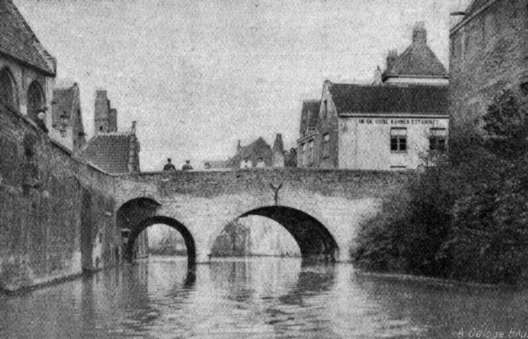
Nepomucenusbrug is a stone arch bridge in Bruges, Belgium, spanning the Dijver canal and connecting Wollestraat with Eekhoutstraat in the heart of the historic city centre. Modest in scale compared to Bruges's grander landmarks, it is nonetheless one of the most photographed spots in town, offering a classic view over the canal and its medieval-era surroundings.
How old is the bridge?
The bridge was built in 1357 by master mason Jan Slabbaerd, making it one of the older surviving bridges within the historic core of Bruges. Its stone arched structure has kept its original form over the centuries, even as the city repeatedly reworked its wider network of canals and crossings.
Where does the name come from?
The name refers to Saint John of Nepomuk, the patron saint of bridges and of those who travel over water, whose veneration spread widely across Central and Western Europe from the 18th century onward. In 1767, a statue of the saint by sculptor Pieter Pepers was placed on the bridge. The figure holds a crucifix and is crowned with a halo of five stars, an iconographic detail closely tied to depictions of this particular saint.
What happened to the statue?
The statue has a turbulent history of its own. At the end of the 18th century, unknown individuals threw it into the Dijver canal. It was later recovered and returned to its pedestal, where it still stands today, watching over the water below and the steady stream of visitors crossing between Wollestraat and Eekhoutstraat.
Why is it worth a stop?
Nepomucenusbrug sits within the UNESCO-listed historic centre of Bruges, right along the Dijver, one of the city's most scenic canal stretches. The views from this spot — calm water, brick facades, and the arched silhouettes of neighbouring bridges — are among the most recognisable images associated with Bruges, drawing both casual walkers and passengers on the canal boat tours that pass beneath it.
Beyond its scenic value, the bridge still serves a practical role as a everyday pedestrian crossing linking two streets of the old town, so visitors naturally cross it while walking between the centre's main sights, without any detour required.
Frequently asked questions
Where exactly is Nepomucenusbrug located? The bridge crosses the Dijver canal in the historic centre of Bruges, linking Wollestraat and Eekhoutstraat.
How old is the bridge? It was built in 1357, making it one of the older bridges in central Bruges.
Who built Nepomucenusbrug? Its construction is attributed to master mason Jan Slabbaerd.
Why is there a statue of a saint on the bridge? In 1767, sculptor Pieter Pepers added a statue of Saint John of Nepomuk, patron saint of bridges, shown holding a crucifix beneath a halo of five stars.
What happened to the statue historically? At the end of the 18th century it was thrown into the Dijver canal by unknown persons, but it was recovered and restored to its pedestal.
Can pedestrians cross the bridge? Yes, Nepomucenusbrug remains an active pedestrian crossing used daily by locals and visitors exploring the historic centre.
Nearby places

Earn badges for the places you visit
Download NextOnTrip, discover new places and check off your trails.