About this place
Na Špičáku is a small but ecologically remarkable national nature reserve located right next to the village of Supíkovice in the Jeseník district, in the northern part of Moravia, Czech Republic. The protected area centers on Velký Špičák hill, rising to roughly 518 metres above sea level, which forms the summit of an ancient volcanic cone emerging from sediments left behind by the continental ice sheet. It is precisely this geological mix — old Devonian limestone meeting younger glacial deposits — that has made the surroundings one of the most fascinating corners of what is known as the Jeseníky Karst.
What lies beneath the hill
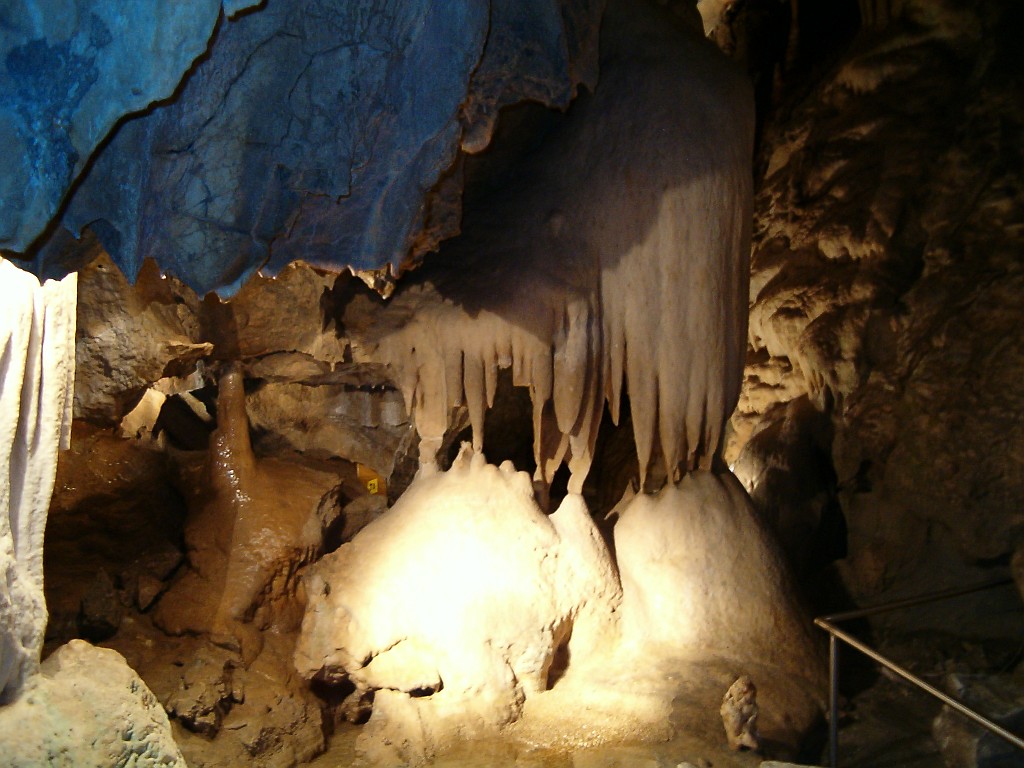
The reserve's main draw is the Na Špičáku Cave, one of only two show caves in the region and among the most recognisable underground karst features in the Jeseníky mountains. The cave formed within limestone roughly 380 million years old, and its known passages stretch for about 410 metres in total, though visitors can only walk part of that distance — around 220 metres are open to the public. Inside, distinctive karst formations have long attracted both researchers and speleology enthusiasts.
A site with a long history
The cave was first mentioned in writing as far back as 1430, making it one of the longest-documented sites of its kind in the region. While local stories about underground passages likely circulated even earlier, it was only toward the end of the 19th century that the cave was formally opened to visitors. The current tourist route, still in use today, was established in the 1950s and has since welcomed generations of people curious to see this underground world of the Jeseníky Karst firsthand.
Why is the area protected?
Legal protection was granted to the site in 1970, and the reserve now covers 7.05 hectares on the hillside near Supíkovice, part of the wider Rychlebské Mountains range. The reasoning behind the protection extends beyond the cave itself: it also covers the full range of karst phenomena, both on the surface and underground, along with natural stands of yew trees — a species that has become increasingly rare in Central European forests. This combination of unique geology and valuable flora is also why the area was included in the EU's Natura 2000 network, designated as a Site of European Importance for the lesser horseshoe bat, a small bat species for which the cave and its surroundings serve as an important habitat.
Life underground
Bats are undoubtedly the most notable animal group associated with the Na Špičáku reserve. The cave's underground passages and chambers provide natural shelter, used especially during hibernation and breeding periods. Because of this, the site has also hosted educational events dedicated to bat conservation, helping visitors understand the role these mammals play in the local ecosystem.
Who should visit
Na Špičáku appeals to visitors who combine an interest in nature with curiosity about geology and history. A tour through the cave reveals the results of hundreds of millions of years of karst formation, while a walk around the reserve itself offers a chance to see rare yew habitats and a landscape shaped by ancient volcanic activity and glaciation. It's a particularly rewarding stop for families, cave enthusiasts, and anyone exploring the wider Jeseník and Rychlebské Mountains area.
Frequently asked questions
Can the Na Špičáku cave be visited independently? The tourist route is open to visitors, though given the site's protected status, it is worth checking local rules and opening hours before planning a visit.
How long is the visitor route inside the cave? Of the roughly 410 metres of known passages, about 220 metres are accessible to the public.
Why was this area given protected status? The reserve safeguards both karst phenomena — the cave and surface formations — and natural yew stands, as well as habitat for the lesser horseshoe bat.
Nearby places

Earn badges for the places you visit
Download NextOnTrip, discover new places and check off your trails.