About this place
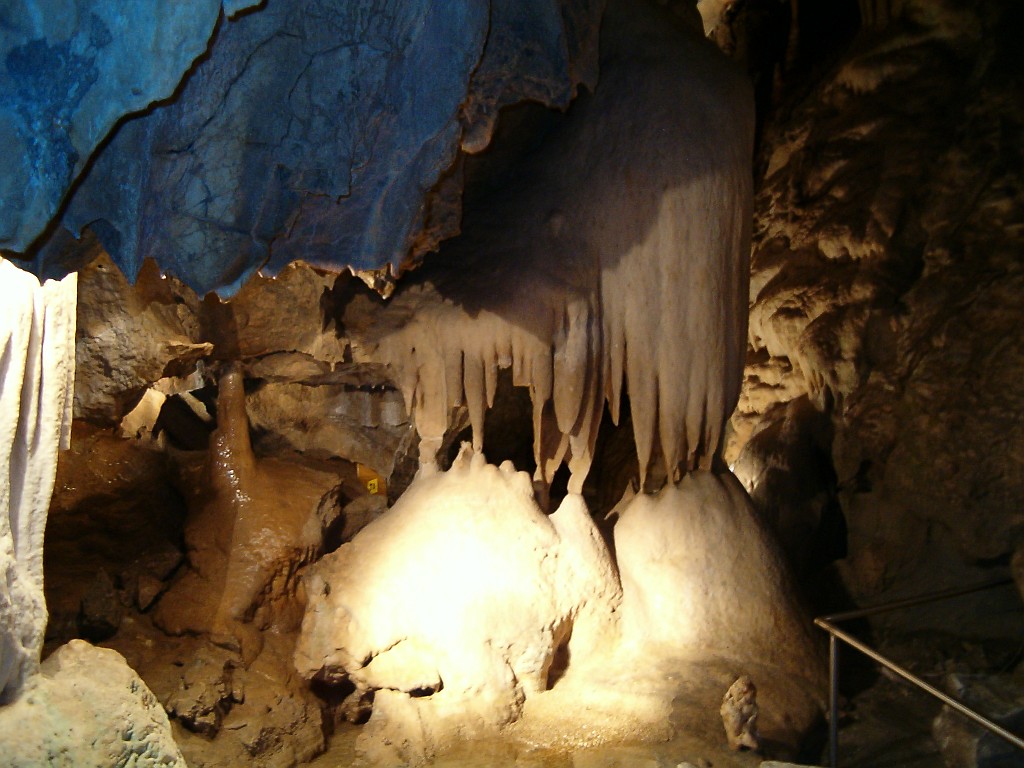
Na Špičáku Cave is a small karst cave in the village of Supíkovice, in the Jeseník District of the Olomouc Region, part of the Zlaté Hory (Golden) Mountains in northeastern Czechia. It holds a rare distinction among karst caves: it is the oldest documented cave in Central Europe, first mentioned in writing as early as 1430.
How did the cave form?
The cave's passages are carved into Devonian limestone roughly 380 million years old. Their distinctive heart-shaped cross-section was shaped by meltwater from a retreating glacier, which decisively molded the corridors into their present form. The full system of known passages measures 410 meters, though only 220 meters are open to visitors.
What makes its history so unusual?
The cave walls preserve numerous inscriptions left by people who took shelter here over the centuries, whether from bad weather or danger — the oldest surviving inscription dates to 1519. This shows the cave served as a refuge long before it became a tourist attraction. To protect this heritage, restoration work on the wall paintings was completed in 2014, focusing mainly on the cave's central section; the paintings themselves span a period from the late Middle Ages to the early 20th century.
When was the cave opened to the public?
Na Špičáku Cave (also known as the Supíkovice Cave) was opened to visitors in 1884–1885 by the Moravian-Silesian Sudeten Mountain Club (Moravskoslezský sudetský horský spolek). Since then it has been one of the notable attractions of the Jeseníky region, combining natural karst features with a historical significance rarely found in caves of comparable size.
Where exactly is the cave located?
The cave lies in the municipality of Supíkovice, in the Jeseník District of the Olomouc Region, within the Zlaté Hory mountain range that stretches along the Czech-Polish border in the Jeseníky area. Its approximate coordinates are 50.2833°N, 17.2497°E.
Frequently asked questions
How long is Na Špičáku Cave? The known passages total 410 meters, but the section open for visits covers 220 meters.
Why is this cave considered historically unique in Europe? It is the oldest cave in Central Europe with a surviving written record, dating back to 1430 — a historical distinction as much as a natural one.
Where do the wall inscriptions come from? They were left by people sheltering in the cave over the centuries; the oldest preserved inscription dates from 1519.
Since when has the cave been open to visitors? The tourist route was established in 1884–1885 by the Moravian-Silesian Sudeten Mountain Club.
What rock formed the cave? Devonian limestone around 380 million years old; meltwater from a retreating glacier shaped the passages' characteristic heart-shaped profile.
Where is the cave located? In the village of Supíkovice, Jeseník District, Olomouc Region, within the Zlaté Hory Mountains in Czechia.
Nearby places

Earn badges for the places you visit
Download NextOnTrip, discover new places and check off your trails.