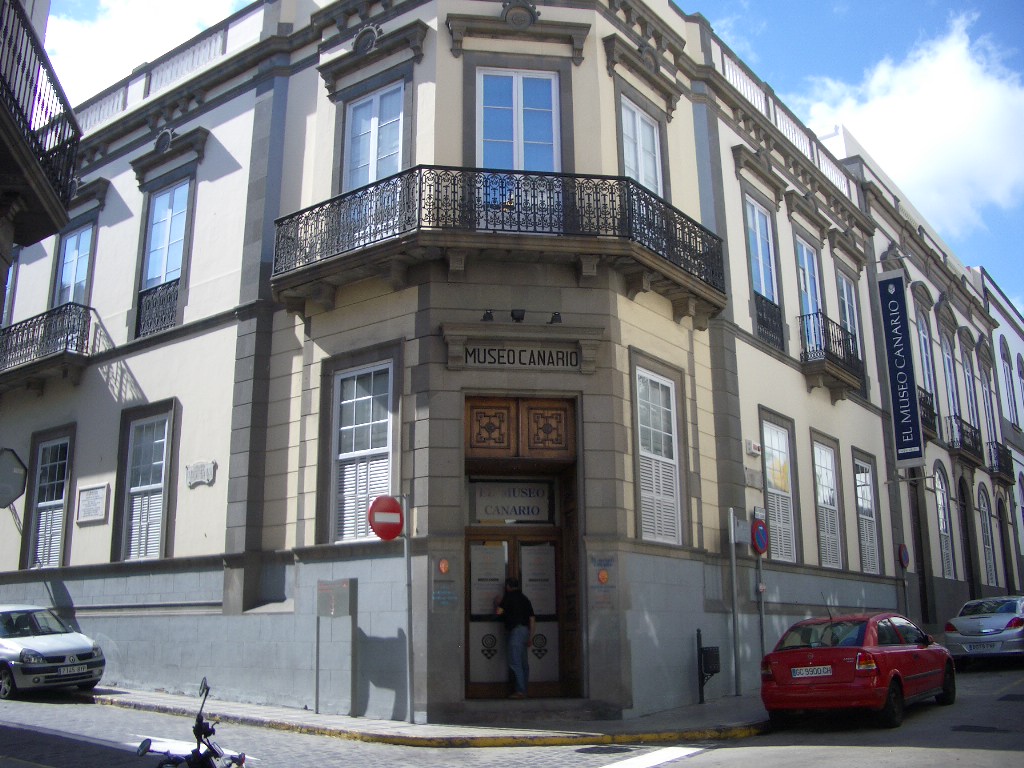
About this place
The Canarian Museum (Spanish: El Museo Canario) is one of the most important research and exhibition institutions in Las Palmas de Gran Canaria, dedicated to the history and culture of the archipelago's indigenous population before the Spanish conquest.
Where is the museum located?
The museum sits in Vegueta, the historic quarter of Las Palmas de Gran Canaria, inside a house bequeathed to the institution by one of its founders. Vegueta is the oldest part of the city, full of colonial-era architecture, cobbled streets and patio houses — a pleasant area to explore on foot before or after your visit.
How did the museum come to be?
The institution traces back to 1879, when a group of Gran Canarian intellectuals — led by physician Gregorio Chil y Naranjo and historian Agustín Millares Torres — set out to create a center for studying the islands' past. A year later, in 1880, they opened a small museum and library on the second floor of the Las Palmas city hall. The collections grew quickly enough that in 1923 the institution moved to its current home in Vegueta, the house left to it by Dr. Chil. Since then, the museum has become the leading reference point for research into the heritage of the Canary Islands.
What will you see inside?
The museum's centerpiece is a permanent exhibition on the aboriginal population of Gran Canaria — the Guanches, the island's original inhabitants before European settlement. Its archaeological holdings rank among the richest in the entire archipelago, including the famous Idolo de Tara, one of the most recognizable pre-Hispanic figurines from the Canary Islands, alongside pintaderas (stamp-like seals used to decorate skin), pottery, everyday tools and naturally preserved mummies. From its earliest days, the museum's own archaeologists organized expeditions into the island's interior to recover artifacts from ancient Guanche settlements, building a collection of exceptional scientific value.
Beyond the exhibition halls, the museum's documentation center — comprising a library, an archive and a newspaper archive — deserves attention. It holds books dating back to the 15th century, historical documents including material connected to the Inquisition's archive, and an extensive collection of old Canarian press. It's a resource valued by historians of the region, but also open to curious visitors.
How much time should you plan?
The exhibition is spread across eleven rooms, so allow roughly an hour and a half to two hours for an unhurried visit. Anyone particularly interested in archaeology or the history of the islands' original inhabitants may want to linger longer, especially in the rooms devoted to Guanche everyday objects and funerary practices.
When is the best time to visit?
Being an indoor institution, the museum works well year-round and makes a good option on days with strong sun or wind, both common on Gran Canaria. Pair the visit with a stroll through Vegueta when temperatures are milder — early morning or late afternoon tend to be most comfortable.
Frequently asked questions
What is the Idolo de Tara? It's one of the best-known pre-Hispanic figurines found on Gran Canaria, displayed in the museum's archaeological collection as an example of Guanche art and belief.
Who were the Guanches? They were the indigenous inhabitants of the Canary Islands before the arrival of Spanish settlers. The Canarian Museum holds some of the most important surviving evidence of their material culture.
Can visitors use the library and archive? Yes — the documentation center includes a library, archive and newspaper archive with documents dating back to the 15th century, open to those doing historical research.
Is it worth combining the visit with the Vegueta district? Absolutely — the museum sits in the heart of the historic part of Las Palmas, surrounded by period architecture, making it easy to pair the visit with a short walk through the city's oldest quarter.
Nearby places

Earn badges for the places you visit
Download NextOnTrip, discover new places and check off your trails.