About this place
The Museu Nacional d'Art de Catalunya (MNAC) ranks among Spain's most significant art museums, housed inside the monumental Palau Nacional on Montjuïc hill in Barcelona. Built in 1929 for the International Exposition, the building itself is a landmark — the terrace at its entrance offers one of the best panoramic views over Plaça d'Espanya and the city beyond.
How do you get to MNAC?
The museum sits on Avinguda de la Reina Maria Cristina, right beside Plaça d'Espanya, one of Barcelona's best-connected squares. Espanya metro station (lines L1 and L3) is just a few minutes' walk from the staircase leading up the hill, and several bus routes stop directly at the square, along with a Hop-On Hop-Off tour stop right at the base. Reaching the entrance means climbing a series of steps and escalators, though visitors with reduced mobility can use the elevators that run alongside them straight up to the terrace.
What will you see inside?
MNAC's collection spans more than a thousand years of Catalan art and ranks among the most complete regional art collections anywhere. Its best-known holding is the set of Romanesque church murals, transferred whole from small churches in the Pyrenees and reassembled to echo the scale and layout of their original chapels — a rare chance to experience medieval religious painting almost as it was meant to be seen. From there, the galleries move through Gothic panels, Renaissance and Baroque painting, and into a dedicated section on Catalan modernisme and noucentisme from the turn of the 20th century, featuring artists such as Ramon Casas and Santiago Rusiñol. The museum also holds substantial collections of photography, coins, and decorative arts.
The Palau Nacional's interior is worth lingering over on its own terms — the grand Oval Hall, restored for the 1992 Summer Olympics, and the central rotunda's dome are architectural set pieces that stand apart from the artwork itself.
When should you visit, and how much time do you need?
Plan on two to three hours for a thorough visit, more if the Romanesque galleries are a priority. Early mornings right after opening, and weekdays outside peak holiday season, are the best way to avoid crowds heading toward the nearby Magic Fountain. The museum closes on Mondays (except public holidays), and free evening admission is offered on certain days of the week — details worth confirming shortly before your visit.
Anything else worth knowing before you go?
The terrace in front of the museum is a popular sunset spot, with sweeping views over Plaça d'Espanya, the Las Arenas arena, and the Barcelona skyline. After touring the galleries, most visitors head down the steps toward the Magic Fountain, which puts on evening light-and-water shows — a natural way to extend a day on Montjuïc.
Frequently Asked Questions
How long does a visit to MNAC take? A standard visit runs 2–3 hours, depending on how much time you spend in the Romanesque collection and the modern art galleries.
What's the fastest way to get there? Take the metro to Espanya station (lines L1 or L3), then walk a few minutes or ride the elevators up the hill to the museum entrance.
Is MNAC accessible for visitors with reduced mobility? Yes, elevators run alongside the staircase up to the terrace, allowing step-free access to the main entrance.
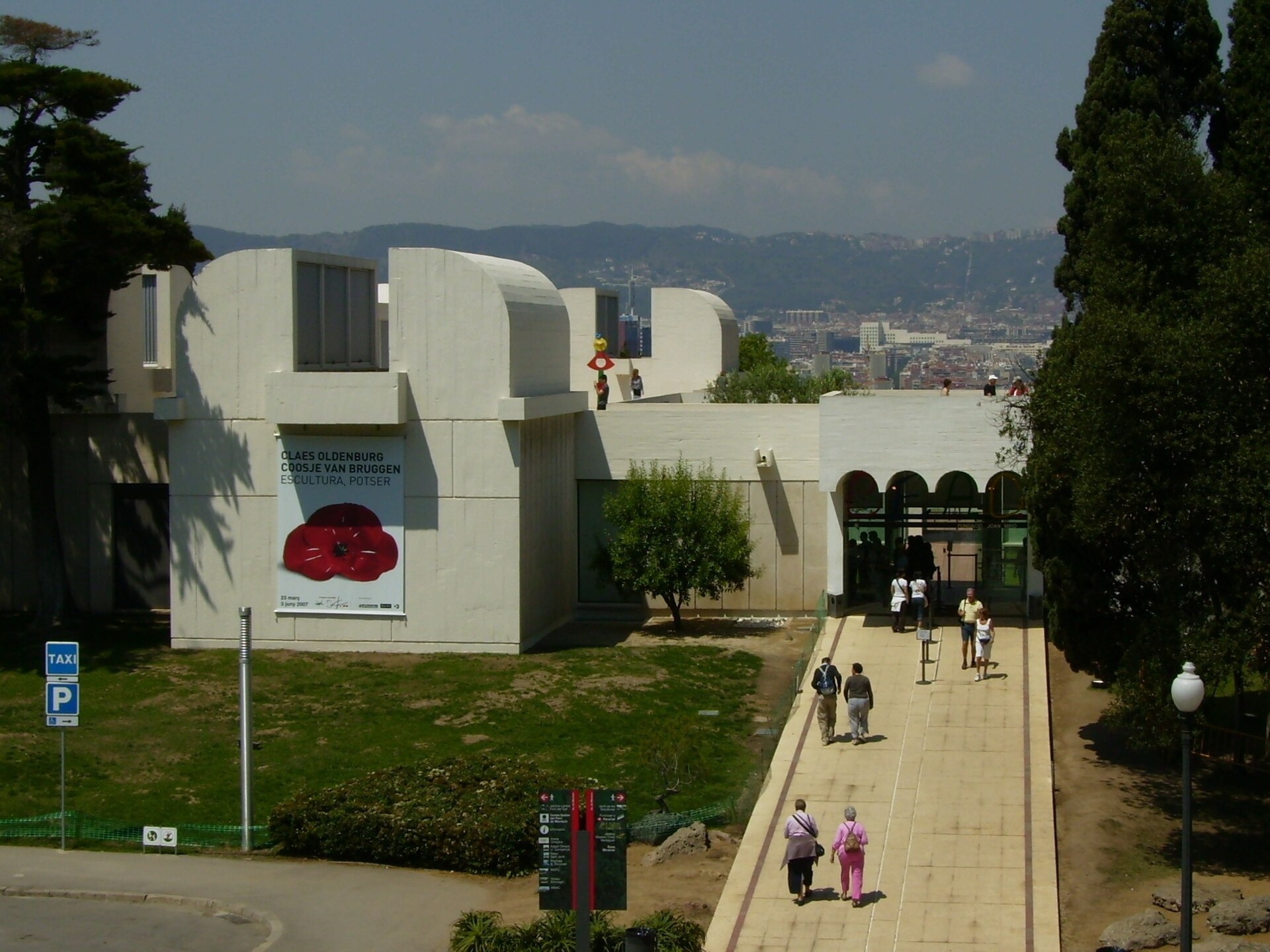
Is it worth combining MNAC with other Montjuïc attractions? Yes — the Fundació Joan Miró, the Olympic Stadium, and the Magic Fountain are all nearby, making it easy to plan a full day exploring the hill.
Nearby places

Earn badges for the places you visit
Download NextOnTrip, discover new places and check off your trails.