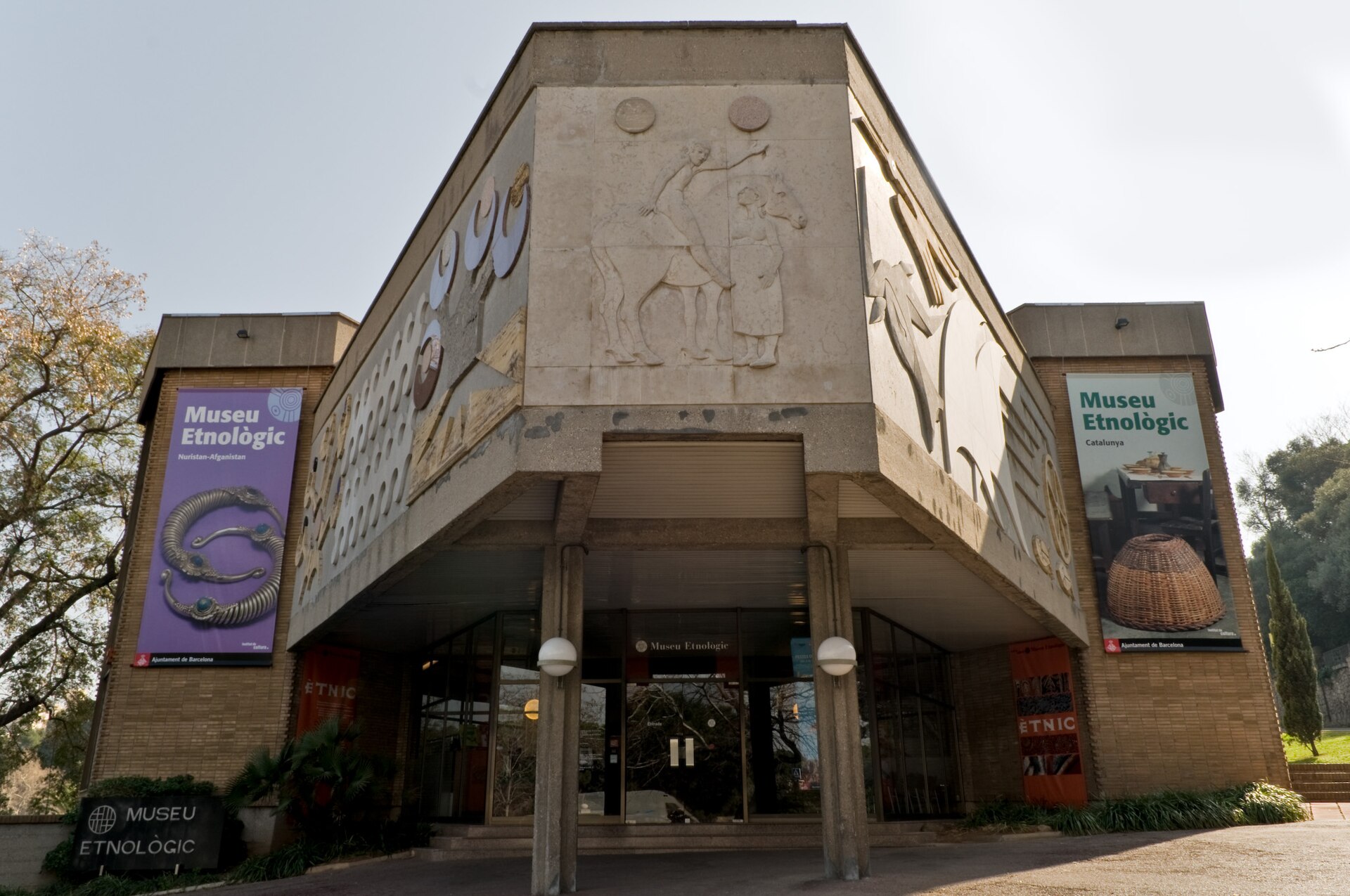
About this place
Museu Etnològic i de Cultures del Món is Catalonia's leading ethnology museum, set on Montjuïc hill in Barcelona next to the Laribal Gardens. Its holdings span more than 70,000 objects gathered from the Iberian Peninsula and from all five continents, making it one of the most wide-ranging collections of its kind in Spain.
What's inside?
The permanent exhibition, titled "Feel Our Heritage," builds around a straightforward idea: everyday objects from different cultures are placed side by side to show how distinct societies have tackled similar human needs — food, clothing, belief systems, the organisation of domestic space. More than 10,000 items are on display across the galleries, and the museum additionally holds an archive of roughly 50,000 films and photographs documenting traditional cultures worldwide.
The Montjuïc building has its own architectural story. It was the first structure in Barcelona designed from the ground up specifically to house a museum, opening in 1973 as the home of the Museu Etnològic. After a four-year renovation, it reopened to the public in 2015.
How did the museum come about?
Its origins trace back to the late 1910s, when a group of Catalan ethnographers recognised the need to systematically document and preserve traditional cultures. That effort eventually produced two separate institutions: the Museu d'Indústries i Arts Populars, founded in 1942, and the Museu Etnològic i Colonial, established in 1949. Their collections formed the basis of what the museum holds today.
In 2017, the Museu Etnològic de Barcelona merged with the Museu de Cultures del Món, and the following year the combined institution adopted its current name — Museu Etnològic i de Cultures del Món, known by the acronym MUEC. The merger was more than a rebrand: it brought two separate collecting traditions together into a single narrative about global cultural diversity.
How many sites does it have, and where are they?
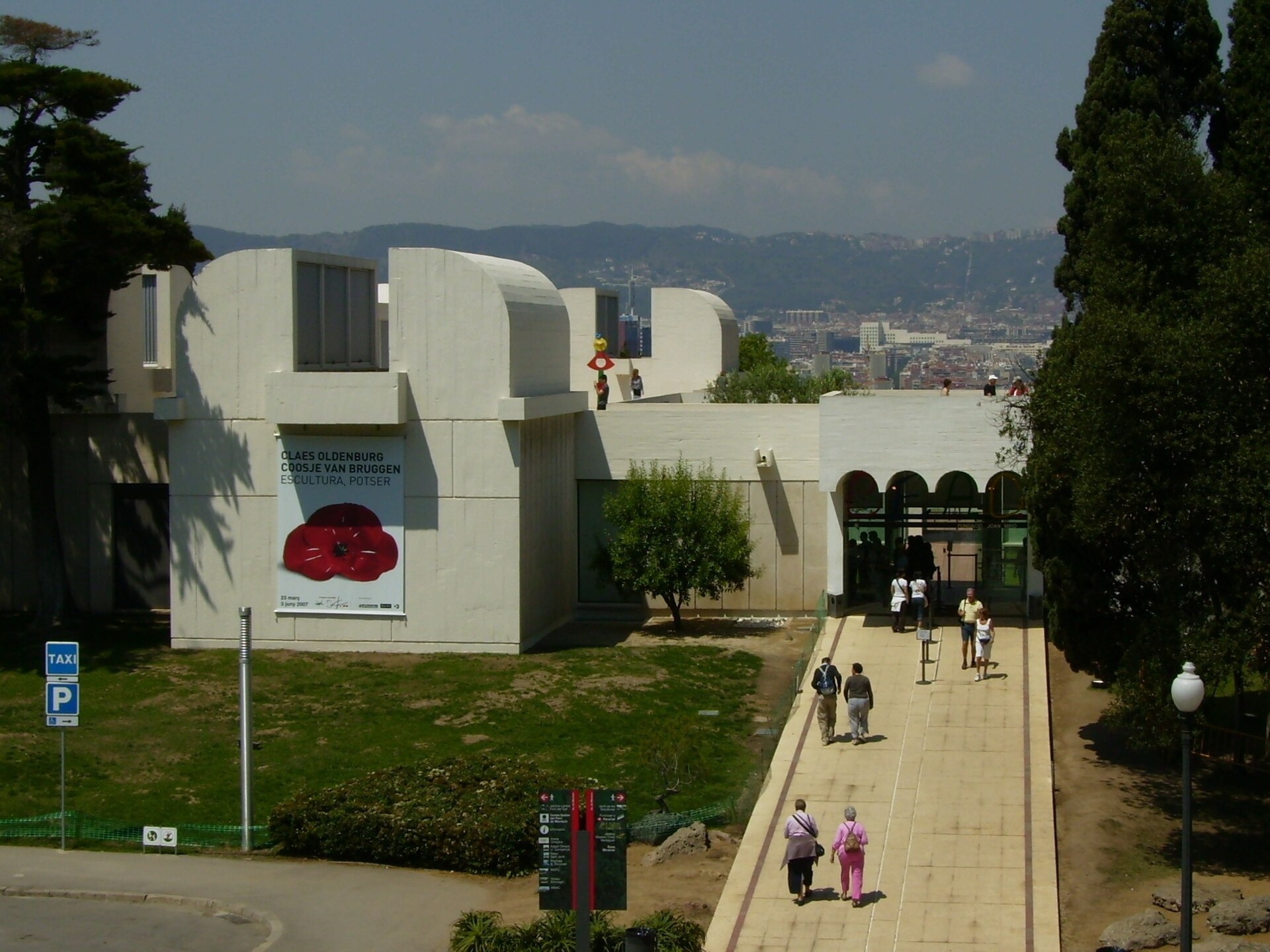
The museum operates across two venues. The main site sits on Montjuïc, at Passeig de Santa Madrona 16, surrounded by the greenery of Parc de Montjuïc — close to other attractions in that part of the city, such as Poble Espanyol and the Fundació Joan Miró. The second venue is in the Montcada district, in Barcelona's historic centre, near the Picasso Museum. Both form a single institution but each highlights a different side of the collection.
Who is this museum for?
It suits visitors with an interest in anthropology, colonial history, and cross-cultural exchange, but it also works well for families with children — the display method leans on side-by-side comparisons and tangible objects rather than dense text panels. It's a natural stop for anyone exploring Montjuïc who wants more than views and Olympic-era architecture on their walk up the hill.
Frequently asked questions
Where exactly is the museum located? The main building stands on Montjuïc, at Passeig de Santa Madrona 16, next to the Laribal Gardens. A second venue is located in the Montcada district in the city centre.
How many exhibits are on display? More than 10,000 objects are shown across the galleries, out of a total collection of over 70,000 items plus an archive of around 50,000 films and photographs.
What sets MUEC apart from other ethnographic museums in Spain? It's the largest institution of its kind in Catalonia, formed by merging two historic museums — the Museu Etnològic de Barcelona and the Museu de Cultures del Món — into one between 2017 and 2018.
Is the Montjuïc building itself worth noting? Yes — it was the first building in Barcelona purpose-built to house a museum, opened in 1973 and later fully renovated, reopening in 2015.
Nearby places

Earn badges for the places you visit
Download NextOnTrip, discover new places and check off your trails.