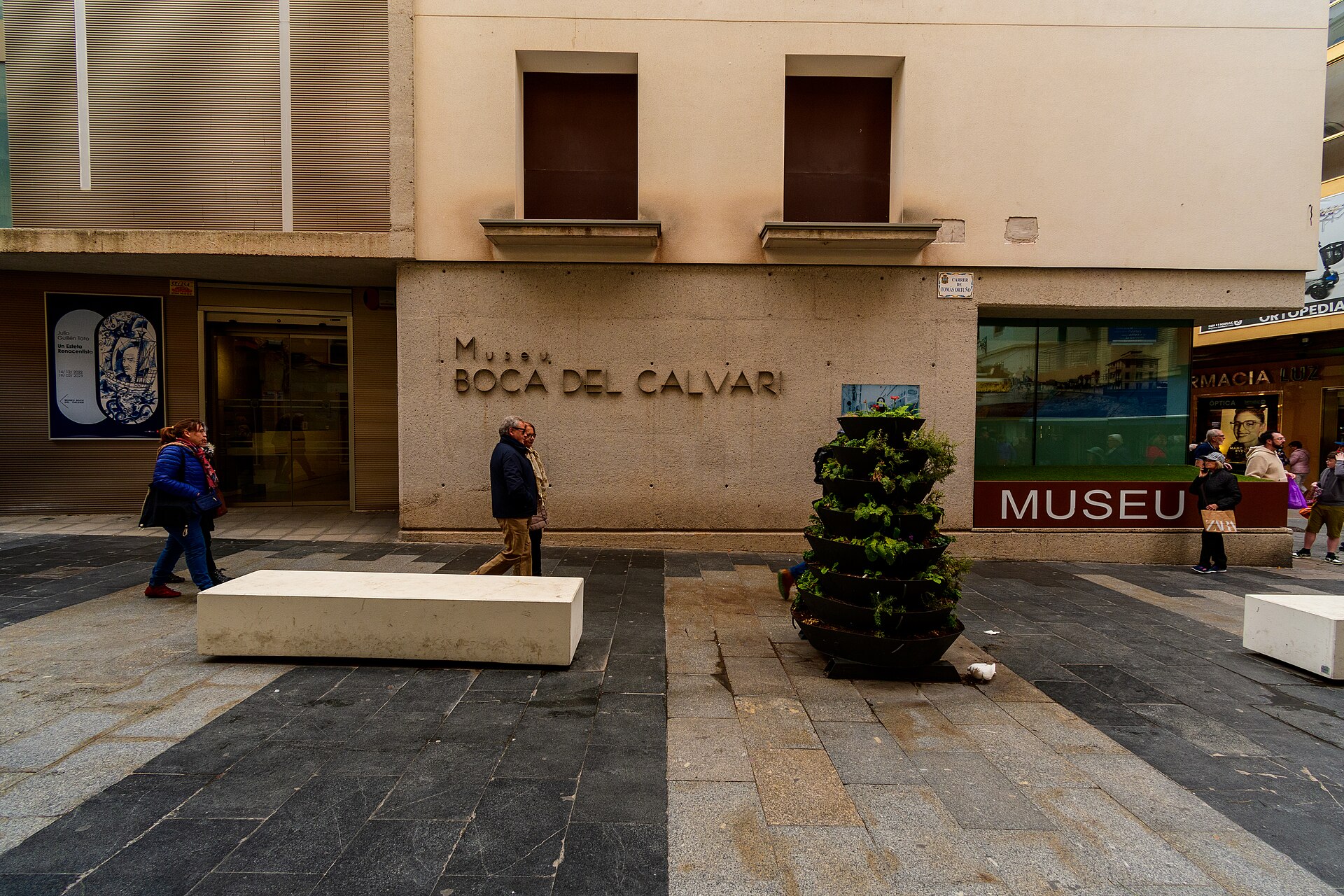
About this place
Museu Boca del Calvari is the municipal history and art museum of Benidorm, on Spain's Costa Blanca. It stands on Calle Tomás Ortuño in the town centre, on the site of Benidorm's original town hall — land donated to the municipality by Gaspar Ortuño Orts back in 1916. The old building was replaced in 2012 by a contemporary structure with a fully glazed ground floor, an investment of roughly 1.6 million euros supported through a regional development plan. The museum opened its doors to the public in March 2015.
What will you see inside?
The museum's programme rests on two pillars. The first is a permanent archaeological display, the Lluís Duart i Alabart Archaeological Hall, opened in July 2024. It brings together more than 500 pieces spanning the Neolithic period to the 20th century, drawn from the town's archaeological, archival, library and photographic collections. Its centrepiece is a Roman lead anchor weighing 350 kilograms — the largest of its kind ever found in the province of Alicante.
The second pillar is a rotating programme of temporary exhibitions covering both local history and contemporary art. Past shows have featured photographer Martin Parr and architect Óscar Tusquets, alongside thematic exhibitions such as a retrospective on the Benidorm International Song Festival (1959–2006). The museum has also displayed finds from local excavations spanning prehistory to the early modern era, tracing how the town evolved from its earliest settlers into the tourist resort it became in the second half of the 20th century.
How do you get there, and when should you go?
Museu Boca del Calvari sits right in Benidorm's old town, an easy walk from either Levante or Poniente beach into the historic centre. The building is fully accessible, with ramps, a lift and adapted facilities for visitors with disabilities.
Admission is free. The museum generally opens in the afternoon and evening, with longer hours in the summer months — it's worth checking the current schedule before visiting, since opening times shift with the season and with whatever exhibition is running. Guided tours can be arranged for groups.
Early afternoon is a good time to visit, giving you somewhere cool to spend an hour during the hottest part of the day before heading back out to the beach or into the old town's restaurants in the evening.
Who is this museum for?
It suits visitors curious to see a side of Benidorm beyond the beaches and high-rises: a town with a history reaching back to prehistoric and Roman times, long before it became one of the Costa Blanca's best-known resorts. The archaeological hall will appeal to anyone interested in the region's past, while the changing temporary exhibitions also draw in art and photography enthusiasts.
Frequently asked questions
Is admission free? Yes, entry to the museum is free of charge.
Where exactly is the museum located? On Calle Tomás Ortuño, in the centre of Benidorm, in the building that replaced the town's old town hall.
What is the museum's main exhibit? A 350-kilogram Roman lead anchor, the largest ever found in the province of Alicante, displayed in the Lluís Duart i Alabart Archaeological Hall.
Is the museum accessible for visitors with disabilities? Yes, the building has ramps, a lift and fully adapted facilities.
Nearby places

Earn badges for the places you visit
Download NextOnTrip, discover new places and check off your trails.