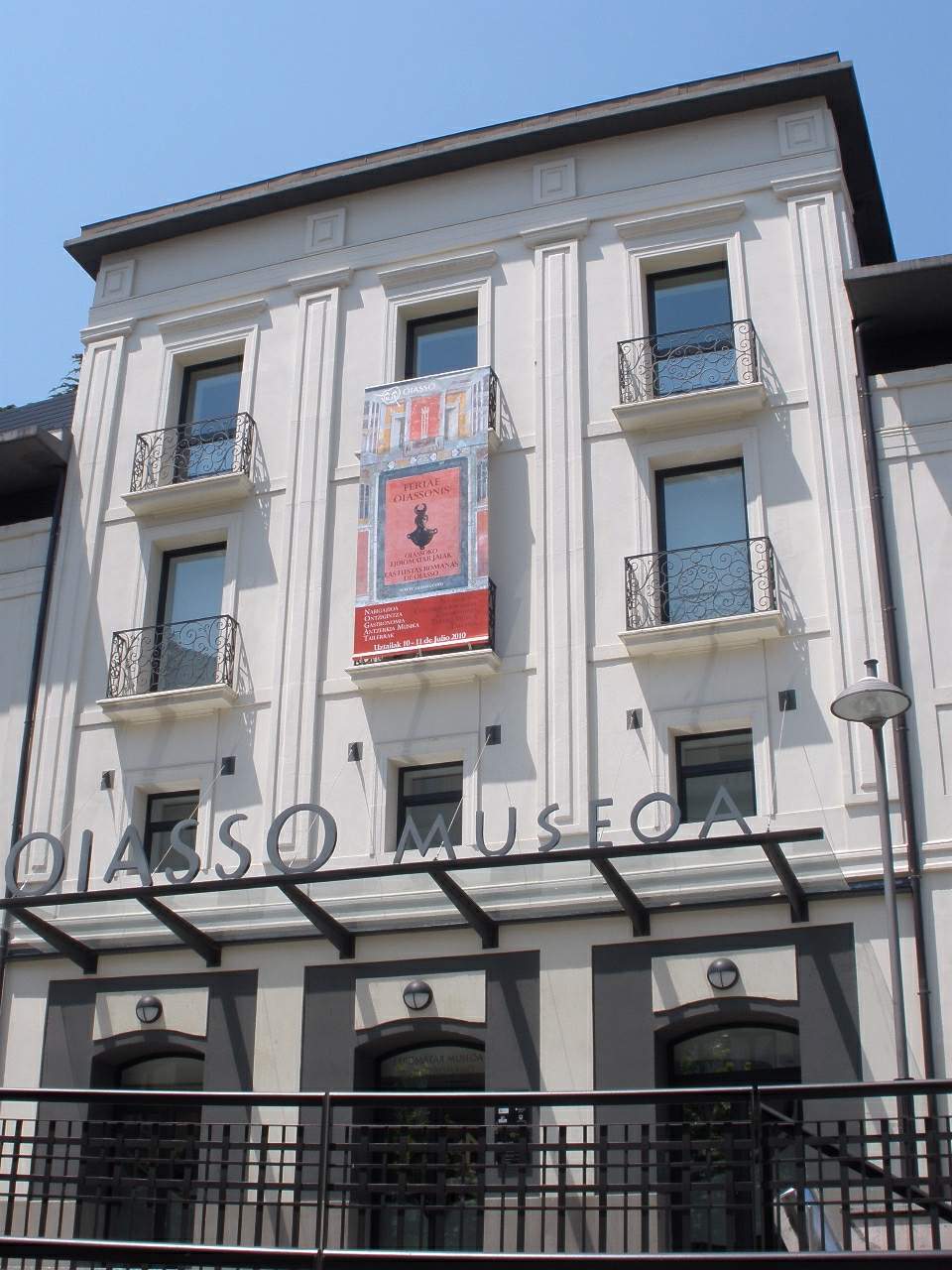
About this place
Museo Romano Oiasso in Irun is a small but content-rich archaeology museum dedicated to the town's Roman past, sitting right on the Bidasoa river near the border with France. Its name refers to Oiasso, the ancient settlement that served as a trading port at the western edge of the Roman Empire's reach into the Iberian Peninsula. The exhibition is built around finds uncovered during construction work and excavations carried out in the heart of modern Irun, so the museum literally stands above part of the site it describes.
What's inside the museum?
The display is organised into three themed rooms. The first looks at cultural contact, showing how the local Vasconic population lived before the Romans arrived and how daily life changed once relations with the newcomers began. The second room focuses on the port itself, presenting objects tied to maritime trade and fishing — the two economic activities that drove Oiasso's growth. The third room recreates everyday life in a Roman provincial town, covering food, clothing, writing, leisure and religious practice. Most exhibits are everyday objects, pottery and tools recovered from archaeological digs across the town.
How do you get there?
The museum sits at Eskoleta 1, in Irun's historic centre, within easy walking distance of the train station and the town's main landmarks. Irun lies right on the Spanish-French border, making it a natural stop for travellers moving between the Basque Country and French Aquitaine, for example alongside a visit to nearby Hondarribia or Saint-Jean-de-Luz.
When should you visit and how does a visit work?
Opening hours shift with the season. From June to September the museum opens Tuesday to Saturday from 10:00 to 20:00, and on Sunday only until 14:00. From October to May a shorter schedule applies: Tuesday, Wednesday, Thursday and Sunday from 10:00 to 14:00, with Friday and Saturday adding an afternoon slot from 16:00 to 19:00. The museum is closed on Mondays and on Sunday afternoons year-round, as well as on a handful of specific holidays in December and early January. Visitors who want a guided visit can join a tour in Spanish at 11:00 or in Basque at 12:30; these tours run about 75 minutes and require booking ahead by phone.
Who is this museum for?
Oiasso works best for visitors drawn to archaeology and ancient history who want something more intimate than the large-scale Roman museums found elsewhere. It's a compact space where the exhibits have a direct link to the location — you're effectively standing on the footprint of the old port while looking at objects pulled from beneath the town. It also pairs well with a wider Basque Country itinerary, especially alongside the coastal towns nearby.
Frequently asked questions
Is the guided tour worth it? Yes — a guide helps tie the three rooms together into a coherent story about the port town, which matters since many exhibits are small everyday objects that are easier to appreciate with context.
How long does a visit take? A self-guided visit through the three rooms usually takes about an hour, while the guided version runs roughly 75 minutes.
Is the museum suitable for children? Yes — the compact format and the everyday-life focus (food, clothing, play) make it accessible for younger visitors too.
Are there other historical sights nearby in Irun? Yes — the museum sits in the town centre near other historical points in Irun, and it's a short trip from the coastal town of Hondarribia.
Nearby places

Earn badges for the places you visit
Download NextOnTrip, discover new places and check off your trails.