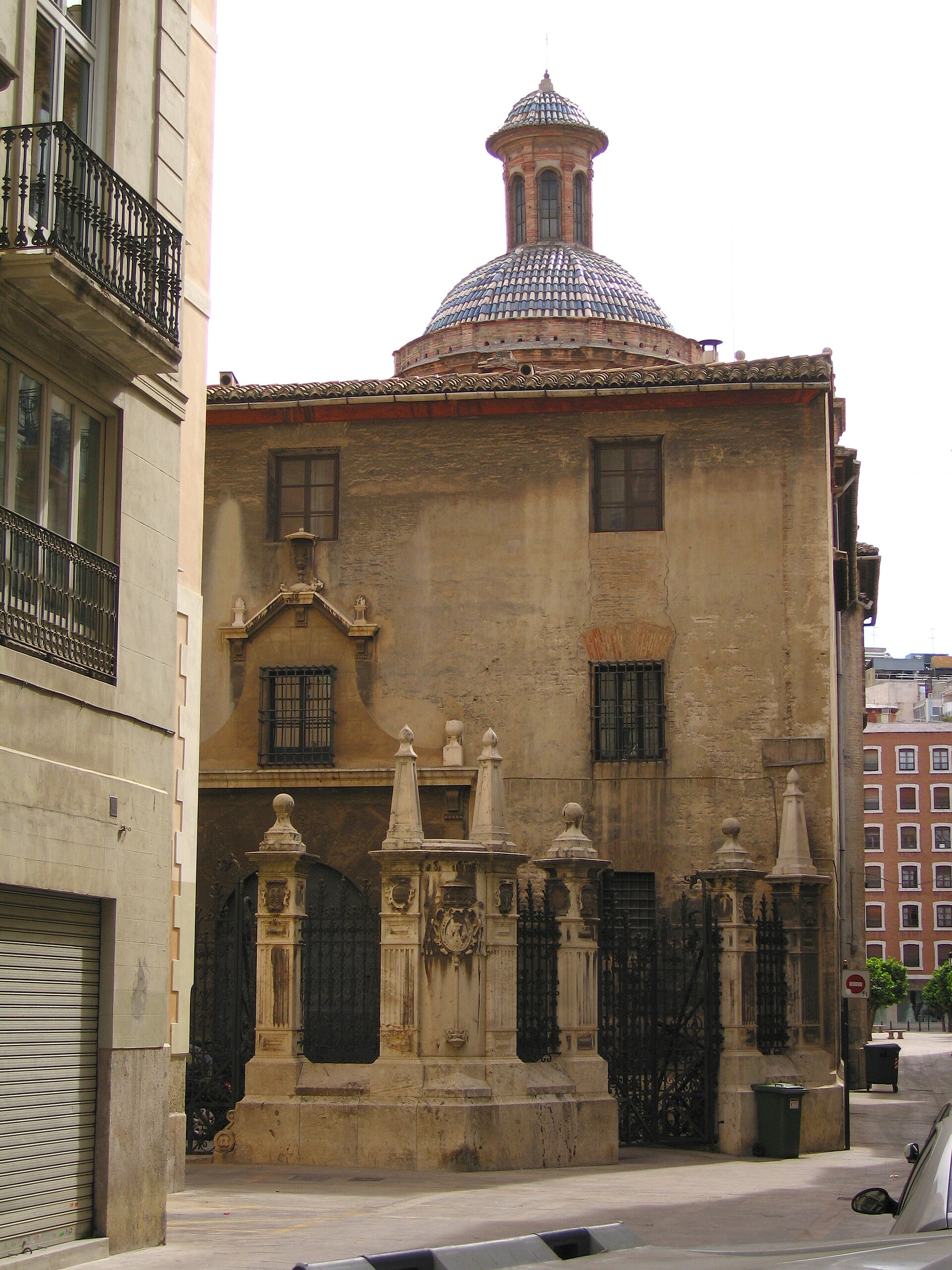
About this place
Museo del Patriarca is a compact but art-packed museum in Valencia, tucked inside a former seminary and college on calle de la Nau, directly opposite the historic La Nau building, once home to the city's old Universidad Literaria. Officially the Real Colegio Seminario del Corpus Christi, the complex was founded in 1583 by Patriarch Juan de Ribera and still functions today as a working church and educational institution, with one wing opened to visitors as a museum housing the founder's private art collection.
What should you know before visiting?
The college was established to train clergy in the spirit of the Counter-Reformation, and Juan de Ribera — Archbishop of Valencia and Viceroy of Valencia — made sure the building served not only as a school but also as a showcase for fine art. The result is a painting collection that has survived almost intact for over four centuries, a rare feat for a private ecclesiastical collection of this age.
How do you get to Museo del Patriarca?
The museum sits right in the heart of Valencia's old town, a short walk from Plaza del Ayuntamiento and the cathedral. Walking is by far the easiest way to arrive, since the surrounding streets are narrow and largely closed to car traffic. The nearest metro and bus stops are within a few hundred meters, and calle de la Nau itself is easy to find thanks to its neighbor, the former university building La Nau, which makes a reliable landmark.
What will you see inside?
The centerpiece of a visit is the college's Renaissance courtyard — a square space wrapped in two-tiered arcades, considered one of the finer examples of this architectural style in the city. Around it, exhibition rooms display the painting collection assembled by Patriarch Ribera, featuring Spanish and Italian masters of the era, including works tied to Valencia's own school of religious painting. The collection also includes a piece attributed to El Greco, making the museum one of the few places in the Valencia region where his work can be seen. The visit extends into the collegiate church itself, with its richly decorated interior, and the sacristy, which preserves liturgical objects connected to the founder.
What sets the complex apart architecturally is that it has combined a religious, educational, and museum function in a single building almost without interruption since the 16th century. That gives a visit a different feel from a typical museum: this was never converted into an exhibition space after the fact — it was designed from the start to house and protect art.
When is the best time to visit?
The museum keeps limited opening hours typical of a church-run institution, so it's worth checking the current schedule before setting out, since religious services can close the building to casual visitors on certain days. Weekday mornings tend to be the quietest window for taking in the courtyard and exhibition rooms without a crowd. Given its small footprint, a visit usually takes 30 to 60 minutes, which makes it easy to pair with a stop at the neighboring La Nau building or the nearby cathedral.
Frequently Asked Questions
Is Museo del Patriarca the same as Valencia Cathedral? No. It's a separate site — a former college and seminary founded by Patriarch Juan de Ribera in 1583, located on calle de la Nau near the cathedral but operating as its own institution, with its own church and museum.
Can you see an original El Greco painting here? Yes, the collection includes a work attributed to the artist, making this one of the few places in the Valencia region where his painting can be viewed.
How much time should you set aside? Given the museum's small scale, half an hour to an hour is usually enough to take in the courtyard, the church, and the painting galleries.
Is it worth combining with other nearby sights? Definitely — the building faces the former university building La Nau, and from there it's a short walk to the cathedral and Plaza del Ayuntamiento, making it easy to fold into a single walk through the historic center.
Nearby places

Earn badges for the places you visit
Download NextOnTrip, discover new places and check off your trails.