About this place
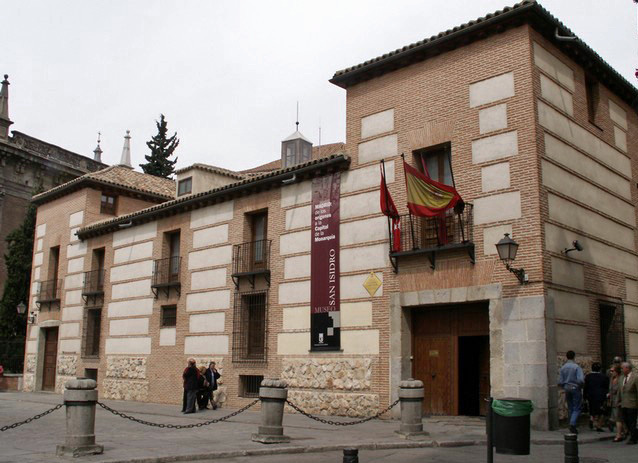
Museo de San Isidro traces the earliest chapters of Madrid's history from inside a former noble mansion in the La Latina district.
Where is the museum and what building houses it?
The museum occupies the Casa de San Isidro, on Plaza de San Andrés, a mansion built in the 1500s for the Lujanes family before passing to the counts of Paredes. Centuries of neglect left the structure in poor shape, and part of it was even pulled down, but a careful restoration preserved its most valuable features: a 17th-century chapel, a Renaissance courtyard, and a well tied to a local legend. The museum opened its doors on 15 May 2000, the feast day of the city's patron saint.
Who was San Isidro, and why does he have a museum named after him?
San Isidro Labrador was an 11th-12th century farm laborer who became Madrid's patron saint. Several miracle stories surround him, the best known involving his young son, who fell into a well; when the father prayed, the water rose and the boy was saved unharmed. That very well stands inside the museum today, which explains why the building has long been linked to the saint's cult and why it draws pilgrims around his feast day.
What does the permanent collection contain?
Most of the holdings came from the now-defunct Instituto Arqueológico and the old Municipal Museum of Madrid. Visitors will find archaeological finds, scale models, and engravings tracing settlement in the area from the Stone Age through Roman and Visigothic times to the Muslim period, when the fortress of Mayrit was built — regarded as the seed of present-day Madrid. The objects on display, gathered through more than a century of excavation work, reveal how successive communities lived, what they believed, and how they related to the land around them.
How is the visit organized?
The permanent exhibition is arranged in three sections: the period before the city existed, the Muslim-era Mayrit, and a final chapter devoted to Madrid itself and to San Isidro. Beyond the galleries, the museum offers a Renaissance courtyard, an archaeobotanical garden showcasing plants historically tied to the region, and a visitable storage area — an unusual feature for a museum of this size. Inside, look out for two sculptures that once decorated the Cibeles Fountain, one of Madrid's best-known landmarks.
How much does it cost, and who is it for?
Admission is free. The museum suits visitors interested in archaeology, urban history, and the legends of Madrid's patron saint, and its manageable scale makes it an easy, unhurried stop for families with children as well.
Frequently asked questions
Is admission to Museo de San Isidro free? Yes, entry is free for all visitors.
What is worth seeing besides the archaeological exhibits? The Renaissance courtyard, the 17th-century chapel, the well linked to the San Isidro legend, and the archaeobotanical garden.
Which period of Madrid's history does the exhibition cover? From the earliest traces of settlement through the Muslim fortress of Mayrit to the era when Madrid became Spain's capital.
Why did the museum open specifically on 15 May? That date marks the feast of San Isidro, Madrid's patron saint, directly connected to the building and the well inside it.
Nearby places

Earn badges for the places you visit
Download NextOnTrip, discover new places and check off your trails.