About this place
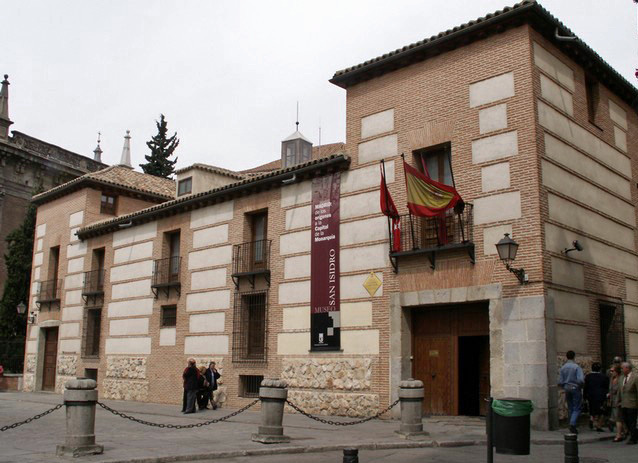
Centro Cultural La Corrala is one of the last authentic examples of 19th-century working-class housing in Madrid, standing on Calle Carlos Arniches 3-5, right next to the famous El Rastro flea market, in the heart of the Lavapiés district.
What exactly is a "corrala"?
A corrala is a housing type unique to 19th-century Madrid: a multi-storey block built around an open central courtyard, with shared galleries running along each floor to give access to the individual dwellings. This particular building went up around 1860. Its ground floor originally worked as a commercial gallery and a stopping point for carts, while the upper floor held modest flats and cheap lodging houses. This kind of construction was concentrated above all in Lavapiés, Embajadores and La Latina, close to the old municipal slaughterhouse and the Fábrica de Tabacos (tobacco factory) — the workplaces that drew rural migrants into the capital.
How did it survive to the present day?
Despite its poor structural condition, the corrala on Carlos Arniches remained inhabited right up until the 1990s. It was only thanks to joint efforts by the Madrid City Council and the residents' association "La Corrala" that the building was saved from demolition. A restoration project led by architect Jaime Lorenzo was completed in 2008, though the doors did not actually open to the public until 2012. Today the building belongs to the Universidad Autónoma de Madrid (UAM) and operates as a cultural centre.
What will you find inside?
The restored interior houses the Museo de Artes y Tradiciones Populares, the only museum of its kind — dedicated to folk ethnography — within the city of Madrid itself. The permanent collection covers subjects tied to traditional rural and popular life: the human life cycle and popular religiosity, the annual festive calendar, musical instruments, dances and adult games, domestic chores, farming, livestock, hunting and fishing, craft trades, and rural transport. A separate room hosts rotating temporary exhibitions built around specific themes, such as the yearly cycle of festivals or the labyrinth as an archetypal image of the human journey. The centre also runs workshops, concerts and other cultural events aimed at both locals and visitors.
How do you get there?
The building sits right in the middle of Lavapiés, just a few steps from El Rastro — pairing a visit with a stroll through the Sunday flea market makes for a natural combination. The nearest metro stations are Embajadores and Lavapiés (line 3), both only a short walk away through the district's narrow streets.
When should you visit?
The centre is open Monday to Friday during morning and afternoon hours, and on Saturday mornings. It stays closed on Sundays, public holidays, and throughout the whole month of August, so keep that in mind when planning a summer trip to Madrid. Admission is free — groups of fewer than 7 people can walk straight in, while larger groups (up to 20 people) need to book ahead by phone.
Frequently Asked Questions
Is there an entrance fee for Centro Cultural La Corrala? No, entry to the exhibitions is free. Phone reservations are only required for groups of 8 to 20 people.
How long does a visit take? Given the modest size of the building, seeing the full permanent collection plus any temporary exhibition usually takes around 45 to 60 minutes.
Is it worth combining with a visit to El Rastro? Definitely — the centre sits right next to the market, so a good plan is to visit on Saturday morning while the museum is open, then explore El Rastro itself on Sunday, when the museum is closed.
Is the building original or a full reconstruction? The structure and layout date from around 1860 and are authentic. What took place was a thorough restoration, completed in 2008, rather than a rebuild from scratch, so the historic character of the corrala has been preserved.
Nearby places

Earn badges for the places you visit
Download NextOnTrip, discover new places and check off your trails.