About this place
Moulin de Dosches: the windmill that came back to a village in the Aube
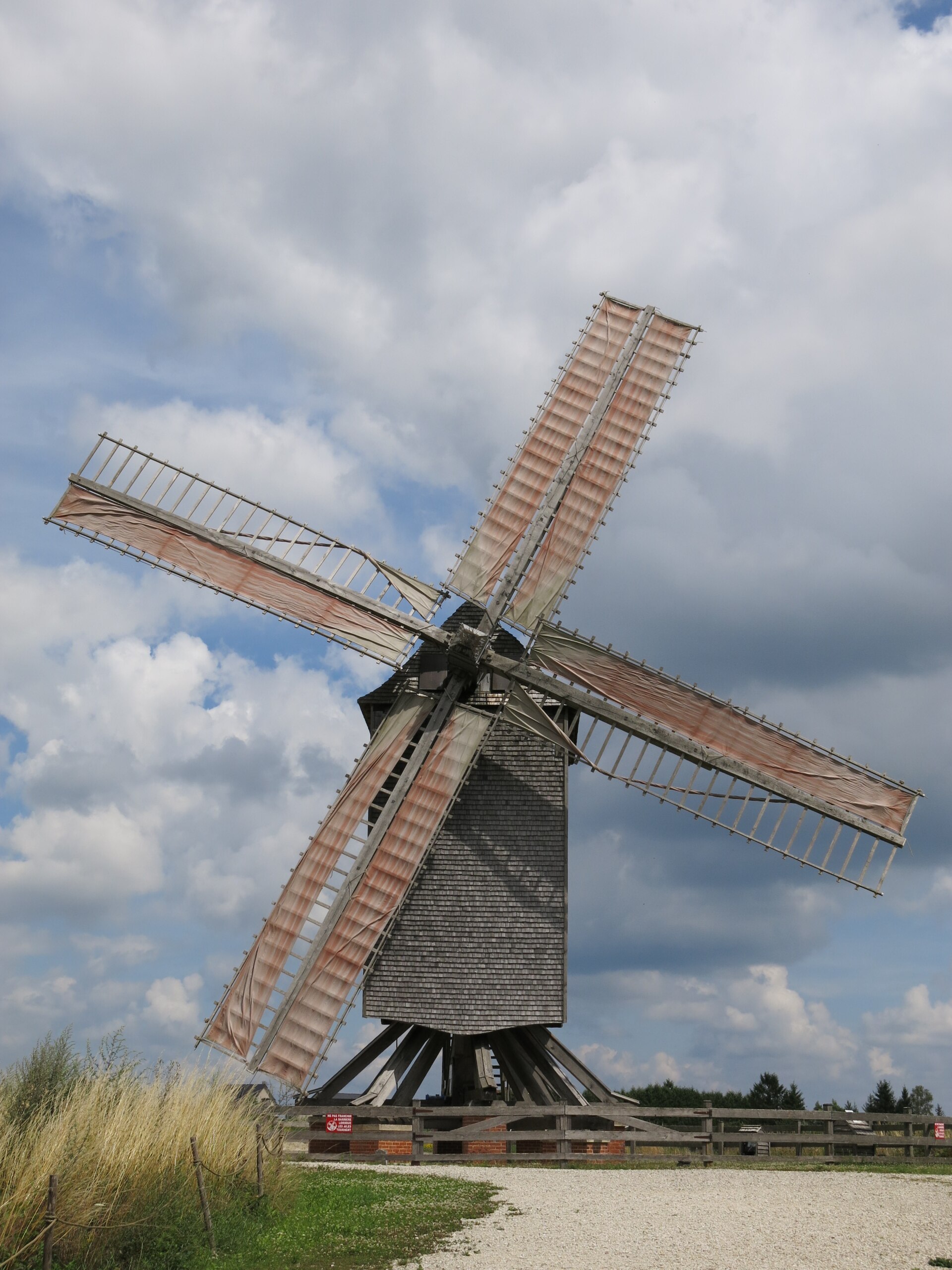
Moulin de Dosches stands on a rise above the village of Dosches, right on the edge of the Forêt d'Orient Regional Nature Park in the Aube department of France. Despite the generic name "moulin," this is not a watermill but an all-timber windmill mounted on a rotating pedestal — a faithful rebuild of the type that once dotted the Champagne countryside in the 18th century.
Why a windmill here, and not a watermill?
Dosches itself once had two windmills of its own. By the end of the 18th century, close to a hundred such windmills were turning across the Aube, mostly in dry spots or near small streams where water power wasn't practical. By 1899 only three of that hundred were left standing, and within a few more years windmills had all but vanished, pushed out by more efficient industrial flour mills. Neither of Dosches' original two windmills survived into the modern era.
Who rebuilt it, and when?
The revival was driven by the Association des Moulins à Vent Champenois, founded in 2001 to bring this lost heritage back. The design and construction were led by Erwin Schriever, a Dutch master carpenter specialized in this type of mill. The build stretched over roughly six years and drew on the work of close to 300 trainees and volunteers, who learned traditional carpentry techniques in the process. The prefabricated frame elements were trucked to the site in September 2006, and the windmill was formally inaugurated on 23 June 2007.
How is the mill built, and how does it actually turn?
Moulin de Dosches is a "post mill" type structure (moulin sur pivot): the entire upper body, sails included, pivots on its pedestal to face into the wind. The pedestal alone stands 7 metres tall and weighs 7 tonnes; the timber cage measures 8 metres in height with a 4.20-metre side. The main axle runs 6.20 metres long, the gear wheels measure 2.50 metres across, and the sails stretch 10 metres with a 2-metre width. The millstones are 1.50 metres in diameter. Even though the whole structure weighs in at dozens of tonnes, just two people are enough to swing it into the wind using a lever — thanks to the finely balanced pivot mechanism.
What else is there to see on site besides the windmill?
Next to the mill stands a 15th-century tithe barn (grange à dîme), its medieval timber roof still intact, now housing the reception desk and a small gift shop. The site also includes a bread oven, a miller's house, and a herb garden (jardin de simples). The mill is fully operational: visitors can watch flour-milling demonstrations, try out old-fashioned wooden games, and join educational activities. The site also takes part in national heritage events such as the Journées du Patrimoine and the Journées des Moulins.
Frequently asked questions
Is Moulin de Dosches an original historic windmill? No — it's a faithful reconstruction modeled on 18th-century Champagne windmills, built between 2001 and 2007 on the site of the village's former, long-vanished mills.
Who designed and built the windmill? Erwin Schriever, a Dutch master carpenter, led the design and construction on behalf of the Association des Moulins à Vent Champenois, with the help of around 300 trainees.
How does the turning mechanism work? The whole upper structure sits on a pivot and, despite its considerable weight, can be rotated to face the wind by just two people operating a lever.
What can visitors see beyond the windmill itself? A 15th-century tithe barn with the reception and gift shop, a bread oven, a miller's house, a herb garden, plus flour-milling demonstrations and educational activities.
Where exactly is Dosches? Dosches is a village in the Aube department, on the edge of the Forêt d'Orient Regional Nature Park, in the Grand Est region of France.
Nearby places

Earn badges for the places you visit
Download NextOnTrip, discover new places and check off your trails.