About this place
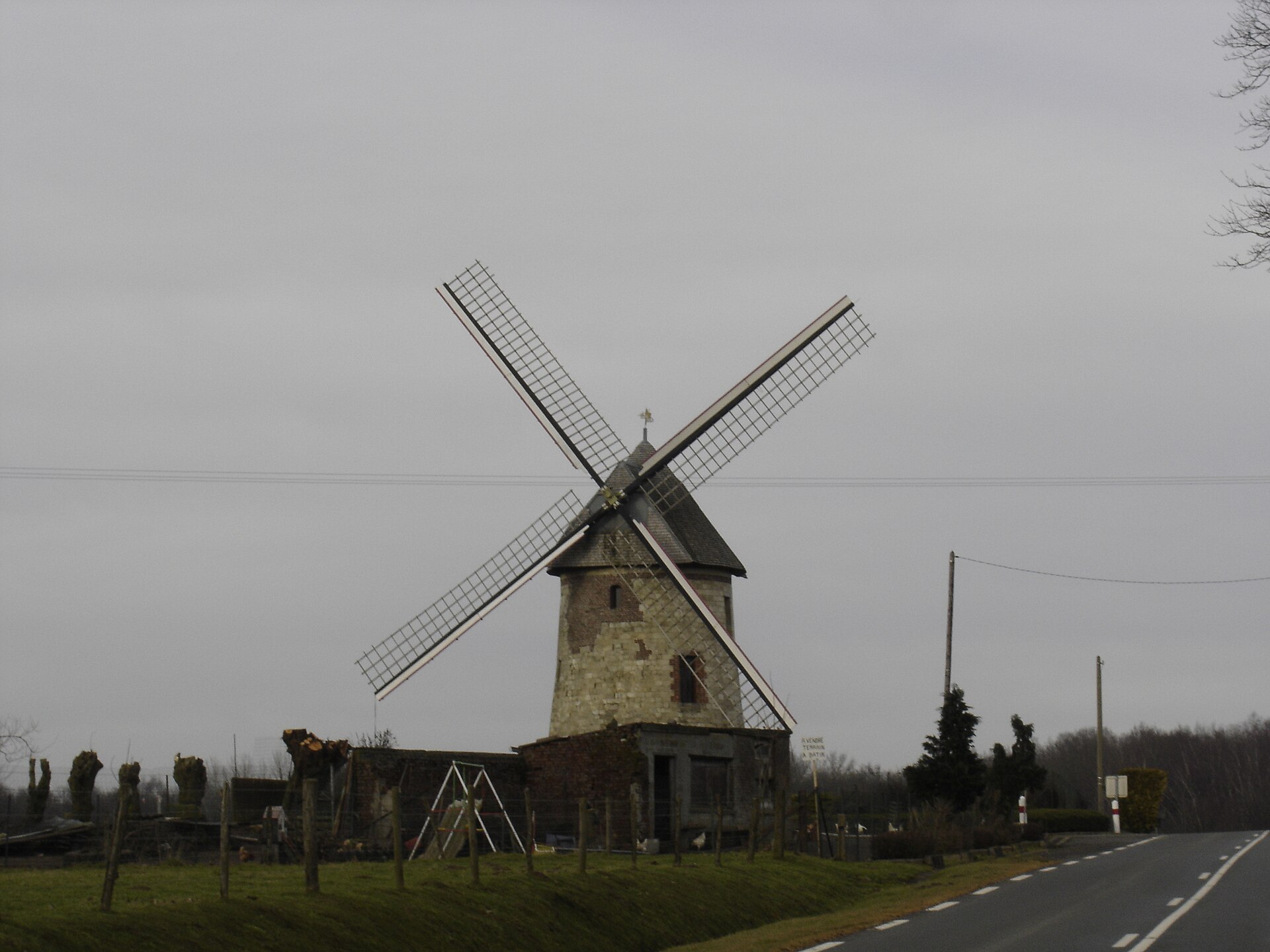
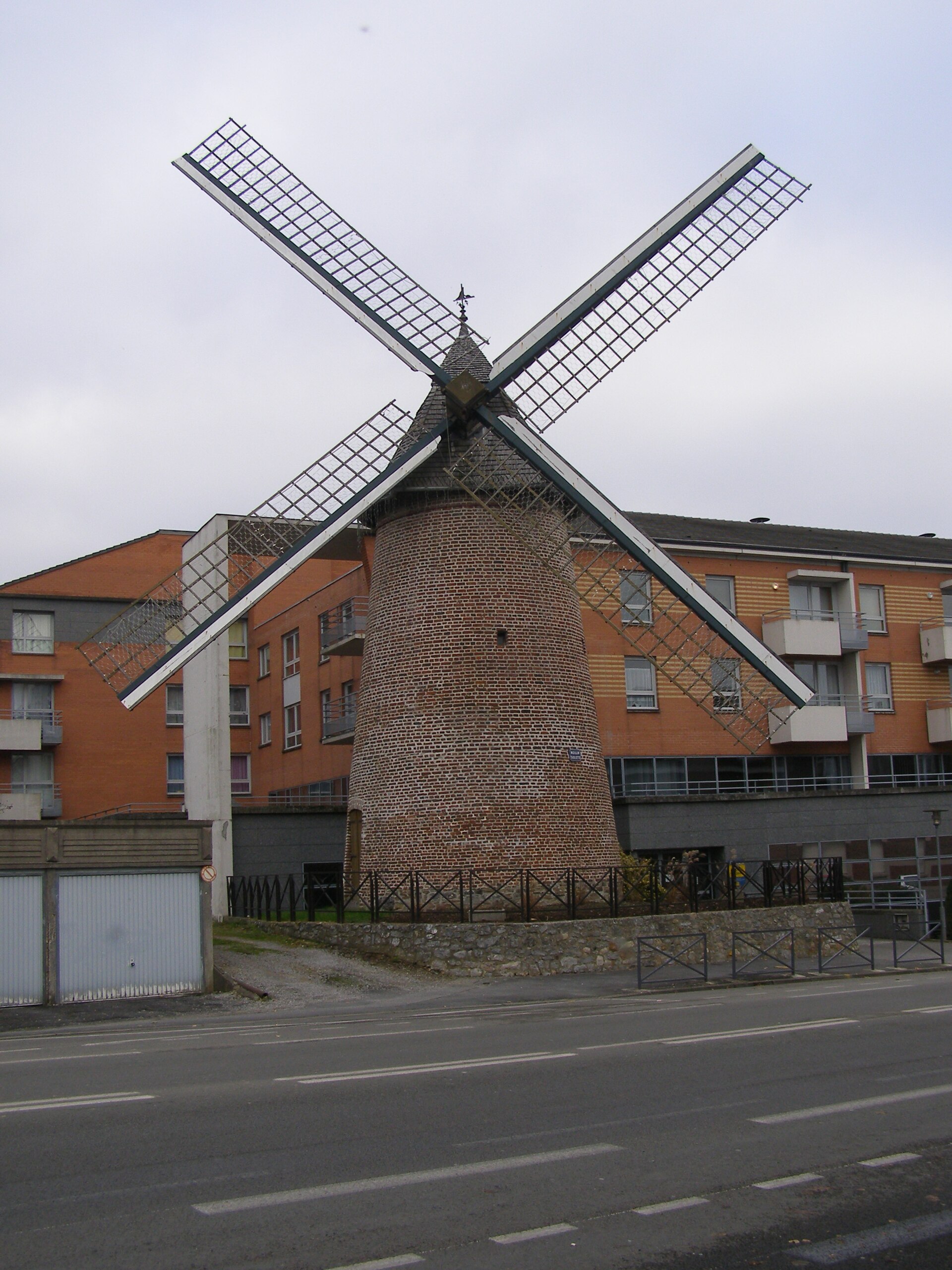
Moulin Blanc is the last surviving windmill in Saint-Amand-les-Eaux, a spa town in the Nord department of northern France. The whitewashed tower is the only remnant of an era when dozens of oil and flour mills operated in the area, and it now stands as one of the few reminders of that milling tradition in the region.
When was Moulin Blanc built?
The mill was built in 1802 by Henri Van Looy, a local oil manufacturer who wanted to compete with another producer in town, named Nicolle. The early 19th century was a golden age for vegetable oil production in Saint-Amand-les-Eaux: in 1862 alone, some 45 hectares of surrounding farmland were given over to rapeseed, and local millers also pressed flaxseed and poppy seed into oil.
What makes this windmill unusual?
Moulin Blanc stands out among the region's windmills because of its dual function. The structure was built with two working levels — one for grinding grain into flour, the other for pressing oil from rapeseed and flax. Combining both processes in a single building was unusual, and it is precisely this feature that makes Moulin Blanc the only mill of its kind north of Paris. The second distinctive feature is a walkway running around the upper part of the tower, where the miller could rotate the cap — the rotating top section holding the mechanism and sails — a full 360 degrees using a hand crank connected to a winch, without ever leaving the platform.
How long did it operate, and what happened afterward?
The mill worked throughout the 19th century and into the first half of the 20th. Its last miller, Donatien Lombart, ran the operation until 1952. After it closed, the windmill stood abandoned for three decades. When the town of Saint-Amand-les-Eaux bought the site in 1982, only the bare stone tower remained — the mechanism and sails were long gone.
How was it restored?
Restoration work began in 1987. Rebuilding the milling mechanism, the internal framework, and the sails took eight years; the project was completed on 1 June 1995, when the sails were mounted and the windmill regained its full silhouette for the first time in decades.
What can visitors see at Moulin Blanc today?
The restored tower now houses a museum dedicated to the history of milling and oil production in the region. It is run by the Association des Amis des Moulins Amandinois (Friends of the Amandinois Mills), a local group dedicated to preserving Saint-Amand-les-Eaux's milling heritage. Visitors can see the reconstructed mechanism as well as the walkway and winch system that allowed the cap to be turned — a technical solution that was unusual for its time.
Moulin Blanc sits within a town best known for its thermal baths and mineral springs, which makes it easy to combine with a spa visit. For anyone interested in industrial heritage and regional architecture, it is a natural extra stop while exploring Saint-Amand-les-Eaux.
Frequently asked questions
Is Moulin Blanc still an active mill? No, milling ended in 1952. The building now operates as a museum covering the history of milling in the region.
What did Moulin Blanc produce? It served a double purpose — grinding flour and pressing oil from rapeseed, flax, and poppy seeds — which was rare among windmills of this type.
Why is it called the "last windmill" of Saint-Amand-les-Eaux? Because it is the only windmill that has survived in the town, even though many similar oil and flour mills once operated there during the 19th century.
When was the windmill restored? The town purchased the abandoned tower in 1982, and full restoration, including the sails, was completed in 1995.
Nearby places

Earn badges for the places you visit
Download NextOnTrip, discover new places and check off your trails.