About this place
Motte den Dulft is a medieval defensive mound in Bornem, in Belgium's Antwerp province, standing on Kloosterstraat right next to the Sint-Bernardusabdij abbey. At first glance it looks like an unremarkable tree-covered hillock, yet it carries layers of history that, according to some hypotheses, may reach back as far as the Gallo-Roman period or the early Frankish era.
Where does the name come from?
The "Dulft" part of the name most likely derives from the Van Der Delft family, who owned the domain in the 14th century — a common naming pattern in the region, where fortified sites took the name of the family that built or later held them rather than a feature of the land itself. The construction of the motte itself, however, is generally attributed to an earlier period, to the first lords of Bornem, who needed a defensive strongpoint guarding access to the settlement.
What exactly is a motte, and what was it for?
A motte is an artificially raised earthen mound on which medieval builders placed a wooden or stone defensive tower — a donjon or keep. It was typically surrounded by a system of moats and embankments, making the whole complex difficult to take without a proper siege. In the case of Den Dulft, the mound formed part of a larger, moat-encircled complex that was itself one element of Bornem's broader defensive system. Alongside the tower stood an adjoining residential dwelling — a common arrangement for this type of site, where the tower served as the last line of defense while everyday life went on in the building next to it.
It's worth noting that the motte-and-bailey design was one of the most widespread types of early medieval fortification across Western Europe: cheap to build, quick to raise, and effective as a way to control the surrounding territory. Den Dulft fits squarely into that tradition as a local example of a system meant to protect the people of Bornem.
A turbulent history: demolition and rebuilding
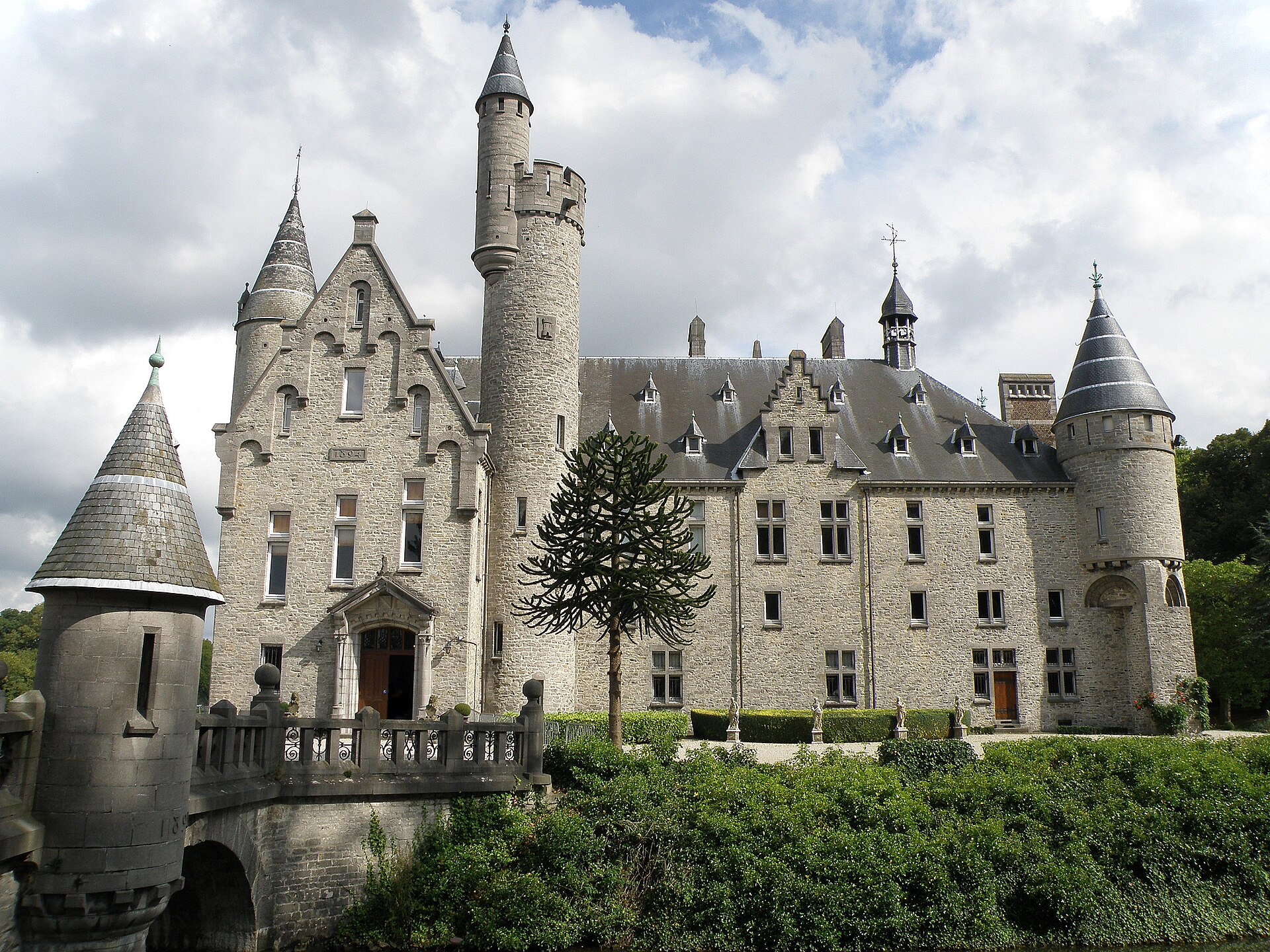
The site's history was anything but a straight line. The donjon itself was demolished in 1737, long before any structures here would receive formal heritage protection. A further blow came in 1798, during the Boerenkrijg (Peasants' War) — an uprising against French rule in what is now Belgium — when the remaining buildings on the site were burned down. Only in 1802 was the present-day Kasteel Dulft (Dulft Castle) built, much as the mound's original tower once had been, and it still stands there today as a witness to that turbulent past.
Protection and status today
The mound itself was protected as a monument, and as part of a protected landscape, in 1978. That same year, Kasteel Dulft was also given landscape protection. This means that even though the original medieval structure vanished long ago, the site itself — its shape, its relationship to the surroundings, and its historical value — has been formally recognized as part of the region's heritage.
Why visit?
Motte den Dulft is a place for travelers who enjoy reading a landscape like a history book. There are no monumental walls or period reconstructions here — instead, there's an earthen mound whose very shape still carries the trace of a function it served centuries ago, standing beside a 19th-century castle that is itself a memento of the turbulent turn of the 18th and 19th centuries. It makes a natural stop for anyone walking the grounds around the Sint-Bernardusabdij abbey who wants to see more than just the monastery itself.
Frequently asked questions
What is a motte? An artificial earthen mound on which a defensive tower was built in the Middle Ages, often together with an adjoining bailey and a moat.
Where does the name Den Dulft come from? Most likely from the Van Der Delft family, who owned the land in the 14th century.
Does the original tower still stand? No — the donjon was demolished in 1737, and the remaining buildings were burned down during the Boerenkrijg in 1798.
What stands there today? Kasteel Dulft, built in 1802, and the earthen mound itself, both protected since 1978 as a monument and landscape.
Nearby places

Earn badges for the places you visit
Download NextOnTrip, discover new places and check off your trails.