About this place
Monumento a los Enamorados is a small, intimate monument in Córdoba, tucked away among the greenery of the Campo Santo de los Mártires gardens, right beside the walls of the Alcázar. It is easy to walk past without noticing, yet the story behind it is worth pausing for.
What does the monument look like?
The monument takes the form of a small open pavilion resting on four columns without a base, topped with a tiled roof. Beneath it stands a pedestal bearing two carved hands, symbolising two intertwined destinies. The hands were sculpted by Pablo Yusti Conejo, while the pavilion itself was designed by architect Víctor Escribano Ucelay in a style echoing traditional Andalusian garden architecture. The monument was unveiled in 1971.
What is the story behind it?
The monument commemorates an 11th-century love story between the poet Ibn Zaydún and Wallada bint al-Mustakfi, a caliph's daughter, poet in her own right, and one of the most independent women of Muslim-era Spain. Their relationship, marked by passionate verse and public scandal, ended in separation when Ibn Zaydún was exiled to Seville, where he later died far from the woman he loved. The gardens of Córdoba, where the couple once walked together, became a recurring symbol of lost love in his poetry — and centuries later, the city chose those same gardens as the setting for a monument to their romance.
How do you get there?
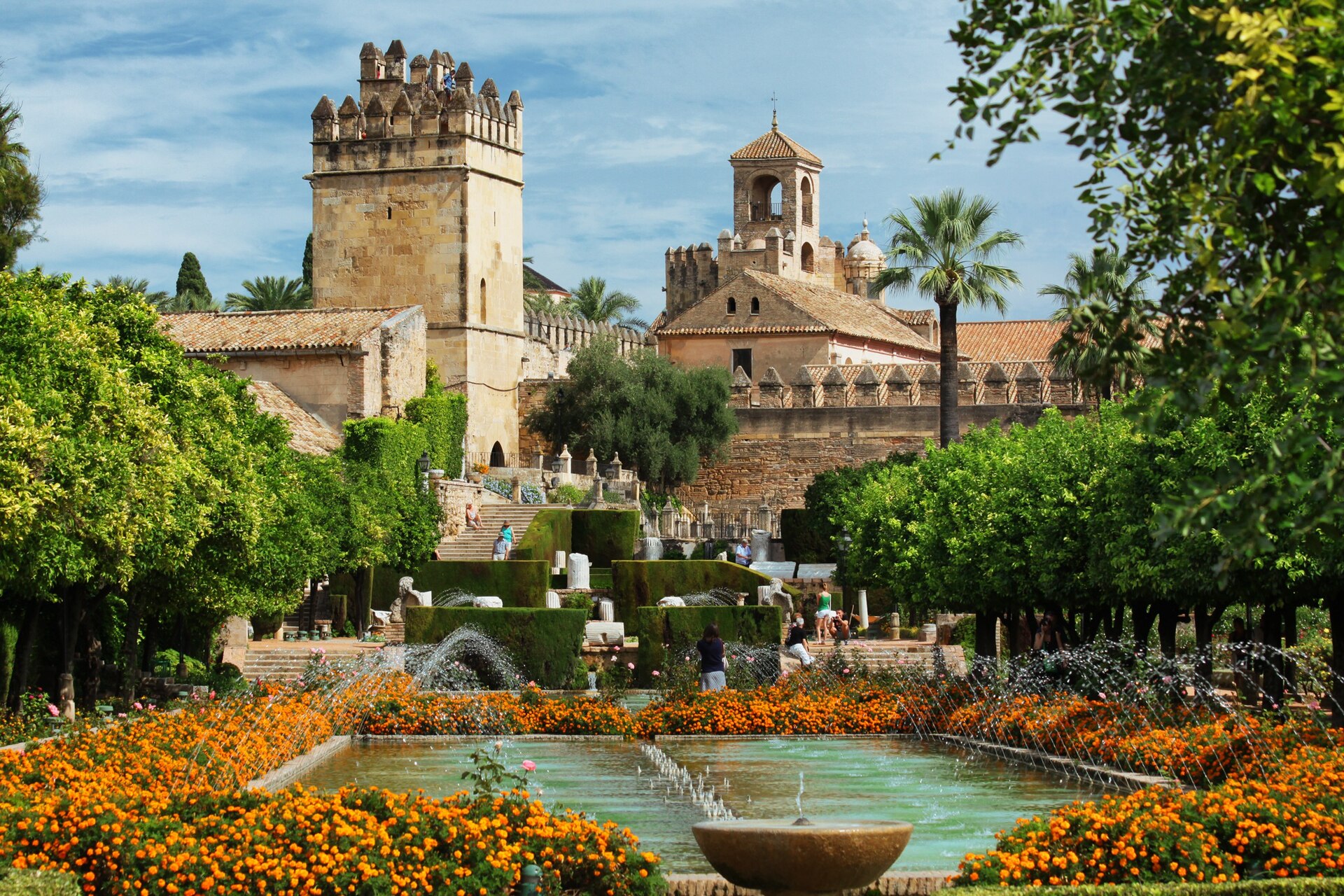
Monumento a los Enamorados sits inside the Campo Santo de los Mártires gardens, right in the heart of historic Córdoba, next to the Alcázar de los Reyes Cristianos and within easy reach of the Roman bridge over the Guadalquivir. The whole area is comfortably walkable from anywhere in the old town, and the monument stands along the garden's main path, so it is hard to miss on the way toward the Alcázar entrance.
What else is worth seeing nearby?
The surrounding area is packed with landmarks: the Campo Santo de los Mártires gardens themselves, with their fountains and manicured plantings; the Alcázar de los Reyes Cristianos, with its viewing terraces and pools; and, a short walk further on, the Roman bridge and the famous Mezquita-Catedral. It makes sense to treat the monument as one stop on a longer walk through the old quarter rather than a standalone destination.
When is the best time to visit?
The gardens and the monument are open year-round, but they are at their best in spring, when the plants are in full bloom and temperatures are pleasant for walking — this is also when the Patios de Córdoba festival draws large crowds. Summer afternoons in Córdoba can get very hot, so early morning or late afternoon visits are more comfortable, with softer light and cooler shade under the trees.
Frequently asked questions
Is there an entrance fee for the gardens where the monument stands? The Campo Santo de los Mártires gardens are open to the public free of charge; a fee applies only if you go inside the adjoining Alcázar.
How long does it take to see the monument? It is a small structure, so a few minutes are enough to see it and take photos, though it is worth combining the visit with a longer stroll through the gardens.
Who does the monument commemorate? The love between the poet Ibn Zaydún and Wallada bint al-Mustakfi, a couple famous from 11th-century Córdoba for their turbulent, poetry-fuelled relationship.
Is the monument lit up in the evening? The Campo Santo de los Mártires gardens are illuminated after dark, making an evening walk through the area an extra reason to visit, especially in summer.
Nearby places

Earn badges for the places you visit
Download NextOnTrip, discover new places and check off your trails.