About this place
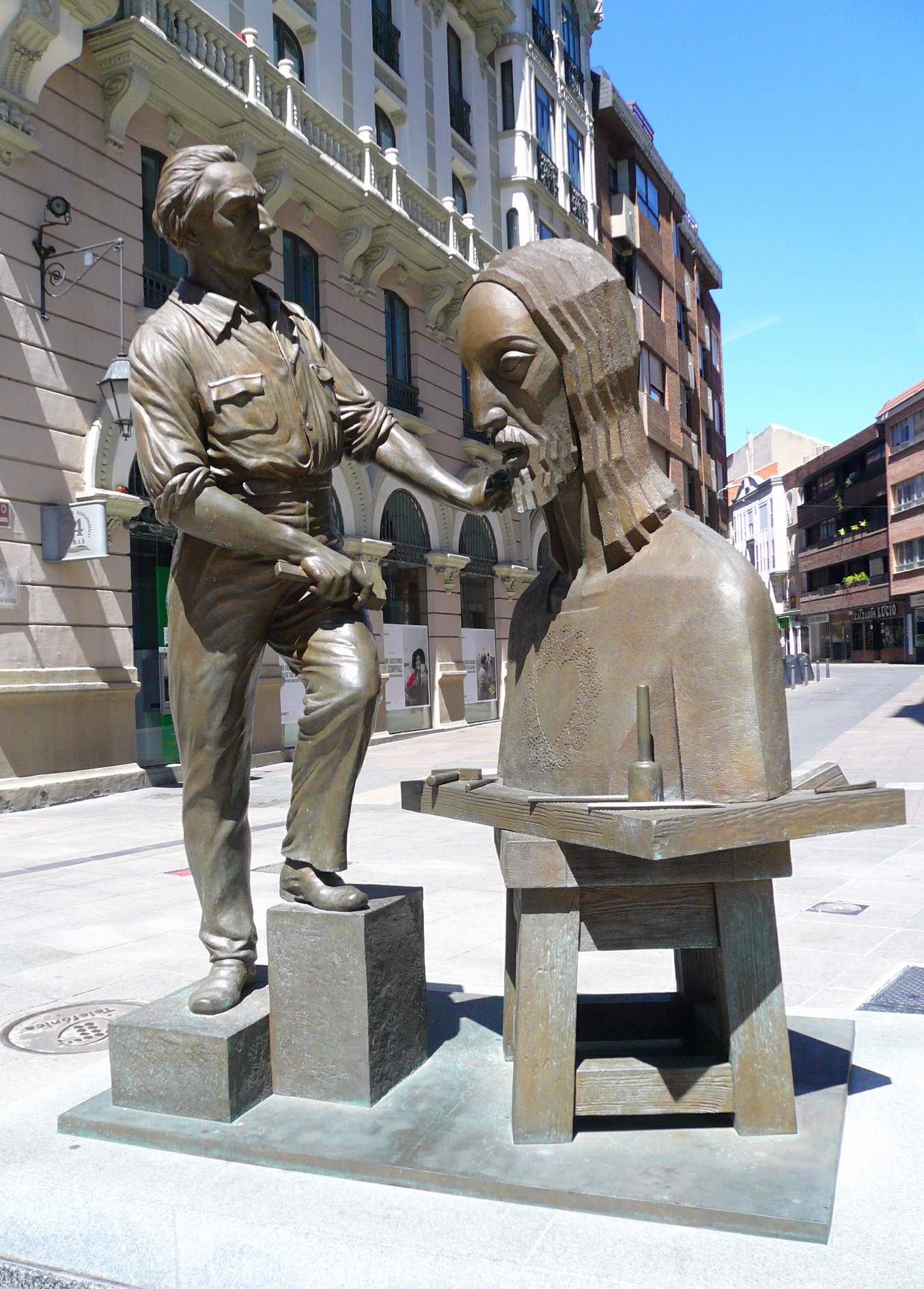
The Monument to Victorio Macho stands on Calle Mayor in Palencia, a bronze tribute unveiled in 2017 to the city's most celebrated sculptor. It's a modest stop on a walk through the historic center, but a good excuse to trace how one artist's work reshaped the skyline of an entire town.
Who was Victorio Macho?
Victorio Macho (1887-1966) was born in Palencia and went on to become one of the leading Spanish sculptors of the 20th century. Although he spent much of his working life away from his hometown — living at various points in Madrid, New York and Peru before eventually settling in Toledo, where he died — he never cut ties with Palencia. It was here that he created his most recognizable work, the Cristo del Otero, a monumental Christ figure that towers over the city. The statue on Calle Mayor is the town's way of honoring that legacy.
What will you see at the monument?
The sculpture depicts the artist himself and occupies a prominent spot on Palencia's main shopping street, surrounded by the townhouses and storefronts typical of a mid-sized Castilian city. It's a useful starting point for getting your bearings — from here it's an easy walk to the cathedral and to the other traces of Victorio Macho scattered around the city. Take a moment to read the information plaque before mapping out the rest of a sculptor-themed route.
What else in Palencia is connected to Victorio Macho?
The essential follow-up to the monument is a trip up Otero hill, home to the Cristo del Otero, a roughly 21-meter Christ figure completed in 1931 and one of the tallest sculptures of its kind anywhere in the world. The artist himself is buried at its base. Right next to it sits an interpretation center dedicated to Victorio Macho, where entry is free and visitors can see sketches, scale models, photographs and tools that trace how the giant Christ came to be built. Back in the center, on Plaza Mayor, stands another Macho work, a monument to the Renaissance sculptor Alonso Berruguete unveiled in 1963, while his "Iberian Peasant" sculpture greets arrivals from the Tierra de Campos region along Avenida de Asturias.
How to get there?
Calle Mayor is Palencia's main, largely pedestrianized street, so the monument is easiest reached on foot from either the train or bus station, both around fifteen minutes' walk from the center. Palencia sits on the Madrid-León rail line, making it a convenient stop on a wider trip through Castile and León. For Otero hill and the Cristo del Otero, it's worth taking a car, taxi or local bus, since the walk up from downtown is longer and involves a real climb.
When to visit?
Spring and autumn are the most comfortable seasons to explore Palencia, since summers can get quite hot on the open Castilian plateau. The interpretation center by the Cristo del Otero keeps limited opening hours, so it's worth checking the current schedule locally or with the tourist information office before heading up. The monument on Calle Mayor itself is accessible year-round, at any time of day.
Frequently asked questions
Where exactly is the Monument to Victorio Macho? On Calle Mayor, Palencia's main shopping street, right in the heart of the city center.
Is the monument the same thing as the Cristo del Otero? No. The Calle Mayor statue is a tribute to the artist himself, while the Cristo del Otero is his best-known work, a monumental Christ figure on the hill above the city.
Is admission to the interpretation center free? Yes, entry to the center dedicated to Victorio Macho next to the Cristo del Otero is free of charge.
How long does it take to see everything related to Victorio Macho in Palencia? The monument itself takes just a few minutes, but a full route covering the Cristo del Otero, the interpretation center and the Berruguete monument on Plaza Mayor takes two to three hours, depending on your pace.
Nearby places

Earn badges for the places you visit
Download NextOnTrip, discover new places and check off your trails.