About this place
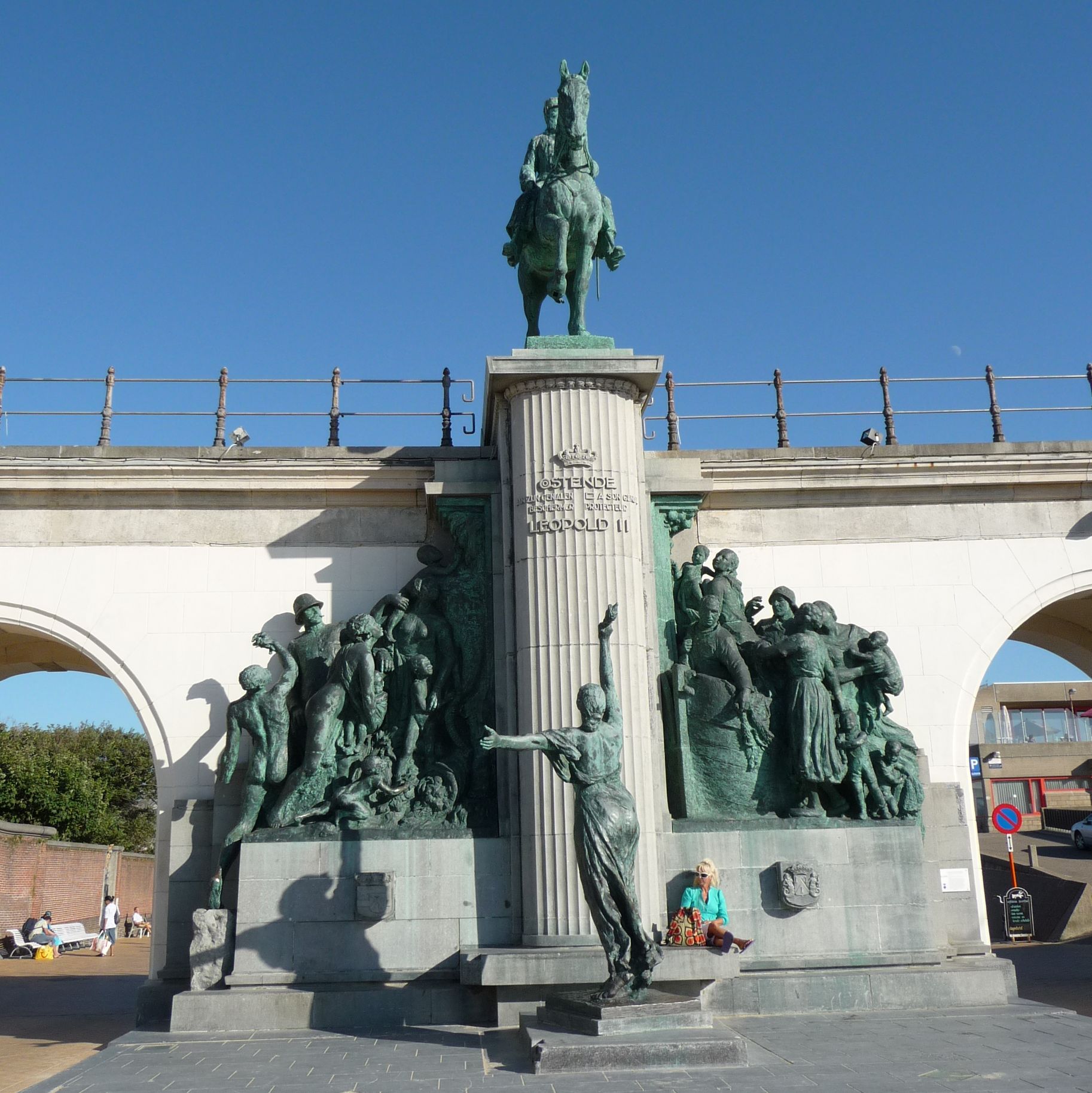
The Monument of Leopold II in Ostend is an equestrian statue of the Belgian king standing on the seafront promenade, close to the Royal Galleries. Sculpted by Alfred Courtens and unveiled in 1931, it is now one of the most debated monuments in Belgium.
What is this monument?
The statue shows Leopold II on horseback. It was meant to honour the king as a benefactor of Ostend, a ruler who supported the town's growth as a seaside resort. It was erected at a time when Belgium proudly celebrated its colonial past, and that context shapes how visitors read it today.
Around the rider, bronze sculptural groups depict Ostend fishermen and Congolese figures. It is the latter that draw most of the modern criticism.
Why is it controversial?
Leopold II ruled the Congo Free State, and his rule is associated with violence and the exploitation of the local population. The left-hand sculptural group shows Congolese people thanking the king for freeing them from Arab slavery. Today that message is widely seen as one-sided and propagandistic, which is why this group sits at the centre of the dispute.
The monument has been a target of protest several times:
- in 2004 the activist group "De Stoeten Ostendenoare" sawed off a hand of one of the Congolese figures,
- in 2016 an information board was installed beside it to explain the historical context,
- in June 2020, after the death of George Floyd, red paint was thrown over the statue, as happened to Leopold II statues in other Belgian towns.
Heritage status
Since 1981 the monument has been protected as a cultural heritage landmark. Sources give the credit slightly differently: the sculpture is usually attributed to Alfred Courtens, and some also name Antoine Courtens as the architect of the monument.
Frequently asked questions
Where is the Leopold II monument in Ostend?
On the Zeedijk seafront, at the Royal Galleries, near the beach and the landmark known as the Drie Gapers.
When was it unveiled?
In 1931.
Who made it?
Alfred Courtens, a Belgian sculptor; Antoine Courtens is named in connection with the architectural design.
Is it free to see?
Yes. It stands in public space along the promenade and can be visited at any time.
Why stop here?
It is a good place, during a walk through Ostend, to see how Belgium is confronting its colonial history today. Read the information board and take a closer look at the bronze groups.
Planning your visit
The monument fits easily into a stroll along the beach and promenade. Early morning or late afternoon is best, when the seafront is calmer and the light suits photographs of the sculpture. It is only a few steps from the Royal Galleries, which were built as a grand promenade, so a visit takes just a few minutes. It pairs well with other seaside sights and with museums that address Belgian history. For anyone interested in history and public memory, this stop shows first-hand how a town handles a difficult legacy: the statue has not been removed but accompanied by commentary meant to help visitors understand its context.
Why it still matters
The story of this statue shows that monuments are never neutral: their meaning shifts across generations. In 1931 it was intended as a tribute to a benefactor king. Today it is a reference point in the debate about colonialism, memory and how history is told in public space. Visitors can judge it for themselves, but the ongoing conversation around it makes it one of the more thought-provoking places on the Ostend coast.
Nearby places

Earn badges for the places you visit
Download NextOnTrip, discover new places and check off your trails.