About this place
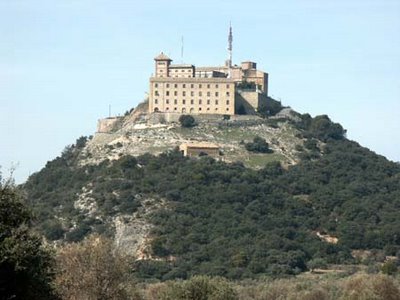
Monasterio de El Pueyo is a sanctuary perched on a hilltop above Barbastro, in the Somontano region of Aragón. The site functions as both a living monastery and a lookout point, with sweeping views over the surrounding vineyards and the Pyrenees mountain range.
How do you get there?
The sanctuary sits roughly five kilometers from central Barbastro, on top of a hill just under 640 meters high. A paved local road climbs there from town, a drive of about fifteen minutes, and the winding approach is part of the experience — the road unwinds through switchbacks that keep opening onto broader views of the Vero river valley and the Somontano countryside. Hikers can also reach it on foot along a trail starting from Barbastro's old town, a walk of roughly an hour.
What will you see?
According to tradition, the site's story begins in 1101, when the Virgin Mary is said to have appeared to a shepherd named Balandrán, instructing him to have a chapel built on top of the hill. The original hermitage was soon too small for the growing number of pilgrims, so it was replaced by a Romanesque church with a cloister, later expanded again in Gothic style. The hill also had strategic value: under King Pedro I of Aragón it served as a forward outpost during the reconquest of Huesca, and in 1251 King James I established a chaplaincy here.
A major renovation followed in 1680, when the sanctuary was enlarged and refurbished. The 19th-century disentailment of church properties brought turbulent times, and it was only through the efforts of Barbastro's citizens that the monastery was recovered for the town in 1843. From the late 19th century, Benedictine monks sent from the abbey of Montserrat ran the sanctuary for more than seventy years, followed by the Claretian community, and since 2009 it has been in the hands of monks from the Argentine Institute of the Incarnate Word.
Visitors today can enter the monastery church, see the statue of Our Lady of El Pueyo venerated by the region for centuries, and, with some luck, join a guided tour of the historic rooms led by the resident monks. A small shop by the monastery gate sells sweets baked by the community, including the traditional rosquillas, along with local honey.
When should you visit?
The sanctuary is open year-round, but spring and early autumn are the best times to come, when temperatures across Somontano are mild and the Pyrenees are at their clearest on the horizon. In summer the exposed hilltop can get quite hot, so it's worth planning a visit for the morning or late afternoon. The site also follows its own liturgical calendar, hosting retreats and days of recollection throughout the year that draw pilgrims as well as school and parish groups.
Where can you stay?
The monastery runs a former pilgrims' hospice that still welcomes guests looking for quiet and contemplation. It's a good option for anyone who wants to spend more than a few hours at El Pueyo — the community offers overnight stays along with organized retreats for individuals, schools, and parish groups. Most visitors, though, will find a single day trip combined with a walk along the viewpoint terraces more than enough.
Frequently asked questions
Is admission to the sanctuary free? Yes, entry to the church and the monastery grounds is free, though donations toward its upkeep are welcome.
How much time should I set aside for a visit? Visiting the church and the viewpoints takes about an hour, but it's worth allowing extra time for the drive up and a walk along the surrounding paths.
Can you stay overnight? Yes, the monastery's former hospice offers overnight accommodation for those seeking a retreat or quiet time, arranged in advance with the community.
What's worth buying on site? The shop by the monastery gate sells rosquillas baked by the monks along with local honey — a popular souvenir among visitors.
Nearby places

Earn badges for the places you visit
Download NextOnTrip, discover new places and check off your trails.