About this place
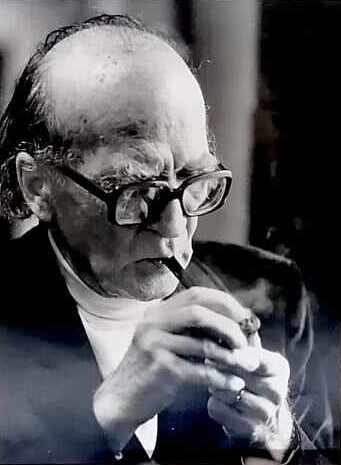
Mircea Eliade is the name of a street in Cascais, the Portuguese coastal town, honoring the Romanian scholar and writer whose life became linked to Portugal for several years.
Who was Mircea Eliade?
Eliade built his reputation above all as a historian of religion and a leading figure in comparative religious studies, though he was also trained as an Indologist and philosopher of culture. Alongside his academic work he wrote essays and novels, and for a period he also served as a diplomat. Today he is remembered as one of the towering figures of twentieth-century religious scholarship, largely because of two connected ideas. The first holds that an encounter with the sacred - a hierophany - splits ordinary experience into sacred and profane realms, both in space and in time. The second, his theory of the eternal return, argues that myths and rituals do more than recall past sacred events: through repetition, communities in a sense re-enter and relive them.
Why does a street in Cascais carry his name?
Eliade's connection to Portugal was not incidental. During the Second World War he served as cultural attaché of the Romanian legation in Lisbon, spending several years in a country that stayed neutral throughout the conflict. That chapter of his life is what the Cascais street commemorates - a town that, together with neighboring Estoril, sheltered numerous European exiles, diplomats, and aristocrats seeking refuge from the war during those years.
What else should visitors know about the area?
Cascais sits at the western edge of what is often called the Portuguese Riviera, where the Tagus estuary meets the Atlantic, a short distance from Lisbon. Once a modest fishing village, it grew into an elegant resort town with a historic center, a marina, and a string of sandy beaches. Its mild climate and closeness to the capital have long drawn both visitors and residents looking for a quieter life by the sea. Street names like this one offer a small window into the town's twentieth-century ties to wider European history and culture.
Getting there and best time to visit
Cascais is easiest to reach by train from Lisbon: the coastal line from Cais do Sodré station runs along the shoreline and terminates in the town, making it a straightforward day trip. Spring and early autumn are the most comfortable seasons to visit, since summer brings hotter weather and larger crowds drawn by the nearby beaches.
Frequently Asked Questions
Why is a street in Cascais named after Mircea Eliade? It commemorates the Romanian historian of religion and writer who spent several years in Lisbon during the Second World War as cultural attaché of the Romanian legation.
What was Mircea Eliade known for? He was a historian of religion and comparative religious scholar, also trained as an Indologist and philosopher of culture, who wrote essays and novels and worked at times as a diplomat. He developed the influential theories of hierophany and the eternal return.
How do you get to Cascais from Lisbon? The simplest way is the coastal train line from Cais do Sodré station, which runs along the shore and ends in Cascais.
When is the best time to visit Cascais? Spring and early autumn bring mild weather and smaller crowds, though summer remains the most popular season thanks to the beaches.
Earn badges for the places you visit
Download NextOnTrip, discover new places and check off your trails.